Let's celebrate, today is World Book Day (athough some countries celebrate in a different day)! It's also known as World Book or International Day of the Book.

What book are you currently reading? What's your favorite book so far?

https://en.wikipedia.org/wiki/World_Book_Day

You can find several interestings books in our catalogue:
www.gutenberg.org
#books #literature #worldbookDay

@gutenberg_org From the Wikipedia page: "World Book and Copyright Day...is an annual event organized by [the] United Nations Educational, Scientific and Cultural Organization to promote reading, publishing, and copyright."

I'm all in on the former two planks and 100% opposed to the latter plank. Copyright chills the spread of knowledge. Sounds like the publishing cartel got UNESCO to promote their propaganda.

"Copyright is brain damage."
https://m.youtube.com/watch?v=XO9FKQAxWZc

#OpenCulture

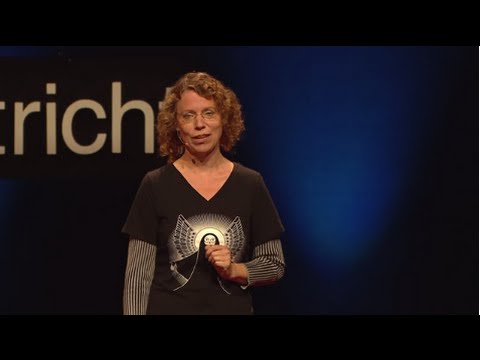
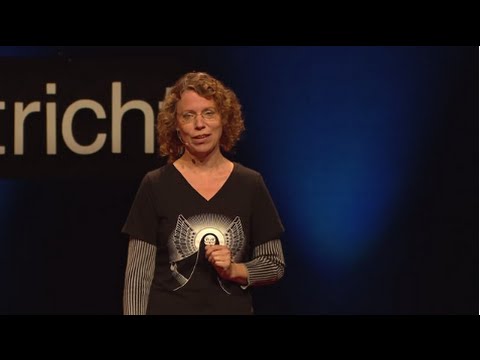
Copyright is Brain Damage | Nina Paley | TEDxMaastricht

YouTube

@elaterite @gutenberg_org
I Disagree

Copyright is what allows an open culture to emerge. As an author, you have the control of what and how people are allowed to use and reuse your creations.

To get open culture, you need the culture, and this goes by respecting people and their work, which means respecting copyright. The open parts is dealt with licenses, not with absence of copyright.

That is why, AI crations, that are disrespectfully stealing from creative work, cannot ever be (open) culture.

@jcolomb "[Y]ou have the control of what and how people are allowed to use and reuse your creations."

In my mind that stymies the advancement of culture, of art. To advance society we need to build upon the work of the past, each generation standing on the shoulders of past generations.
@gutenberg_org

@elaterite @gutenberg_org

I think this only work if the new generation is not stealing the work, but building on it, recognizing the importance of the past in their present. It goes with a respect for the authors and their decisions.

Culture and not cultural appropriation.

(In science - since you took the shoulder analogy - this is also important, as you need to be able to doubt your foundation if you want to build on top of it)

PS: while I use the word stealing, I do not think of this primarily in economic terms, it is more personal than that (can't really explain what I mean here, sorry, seems it is not yet clear in my mind...)

@jcolomb Copyright is an option. Open culture advocates reject that construct. It's similar to the free & open source software movement. It's hard to explain in this forum. However, @nina explains the philosophy very succinctly in the first 14mins of this TEDx talk. I would encourage to take a look. And the last four minutes is an animated excerpt from a movie she made that is both entertaining and very relevant to what is going on in the Middle East.

https://www.youtube.com/watch?v=XO9FKQAxWZc

@gutenberg_org

Copyright is Brain Damage | Nina Paley | TEDxMaastricht

YouTube

@elaterite @nina @gutenberg_org
Funny I had seen the 'illegal clip' some time (years?) ago.

I will think more about it, but as a neuroscientist, I am always critical of mind-culture analogies :)

My first reflex is still (1) copyleft license are only possible because of copyright law, and () the problem is not the law, the problem is capitalism.

@jcolomb Indeed, copyleft is copyright for the electronic age. Copyleft makes it easy to preemptively grant certain permissions of use while retaining others. I used to use a Creative Commons noncommercial license on my photography. Then I moved to a CC license that allowed commercial use. And I'll admit, it took me awhile, but I finally went full open culture and now I place my photography in the public domain. And yes, capitalism is the problem. 1/2

@nina @gutenberg_org

@jcolomb In the States, when we had a Constitution--before we became a dictatorship--the copyright clause said: "To promote the Progress of Science & useful Arts, by securing for limited Times to Authors & Inventors the exclusive Right to their respective Writings & Discoveries." In 1790 "limited time" was 14yrs (I'm good with that). By 1998 "limited time" became an absurd life of the author plus 70yrs!
2/2

@nina @gutenberg_org