Good read on the ABC today about Australia's declining weather observation stations - and the important work that historical climatologists like Linden Ashcroft do, unearthing old records of weather obs.

As a kid, my family kept daily rainfall observations - it was always fascinating looking at the old records.

https://www.abc.net.au/news/2026-04-19/australias-shrinking-rainfall-observation-network/106502184
#Weather #Climate #WeatherAndClimate #Australia #YourABC

The quiet disappearance of Australia's rainfall observation network

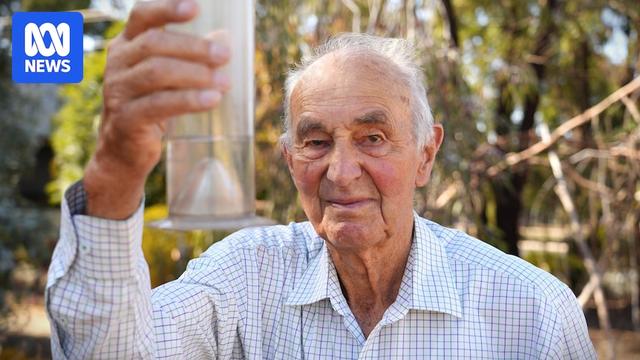
For more than 60 years, Frank Pritchard has diligently checked the weather, adding to a record that stretches back more than a century. But he's part of a quietly shrinking network of observers around Australia. Without it, scientists say we risk missing out on important information that could help improve weather forecast models and climate projections.
@michcampbell Interestingly though, BoM don't really want to take observations from home weather stations. I've been running one for over 15 years now and contribute to various other weather services, but BoM, nup, no way to send my data there.
@david very odd, as I think the network includes ~5000 volunteer weather observers. Maybe they have enough of a density of observations where you live? It's a shame though, more data is more data!

@michcampbell It is also possible I just haven't found how to get the data to BoM.

The UK Met Office has an easy API.

@david the BOM data infrastructure is an asbolute nightmare 😂

I don't know anyone to contact, @ibk or @adamhsparks might have some idea about how to get the obs to them :)

@michcampbell @david @adamhsparks I do not know who to contact, I’m afraid.
@michcampbell @david @adamhsparks For a while, the BoM had the Weathwr Observations Website, BoMWOW, for submitting observations. Which was actually the UK Met Office. They closed it in 2024 apparently because not many people were using it.
And upon searching I see that UKMO are also shutting down WOW: https://weatherobservationswebsite.blogspot.com/2025/12/important-update-retirement-of-weather.html
Important Update: Retirement of the Weather Observations Website (WOW)

After more than a decade of supporting crowd-sourced weather observations and citizen science, the Met Office will begin retiring the Weathe...

@ibk @michcampbell @adamhsparks I did contribute to WOW, but had no confidence BoM was using any of that data. There was absolutely no mention of anything BoM on the WOW site iirc. But yeah, I was aware that the WOW was shutting down.
@david @michcampbell @adamhsparks To the best of my knowledge, WOW data was rarely used. Certainly not incorporated into the “official” climate database. Possibly checked by some forecasters, but only in real time.
It was a great idea sadly lacking in commitment by the organisation.
@michcampbell @david @adamhsparks My time working in the area showed that even the “official” observations were riddled with errors. “Volunteer” rainfall – the biggest collection by number of sites – was often comical in the errors. It took a crazy amount of work every day to clean up the rainfall data, and that it is still quite unclean is testament to how tricky it can be. I have seen things that you people would not believe …
@michcampbell @david @adamhsparks I was becoming a convert to remote sensing and modeling (in the broadest sense) for weather observations. Backed by a relatively small but very high quality network of “ground truth” observing sites.
Much of what I see coming from, say, Copernicus suggest that this is the way.
Most (all?) forecasts are done that way now: it’s big grids really.
@michcampbell @david @adamhsparks I’m also quite happy not to have to worry about this any more. Being old has its advantages.

@ibk @david @adamhsparks

I heard a rumour once that the Tully LPO fudged the numbers to steal the 'wettest town in Aus' crown from Babinda - rumour was once the posty retired there was a step change in the precip 😂

No idea if true, but I badly want it to be!

@michcampbell @david @adamhsparks
Yeah, these sort of things almost certainly happen, although with anything like a record it becomes weird.

But also:
Missing a week of observing and it being completely unknown whether the rain total for first day back being for one day or seven.
Observations claiming to be for 29 Feb 2019 (with obs also submitted for 28 Feb and 1 Mar).
Bird poo in the rain gauge. Irrigation spray in the gauge.
People moving to another town, but continuing to report having taken the gauge with them.
Attack ships on fire off the shoulder of Orion …

@adamhsparks @michcampbell @david Yikes. The stakes can be ridiculously high for a simple weather observation.
@adamhsparks @michcampbell @david I think my favourite story is the rain gauge in northeast Tasmania that was subject to vandalism.
So a security fence was erected.
The next time the site was visited, the observing equipment was found intact. But the fence had been stolen.

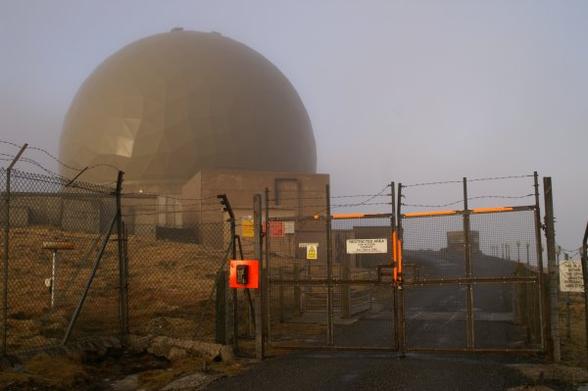
@ibk @adamhsparks @michcampbell @david apologies for butting in, but that reminds me of the UK's record for wind, recorded by a weather station on a hill above RAF Saxavord on Unst in Shetland. According to Wikipedia "It holds the unofficial British record for wind speed, which in 1992 was recorded at 197 mph (317 km/h) — just before the measuring equipment blew away."

I went there a few years ago. It *was* very windy!

https://en.wikipedia.org/wiki/RRH_Saxa_Vord

RRH Saxa Vord - Wikipedia

@patrickhadfield @ibk @michcampbell @david nonsense. This fits perfectly!
@adamhsparks @patrickhadfield @ibk @david agreed, the more fun weather/weather obs stories the better

@michcampbell @adamhsparks @patrickhadfield @david Seeing as how you asked …
Back in the very olden days (although within our lifetimes), upper wind observations were done by releasing a balloon, then manually tracking it using a theodolite (telescope with dials for azimuth and elevation). A fix on the balloon's position was taken every minute; by assuming a rate of ascent and some fancy work using a special slide rule, the wind speed and direction at various heights could be determined. (Similar things still happen, although the person-looking-through-a-theodolite-and-using-a-slide-rule is replaced with a computer-driven radar).
The data from these observations is coded up and sent (as a PPAA message; these telegraph-era codes are a thing of beauty) into the Bureau, and thence to the rest of the world.
There are all sorts of reasons why a particular balloon flight might not yield a suitable observation: poor visibility, strong winds, clouds, on-ground emergencies, etc. In this case, a NOREP (no report) message is sent, with a short plain-text comment.
Which is all just background for the message sent from East Sale by an observer who thought they had enough time to light a cigarette between position fixes:

NOREP BALLOON LOST IN SMOKE

(This is story ought to be true even if it's not).