 Andy Arthur - Threadinburgh
The thread about some of Edinburgh, Leith and Portobello’s old cinemas and how they fit into the modern streetscape
This thread was originally written and published in August 2018.
Edinburgh and Leith were once full of cinemas, and speak to anyone of a certain generation and they will go a bit misty eyed telling you about their picture house, and which ones were “fleapits“. This thread thread takes a whistlestop tour of some old photos of old cinemas, overlaid against the modern street scene to help listeners of a younger generation appreciate how they relate to our world now.
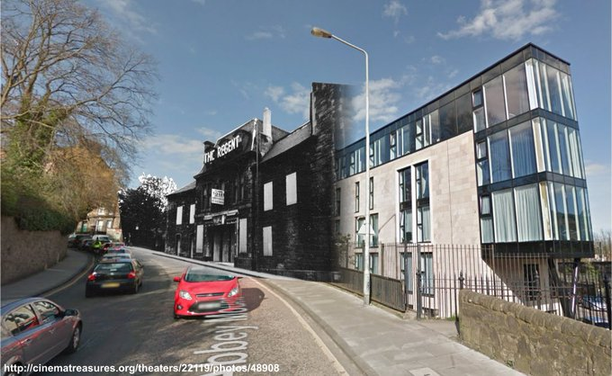
At Abbeymount, The Regent cinema which was open 1927-1970. The façade was converted from the Palace Brewery buildings which were its predecessor on the site. The plot is now occupied by one of the ubiquitous PBSA (Purpose-Built Student Accommodation) blocks. Named after the Regent Road and Bridge up the hill, the bar at the top of Abbeymount is also called The Regent.
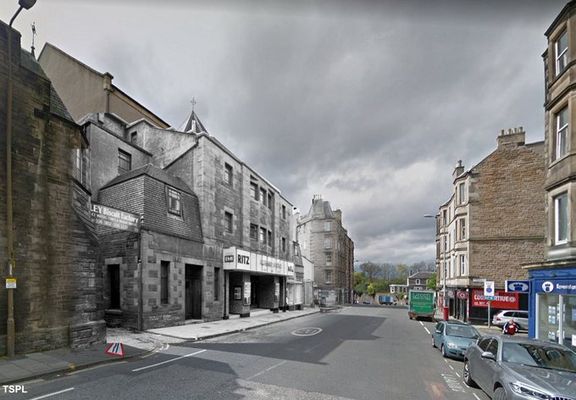
The RegentAs the above picture of The Regent seemed to be popular, I did another cinema. Here’s the Ritz on Rodney Street, which was open 1929 – 1981 by which time it was known as an ABC. It was one of the first cinemas in town opened purely for the new fangled talkies. The building was demolished in 1983.
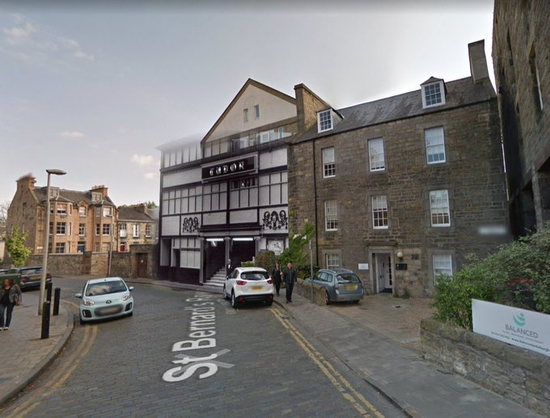
The RitzThe Tudor was perhaps one of Edinburgh’s weirdest looking cinema? Actually known as The Palace and then St. Bernard’s, it was the Savoy for most of its operational life, until 1960. Located on St. Bernard’s Row, just off of Raeburn Place in Stockbridge. It opened in 1911, was closed in 1966 and the building demolished in 1982.
The TudorPoole’s Synod Hall on Castle Terrace. The ecclesiastical name came from its roots as the United Presbyterian Church’s Synod Hall, although in a nice 360° turn of events it was actually built as an entertainment venue called The New Edinburgh Theatre. When that venture failed, almost ruining one of its principal backers, the eminent local architect, businessman and politician Sir James Gowans, the U.P. Church stepped in. It ceased to be required by them after they merged with the Free Church in 1900 to form the United Free Church, at which point the Town Council took it over and sublet it for various purposes. One of the lets was the Poole family of travelling entertainers who increasingly turned the venue over to early cinema shows, including one of the first showings of a talkie in the city in 1926. However the building remained in the ownership of the city who eventually desired an opera house and had it demolished in 1966; coincidentally the same year that they allowed Sir James Gowans’ masterpiece, his villa of Rockville in Merchiston to also be demolished. The city fell out with its business partner for the opera house scheme and nothing came of it. The plot lay vacant for about 30 years until eventually being by an office block called Saltire House.
Poole’s SynodA much less well known establishment was the Blue Halls on Lauriston Street. This was converted from the West Port Livestock Market in 1930 as a talkies venue and had 1,780 seats. Renamed the Beverley in 1954 and closed in 1959. The cinema was demolished soon after and the plot lay vacant until the whole block was cleared around 1971 and replaced by a brutalist office block for the Post Office called West Port House. It was vacated in 1997 and met the same fate as the cinema ten years thereafter, being demolished and replaced by another new office block.
The Blue HallsIf you’ve ever wondered where the Alhambra Bar on Leith Walk took it’s name from then meet The Alhambra Theatre. Opened in 1914 as a variety hall, it functioned as a full cinema from 1915 to 1958 becoming yet another victim of the rise of home television and an Entertainment Tax that made many already marginal venues unprofitable. It lay vacant for sixteen years after closure and was not demolished until 1974, to make way for a garage. It is now the site of a Majestic wine store but you can still enjoy a pre or post theatre libation over the road in the Alhambra, you just have to go elsewhere for the show.
The AlhambraThe Embassy on Boswall Parkway, East Pilton was opened in 1937 as a “super cinema” to serve an otherwise cinema-less large area of new housing estates. It was a common failure of Edinburgh’s interwar, peripheral housing schemes that a large concentration of new housing was erected on greenfield sites far from the trappings of life like shops and pubs; and cinemas! This was a bit of a downer to life in what was otherwise good quality housing that was a huge improvement on the inner-city slums that they were built to replace. The Embassy closed in 1964 after a fire but requests to run it as either a dance hall or bingo hall were declined and it was demolished in 1975. It is now the site of a modern housing block.
The EmbassyThe County on Wauchope Avenue in Craigmillar, which was a Bingo hall by the time this photo was taken in 1970. Its predecessor, the Rio had opened in 1936 but had been largely gutted by a fire on October 11th 1946. When it re-opened in 1950 its proprietors also ran the County in Portobello and so it took on that name too. It closed again some thirteen years later and was turned over to Bingo, a common fate for cinemas. It was similar to The Embassy in that it arrived in a peripheral housing scheme that had precious little in the way of entertainment venues (it did not get a pub, The White House, until 1936). In the image below it is imposed on a 2008 image of the remains of the by then decrepit housing estate, and it in turn is too overlaid on what was still a vacant plot in 2018. The area is almost unrecognisable now, covered in new housing and a large Lidl supermarket.
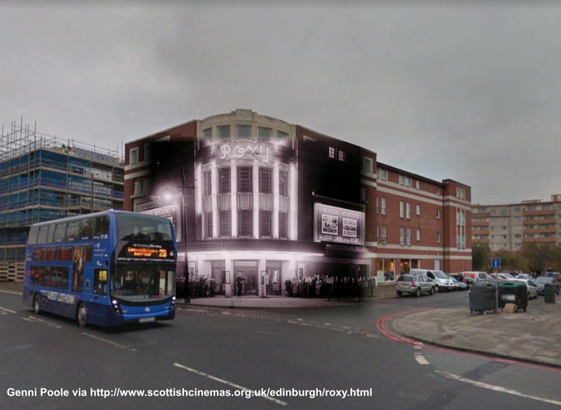
The CountyPoole’s Roxy at the western end of Gorgie Road was opened by the same family who ran the Synod Hall in 1937 as a 2,000 seater super-cinema. It served both the established tenement community of Gorgie as well as newer housing schemes built in the district at Chesser, Stevenson, Hutchison, Stenhouse and Whitson. A Mickey Mouse Club was a particular draw to this establishment. It closed as a cinema in 1963, and after a brief attempt to run it as a joint Cine-bingo establishment, it spent the next 40-odd years serving only Bingo to patrons; 14 years longer than it was a cinema. The auditorium is now gone and replaced with flats, but the façade has been retained and the ground floor is now a giant ice cream parlour.
Poole’s RoxyThe Palace on Princes Street was opened in 1913 and was a high-class establishment in the Georgian classical style befitting its surroundings, with a sumptuous interior, the Wedgewood Cafe and smoking rooms. It was slightly slow to catch up with the competition and was only converted for talkies in late 1930. Its closure came before its time, in 1955, when the neighbouring Woolworths store bought the building to expand into from next door.
The PalaceThe Rutland, which once stood at the foot of Dewar Place on Canning Street, opened in 1930 and was one of Edinburgh’s largest cinemas, with seats for 2,200. Known for its “mighty unit” organ and an elaborately painted interior that included two thousand coloured lightbulbs. It closed for two days in 1950 before reopening as the Gaumont, part of the J. Arthur Rank chain. It closed after a devastating fire in 1963 and was demolished three years later It is now the site of an office block.
The RutlandThe Salon was an altogether smaller 800 seater on Baxter’s Place at the very top of Leith Walk. It opened in 1913 with an Arabian Nights theme; males staff dressed in turbans and females as dancers. As a result it was quickly nicknamed “the Harem“. It had a reputation for being rather seedy and run-down, but survived far longer than grander and more mainsteam venues by specialising in westerns. It closed in 1974 and the auditorium was demolished but the façade hung on (just) for another 40 years before being demolished in connection with the redevelopment of the listed block behind it of Baxter’s Place as a hotel.
The SalonNo, not that old cinema on Bath Street in Portobello – by which I mean the George or County whose dilapidated Streamline Moderne shell is just still hanging on to life – I mean the other one. The Bungalow Electric Theatre was converted from a roller-skating rink in 1913 to show “animated pictures“. It was given a patriotic wartime renaming in 1942 as the Victory. It closed in 1956 and was used as a storage unit. Its remains were demolished in 2005, with a new block of flats built on the plot in 2017.
The VictoryThe entrance to Edinburgh Marine Gardens, a vast Edwardian amusement park, lies exactly where the entrance to Lothian Buses’ Marine Garage now is. The park was a permanent home for the structures of the 1908 Scottish National Exhibition at Saughton Park and included a variety of entertainments, including a cinema and dance hall. One of the early attractions was aviation, with the first flight across the Firth of Forth starting and ending here. During WW2, the shell of the ballroom was converted into a factory for building amphibious landing craft.
Marine Gardens #Cinemas #Edinburgh #Entertainment #October11 #Portobello