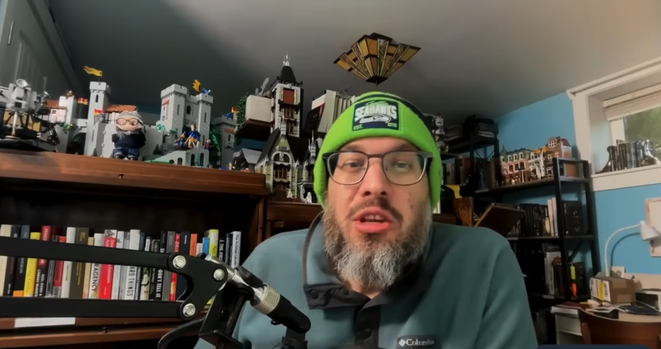
I don't trust Nate B Jones at all. This guy has a podcast about AI for CS people and I think it's propaganda designed to bring the doubters back. All of his podcasts lead with validating some problem we've all noticed with the way AI has been implemented, but then it pivots to "but it's not really as bad as you think."

This gives the illusion of balanced reasoning. Considering both sides.

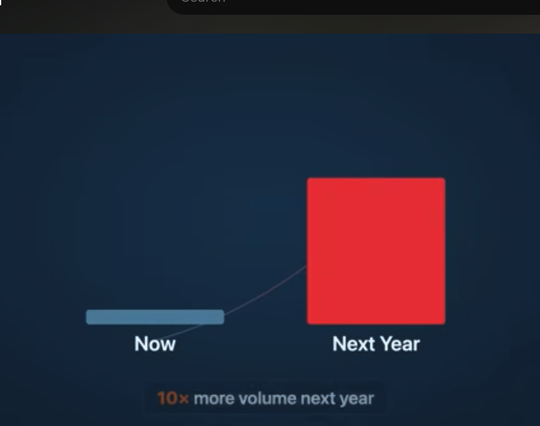
But the real reason I don't trust this guy is he put up a graph like this:
@futurebird 💯 never trust the logical thinking of someone who can't make a coherent graph

@Tak

Technically it is "coherent" it's just a suspect tactic. It's fine to say "I think this thing will be ten times worse in the future" ... but making a graph about it can only be about abusing the patina of objectivity that comes with graphs to make an opinion seems like it is supported by research.

That makes me see the speaker as manipulative, a charlatan.

Even though his point was probably ... fine. Is "dark code" a problem? Yea. Probably it is. But this is bad communication.

@futurebird @Tak
My rubric for trusting things that I can't be bothered to research myself is: are they using emotional arguments to convince me?

Charts without axes or contexts fall into this. 10x on one instance a year is a lot less interesting than 10x on a million instances a year. This chart is trying to trigger my worst case scenario emotion by making me think "10x bad is really bad".

@flipper @Tak

I would really like to hear from people who have a wide range of opinions on AI. But it's a messy landscape and I think there is a real effort to push propaganda.

@futurebird @Tak there are so few considered opinions on the subject at the moment - it's so new and politically charged that it's difficult to separate the issues and evaluate.

Many of the people who I generally trust and are deep experts on these subjects turn into weird corporate parrots when they start talking about AI. The sense I get in the valley is that you're expected to either believe that AI will solve everything or that it's an existential danger to us all. The opinion that it's just a tool, and that it's up to us to figure out the best way to approach it and (dare I say) regulate it, is not a popular one.