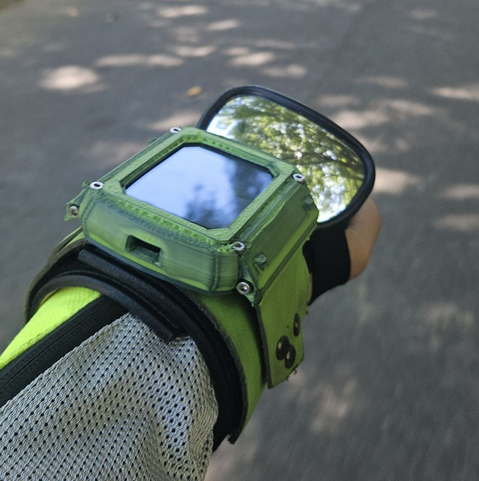
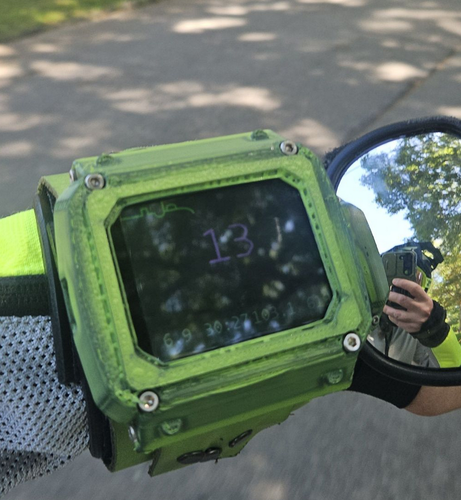
This component of my #cyberpunk jacket project that I call the "codex" was designed to be usable separate from the rest of the tech built in to the jacket. I was able to get it to read data from my #EUC so it can show ride stats, charge, and current speed.

This was my first test ride with the codex by itself. The display is hard to see in the picture because it's a very sunny day. I'll try again next time it's overcast.

The texture of the case comes from 3d printing in a dark color and then spraying with a single coat of plasti-dip.

@Nundrum Is the plasti-dip tacky at all?

Really kick ass work on this.

@retech Thanks!!

It has that rubbery/grippy feel you'd expect, but it's not tacky or sticky.

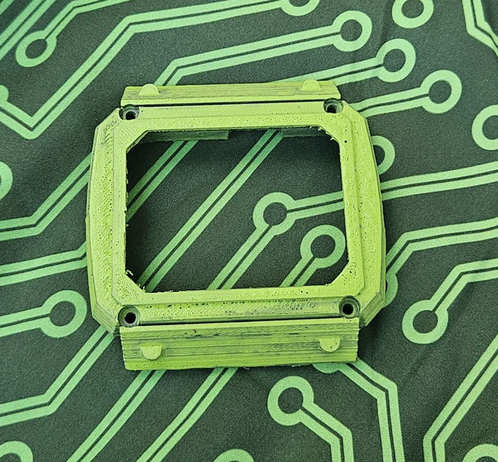
Here's a picture of an earlier print that I gave two coats to. Keep in mind I didn't really give a lot of attention to applying it, but I think if you did it could give a very nice finish. But for the jacket's aesthetic I liked the rougher look with only one coat.

@Nundrum Personally, I like that reticulation (problem) with the paint on this.

Do you have to use a primer with that on the print? I'm guessing not. But you never know.

@retech No primer. That earlier print has survived fine for about two weeks now. Of course if it goes wonky I'll be sure to post about it :D

@Nundrum Cool.

I've been using a clear primer on some stuff that enables me to do stuff like acrylic washes. After, I used a clear dead flat cover and it holds extraordinarily well.

@retech Have any pictures? I'm curious to see how that turns out.

@Nundrum Eceedingly well.

Anything that is not that round piece in the back with the 3 downward oriented tubes has been aged to match that with this technique. The clearish small tubes, all the corrugated tubes, and some odd bits.

@retech Wow! Just wow! That's an amazing work!

I never would have guessed that's the technique you used here. I'm fascinated.

@Nundrum Cheers. I don't like the way solvent based paints look. The effect is entirely unnatural. The goal is always to make it look real/organic, like this happened naturally over time. Tearing down enough old worn out shit, I realised the only way to duplicate the layers that time built up, is to build them up myself. I kinda stumbled on the primer. I was using it for a few pieces that I knew would have bonding issues. Plastics that did not paint very well, or things that my get touched a lot, or both. self etching primer works very well, on certain plastics, not so much different than regular paint on others. The primer was a winner. Just so happened I needed to do washed on some areas primed... My normal process was to use a 200-280 grit sand paper on it to prep it. Put an acrylic was down as the base, and work kinda fast with a dryer so that it set quick. Then coat with dead flat, a lot. Took longer, had a relatively high unsatisfactory rate, and made me nervous because I don't know how it will age. This newer method (5yrs now) is the goto and has worked on every plastic I've tried, and it needs no sanding prep. I do clean it well though, but that's kind of obvious.
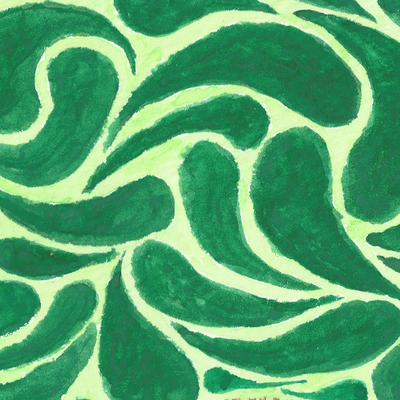
@Nundrum Adding to this... I would far rather do 30 thin washes to get it right, than rush it and paint it one or two sittings. The later almost guarantees having to go back and strip it and start again. You can stop at the sweet spot with a wash. There's also a high enough level of unpredictability that I love. A rusty pipe staining a building it's been leaning against for 20yrs does not have a calculable pattern and will never look the same as the one next to it. I purposely introduce unknowns so I cannot duplicate one piece to the next. Nature never does.

I think 137 is pinned on my timeline with better pics. She is one of my favourites. A lot of that has to do with the textures and colours.