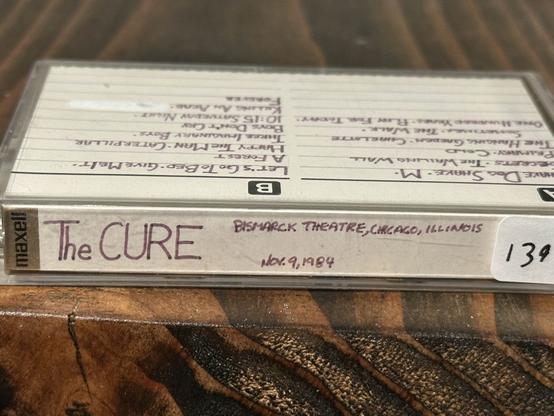
For decades, Aadam Jacobs recorded live music shows. His collection of over 10,000 shows since 1984 features Nirvana, R.E.M., The Pixies, Björk, Depeche Mode, The Cure, and so many more — and they're now available on the Internet Archive for free. https://kottke.org/26/04/online-treasure-trove-secret-concert-recordings
Now Online: a Treasure Trove of 1000s of Secret Concert Recordings

For decades, a guy named Aadam Jacobs has been recording live music shows. His collection of over 10,000 shows since 1984 feature the likes of Nirvana, R.E.

kottke.org

@kottke
Copyright?

The performers own the performance copyright. The material is also mostly copyright.

But the Internet Archive went beyond backup of Websites to pirating of music, video, software and books.

@raymaccarthy @kottke
There is a long history of "bootlegging" live performances.
I know this does not make it 'legally' right but there are varying attitudes by artist towards such a practise and seem hard to stop especially as passing recordings is often a cottage industry rather than a full commercial enterprise.

So you have to ask the question. What do you do? destroy/lock up culturally interesting art or allow it to be enjoyed as it already exists.

@raymierussell @kottke
Archive it properly and negotiate with rights holders of material and performance.
Eventually it will be in the Public Domain, though US Corporations have maliciously lobbied and got copyright period extended too much.

The long history of bootlegging has no impact on the morality or legality.

There is a long history of pirating books in the 19th C. esp. (and into 20th), by legitimate US publishers. The AI LLM purveyors have extensively pirated and used current pirates.

@raymaccarthy @kottke
In an ideal world proper legal archives would be achievable. But we live in the world that we live in.

While legally dubious I think it is possible to argue that bootlegging could be moral good in certain cases.
What is moral and what is legal can often diverge depending on ones own personal morality.

The difference to me is the motivation behind the bootleg. Who did it and why they did it? As long as an artist isn't harmed materially, financially etc.

@raymierussell @kottke
The archive is legal if not shared till copyright expires. Any unauthorised sharing might harm the performer or content rights holder(s).

@raymaccarthy @kottke
Thanks for the response from the Record company legal Dept ;-).

But seriously one could equally argue unauthorised sharing could help a performer/rights holder by getting them known/appreciated in an informal way that commercial companies never could.

@raymierussell @raymaccarthy @kottke

although slightly different content (a non-fiction magazine on a specialist tech/engineering subject), I can confirm it does.

I would not have known this magazine even existed had it not been for Annas Archive - local newsagents/supermarkets no longer stock many specialist magazines, and because it was good I signed up for a subscription *and* bought the binders (made in England!) to put the paper magazine in

https://social.tchncs.de/@vfrmedia/116365810518393496

@vfrmedia @raymaccarthy @kottke
I got into the HitchHikers guide to the galaxy by getting bootleg copies of the radio plays in the 80's off a school friend. I have subsequently over the years bought the books, audiobooks and official MP3 CD of the original 2 radio series.