mpweiher
Seven countries now generate 100% of their electricity from renewable energy
https://www.the-independent.com/tech/renewable-energy-solar-nepal-bhutan-iceland-b2533699.html
Seven countries now generate 100% of their electricity from renewable energy
https://www.the-independent.com/tech/renewable-energy-solar-nepal-bhutan-iceland-b2533699.html
Specifically Albania, Bhutan, Nepal, Paraguay, Iceland, Ethiopia and the Democratic Republic of Congo.
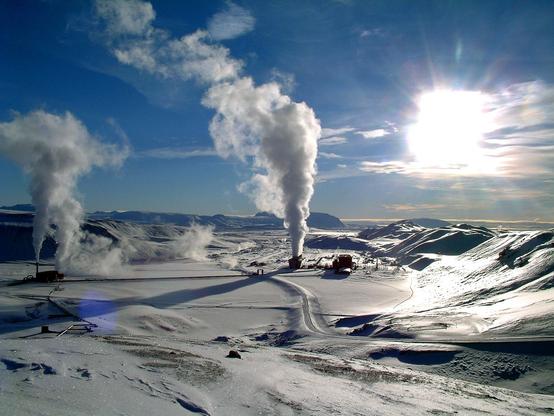
Not to downplay the positive steps that are being taken towards using renewable energy worldwide, but one must point out that all those countries except one are almost exclusively using hydroelectric power, whose availability at such scale is a geographical lottery. As for Iceland, which also relies mostly on hydroelectric power but not in such great a proportion, it makes up for it thanks to easy and abundantly available geothermal power (which, though environmentally friendly, is arguably not technically renewable).
The Earth's heat content is about 1×10^19 TJ. This heat naturally flows to the surface by conduction at a rate of 44.2 TW and is replenished by radioactive decay at a rate of 30 TW. These power rates are more than double humanity's current energy consumption from primary sources, but most of this power is too diffuse (approximately 0.1 W/m^2 on average) to be recoverable.
In comparison, averaged over the year and the day, the Earth's atmosphere receives 340 W/m^2 from the Sun.
https://en.wikipedia.org/wiki/Solar_irradiance#On_Earth's_su...
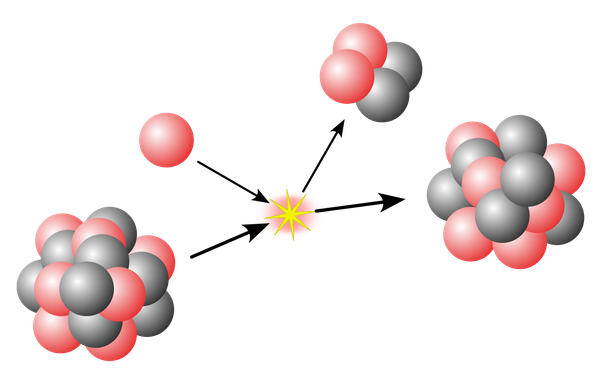
Geothermal is powered by fission Uranium and other heavy atoms deep in the Earth.
Solar is powered by fusion of Hydrogen in the Sun.
I'd use the same classification for both.
About 20% of this is residual heat from planetary accretion; the remainder is attributed to past and current radioactive decay of naturally occurring isotopes.
Most of the radiogenic heating in the Earth results from the decay of the daughter nuclei in the decay chains of uranium-238 and thorium-232, and potassium-40.
https://en.wikipedia.org/wiki/Radiogenic_heating
Potassium is more or less distributed in the body (especially in soft tissues) following intake of foods. A 70-kg man contains about 126 g of potassium (0.18%), most of that is located in muscles. The daily consumption of potassium is approximately 2.5 grams. Hence the concentration of potassium-40 is nearly stable in all persons at a level of about 55 Bq/kg (3850 Bq in total), which corresponds to the annual effective dose of 0.2 mSv.
https://www.nuclear-power.com/nuclear-engineering/radiation-...
No, not quite. Geothermal is powered by the accumulated heat stored in rocks from fission Uranium and other heavy atoms deep in the Earth (and other phenomena).
Geothermal hotspots do not reheat by fission or otherwise at the same speed that we extract their energy (if they did we'd be in trouble if we weren't extracting it!).
As I mentioned in another comment, build a Dyson sphere of solar panels around the Sun and it will last just as long. Build an all-Earth geothermal plant and the heat will be depleted.
Only as a technicality. If you find a geothermal hotspot and start to extract energy from it, the hotspot will eventually cool down faster than if you hadn't (which of course depends on the size of the hotspot and how much heat you're pulling out).
However, given that there's no downsides to cooling down a hotspot other than, well, no longer being able to extract energy from it, geothermal is a bit of an honorary "renewable".
Actual renewables ultimately all come down to recent[0] solar energy, which will never deplete their source however much they are used. All the energy in wind, hydroelectric and biofuels has recently originated in the Sun.
[0] I say "recently" because fossil fuels are all also derived from the Sun, but their rate of regeneration is a bit too slow compared to the speed at which we use them.
If it goes down, what happens to all the buildings using geo/earth heat with these probe heads to collect the energy?
Does this effect occur in lets say 10-20 years or is this longterm like 50y+?
A lot of hydroelectric depends on snow pack and glacier runoff that is being adversely affected by global warming. Solar and wind are the only robust hedges against a warm up that might ultimately severely curtail river flow.
We have a lot of uranium and nuclear is fairly renewable at least in the span of a few centuries. The waste issue is a problem.
Contrary to a popular belief, most high temperature Geothermal plants have a predicted death date.
This is due to the physics reality of the ground itself: Power of a Geothermal well will decay over time to a point where the well become unusable and need to be closed.
It is due to the fact underground water is rich in minerals and raw elements. This soup will slowly but surely cement the well itself and its associated underground.
There are techniques (similar to 'fraking') to extend the lifetime of a well but only to some extent.
If the topic interests you (and you can bear artificially translated English), a French content creator did a pretty good video on the topic:
https://m.youtube.com/watch?v=q4xZArgOIWc
Additionally, Geothermal plants can emit CO2 (even a lot of CO2) in some geological configuration.
All of that makes Geothermal (for electricity) a bit controversial as "Renewable".
I precise that there is absolutely nothing wrong about low temperature Geothermal energy for residential heating and we should do more.
Well yes, hydro and geothermal are the easiest (and earliest perfected) renewable sources to provide consistent base load. It would be odd if the first countries to achieve fully renewable power weren’t making use of those technologies.
Other countries will have to be more reliant on interconnects, diverse renewable mixes and batteries. Luckily this is now almost always cheaper and more secure than fossil fuels and the trend lines point towards that continuing to be more and more true over time.
Well, when geothermal stops being renewable there will be no humans around to need energy generation.
You are still technically correct, which is the best kind of correct.
But if we follow that rationale, in a long enough timeline, solar and wind is also not renewable.
>at such as scale
Not to downplay the positive steps that are being taken but we are conveniently skipping over the denominator here at least in the case of Ethiopia and DRC who both have a grid that is only serving their full population at a fraction of the level needed to make this story one about geographical lotteries and abundance instead of one about poverty preventing them from access to the traditional carbon power generating routes to server the rest of the population.