The madness of the UK's energy system is summed up in the £55m paid to wind farm operators in the last couple of months to cease generation (temporarily) because the energy interconnection (distribution) system was unable to handle the electricity transfer from generation to use; at the same time £217m was paid (mainly to gas-based generators) to make up the shortfall in renewable energy the congested network caused.

The network build-out needs to be accelerated!

#energy
h/t Observer

@ChrisMayLA6

That's about the same situation in Germany: Compensations are paid to renewable energy producers when the power grid is not able to process their production - because the expansion of the grid was delayed for like decades.

The latest fix for this issue by our conservative government is to speed up the power grid enhancement … wait, just kidding … the planned fix is to scrap these compensations for new projects to force renewables (esp. wind) to plan around available grid capacity.

@stekopf @ChrisMayLA6 How exactly does the govt expect to plan the wind around grid demand?

Actually, there could be a solution to that, if the govt built gravity batteries in all the old abandoned mines for local power storage, avoiding the longer distance bottlenecks.

@BashStKid

The issue here in Germany is that we had a lot of fossil/nuclear power plants in the middle and south. But now wind power comes from the North sea, Baltic sea and rural areas in the north. Because of available wind. This was predictable, but grid expansion was delayed.

Whilst making use of existing infrastructure – eg. for batteries or other energy storage types – makes sense, it does not solve the problem of a lack of capacity at new sites for electricity generation.

@ChrisMayLA6

@BashStKid @stekopf

I just love pumped storage - more would be great

@ChrisMayLA6 @stekopf What particularly annoys me about Westminster ignoring mines as gravity batteries is that all the capital cost, excavations, surveying, etc. is all done already, just sitting there, spread out across lots of the country.

Plus free thermal difference heat pumps running on the deep-warmed replaceable water.

Lacks the superhumanising grandeur of the big pumping stations, though.

@BashStKid @ChrisMayLA6 @stekopf Gravity is a very weak force, so 1 tonne lifted by 1000m only stores 2.7kWh, which is not a lot. You aren’t getting many MWh of storage in mine shafts that way unless you can turn them into pumped storage somehow. It’s also relatively complex and fragile machinery that needs to do it all. Dams get away with it because water is cheap and we can store a lot of it.

@bjn @BashStKid @ChrisMayLA6 @stekopf
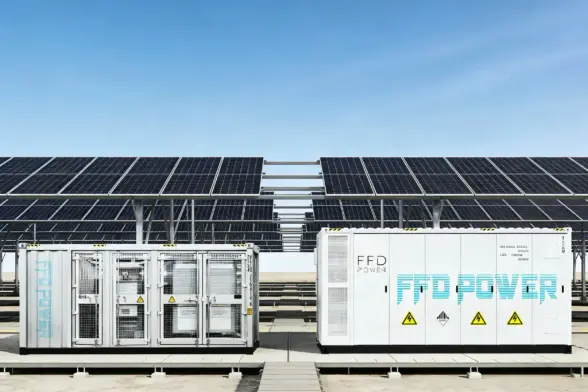
You can store 5MWh in a single 20' container BESS.
https://ffdpower.com/5mwh-bess/

That's similar to having 2000 tonnes of gravity storage with a 1000m shaft.

Further, because the UK is moist, most mineshafts will flood if not actively pumped. You're unlikely to find a dry 1000-metre-deep hole; 100 metres might even be a stretch.

(The energy needed to pump a tonne of water out of a shaft is the same as the energy stored by a tonne at the same depth ...)

5MWh BESS Container | 20ft Battery Energy Storage System

Discover FFD Power’s 5MWh BESS compact 20ft battery container designed for utility-scale energy storage. Flexible configurations, high safety LFP batteries, and scalable solutions for grid and renewable projects.

Turkey BESS Solutions Manufacture

@sheddi @bjn @BashStKid @ChrisMayLA6 @stekopf

I've just been doing the guzintas for sodium cell batteries and about 🇨🇦 $10k worth would give me a day's power on my worst, windiest, winter's day; a week or so in the spring or autumn. The temperature tolerance, cycle count and resource-friendlier chemistry is a big bonus.

I can get power at 🇨🇦 $0.03/kWh overnight, so payback vs full rates is still ~8 years.

With most of Ontario's power coming from wind, nuclear and hydro (90% at the moment), full-on DIY solar+battery remains something of a hobby choice. (And I'm still waiting for permission for it from the household planning committee. 🤔)

@TallSimon @sheddi @bjn @BashStKid @ChrisMayLA6 @stekopf The UK night unit price for people with an EV tariff is 4 times that, with the regular unit rate is around $0.46 CAD at the moment, so a very different story.

@sheddi @bjn @BashStKid @ChrisMayLA6 @stekopf
Gravity storages have their places in the mix. But regarding longevity and maintenance costs are IMO inferior to the pure lead-acid batteries we can install anywhere under the surface. The BESS and BEGS avaliable are so far LiFePO4 based. So at most a couple of decades in commision, dirty production, yet dirtier recycling.

That said, thanks for promoting _any_ alternatives to the fossil fuel "backups".

@sheddi @bjn @ChrisMayLA6 @stekopf Shafts and seams will indeed flood, left to their own devices.

One could use the heat differential to power heat pumps to drain/recycle the water, possibly augmented by thermoelectric couplings.

It’s probably simpler to design the lower travel of the winched loads to be submerged in normal operations. No effect apart from buoyancy on the load.

@bjn @BashStKid @ChrisMayLA6 @stekopf to compare, I have 2x 5kWh batteries attached to a wall outside my house.

@bjn @ChrisMayLA6 @stekopf Completely agree. But, on the positive side, very low-tech, hard to fail, minimal setup cost, and you wouldn’t stick to a one-tonne weight. Also mines come in multiples, never singly, so a cluster is quite a resilient thing. Taking Dinorwig off for maintenance is a much bigger problem.

Also the social aspect; it would make a change for socially deprived areas to get some longterm jobs and future cheap power from a community energy scheme.