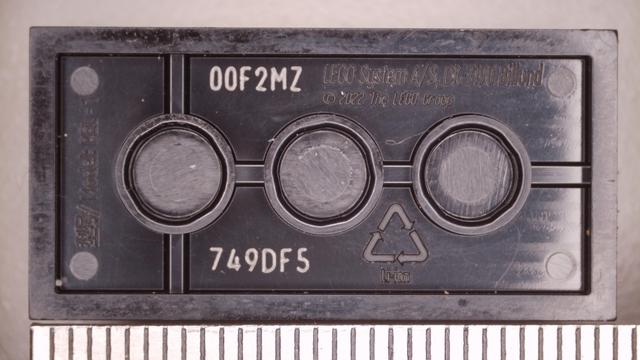
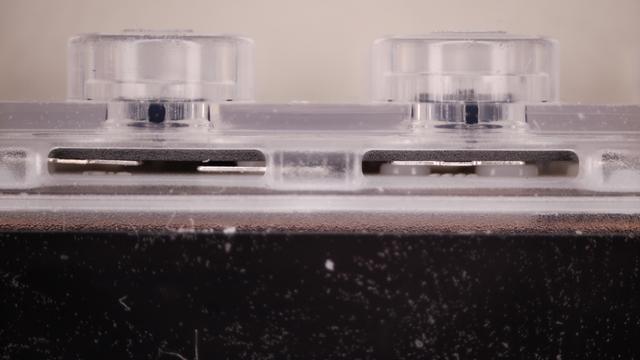
first impressions of the Lego smart brick, before I do any actual tearing down: wow, I forgot how good they are at working with plastic. the injecton molding remains impeccable, at least for this specific piece (I know about their recent QC issues elsewhere)

it's hard for me to look at the positively microscopic (I am literally using a microscope to look at it) "Li-Ion" lettering and think of anything but "showing off!"

(treehouse doesn't let me attach the full size images, you can grab them here: front, side)
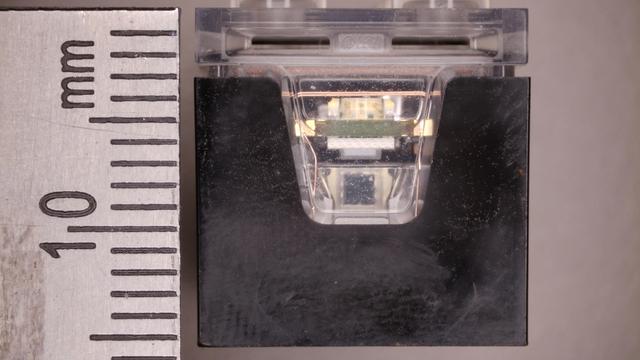
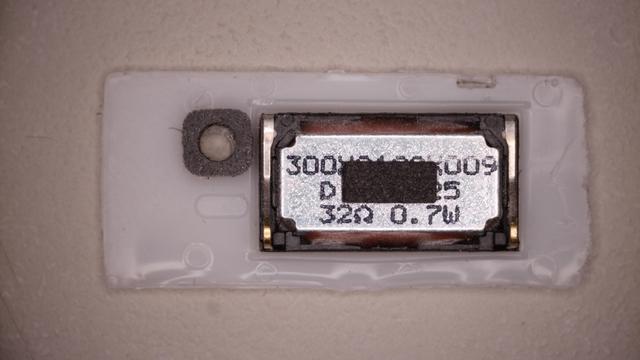
on the side, there are microscopic openings for the speaker to move air through. I would have really liked to be a fly on the wall in a meeting with the mold engineer who had to make this happen

original

I'm not yet sure how I'll open it up. I don't have a hacksaw (somehow... I should fix that), so my options are somewhat limited: it's either cracking or melting plastic. from what others have done I know I there's plastic welding all around the joined region.

okay I've decided on an idea: I will heat up the plastic to make it pliable and then cut it with a knife

as a knfe girl, this is my professional obligation.

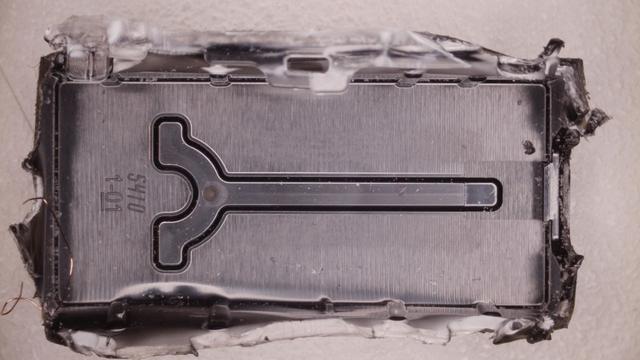
here's a video that shows in more detail the moldwork in the transparent plastic part
if you've never heard of anybody opening welded plastic this way, i can now tell you why: because it's a bad idea. until you heat ABS to the point where it flows (which you don't want here, as it'll make later teardown even worse), it acts rubbery. imagine cutting hot rubber. doesn't work

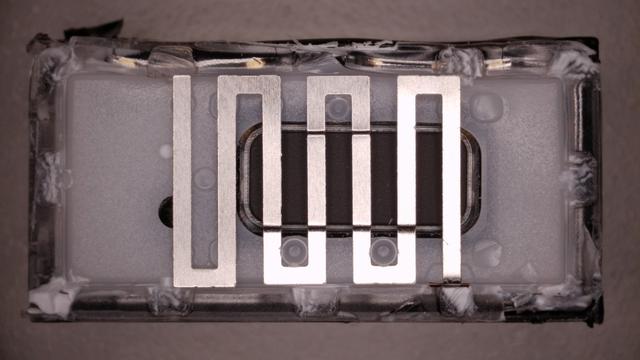
it did however let me lop off the top of it easily

this is I think a 2.4G antenna?

next step is sanding

yep that did the thing. probably should've started with sanding at the beginning.

it was somewhat more destructively than i wanted, but that's ok: i was trying to challenge my (incorrect) belief that sanding is always a tedious pan in the arse

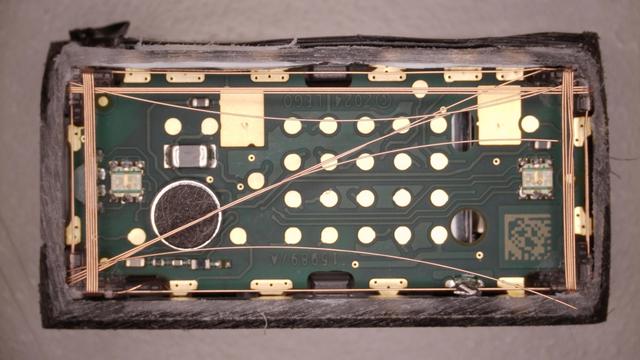
took it apart. there's a sort of a plastic "carrier" that gets manufacured first, then inserted into the final package that's welded shut
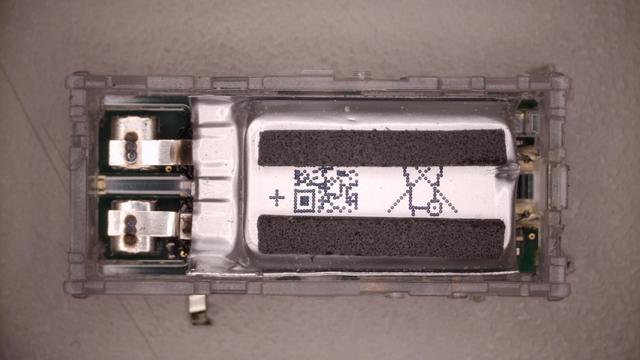
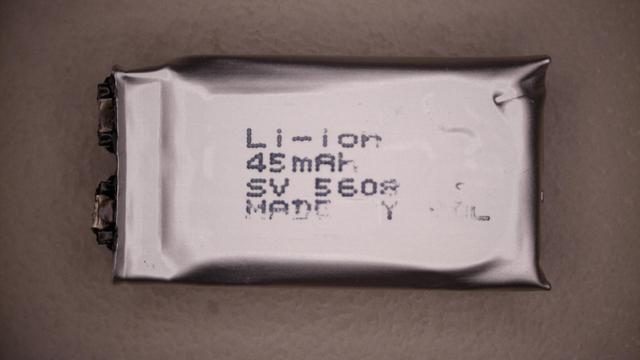
okay, i've extracted the firmware-bearing parts. this is a tiny 45 mAh battery. (part of the lettering was torn off by the glue it was attached with)

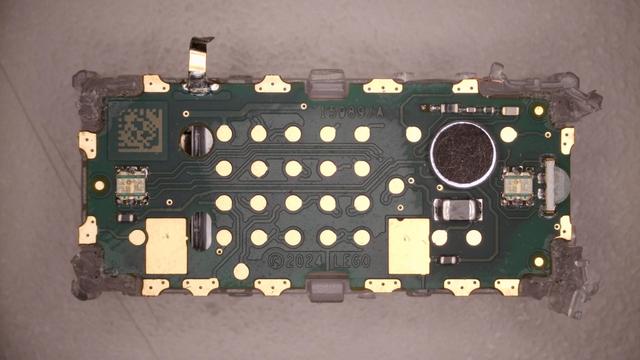
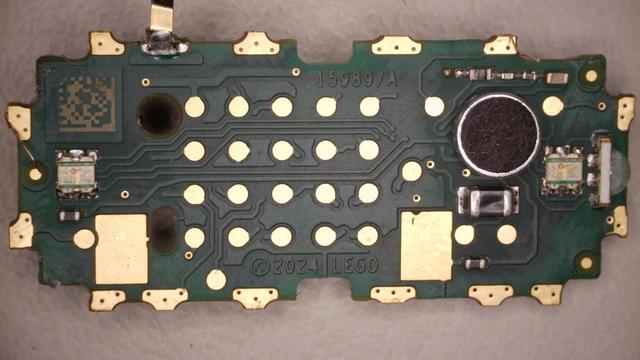
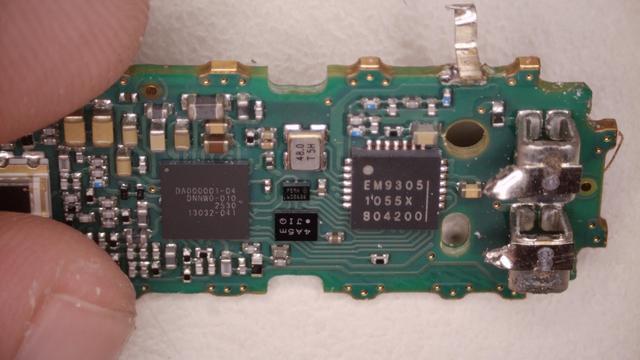
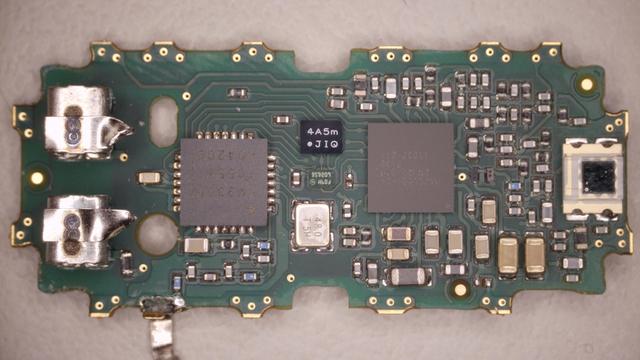
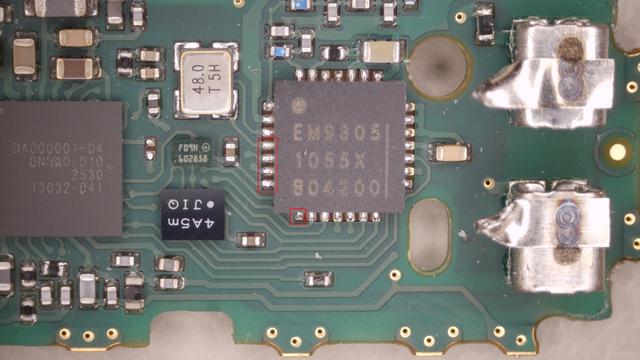
close-ups of the component side (well, the side with more components)

originals: 1 2

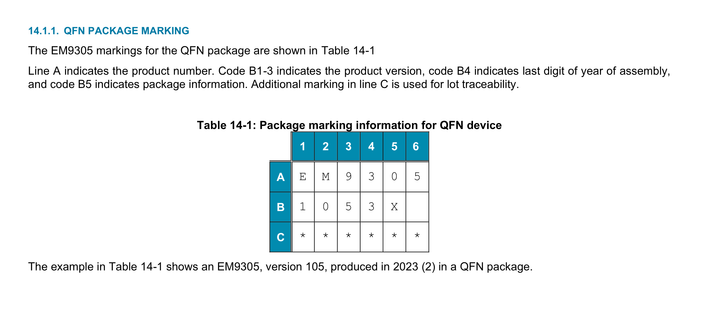
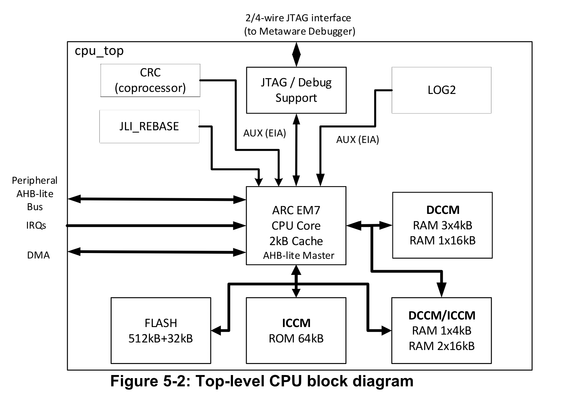
EM9305 is an em|bleu microcontroller in QFN
it has over half a megabyte of flash!
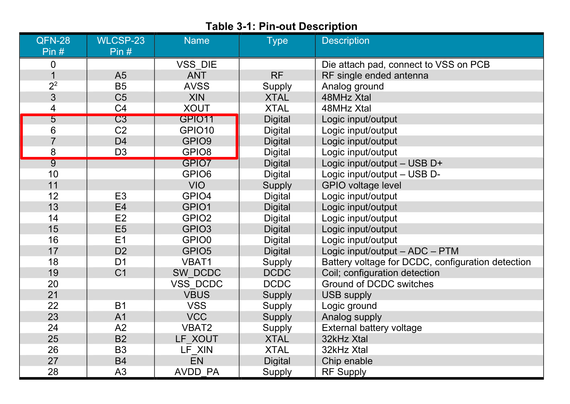
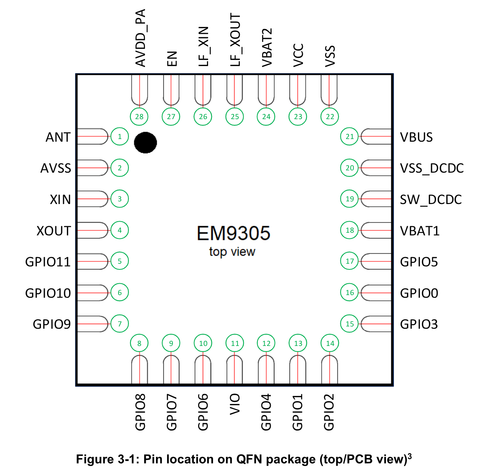
ok so this would be the JTAG pins
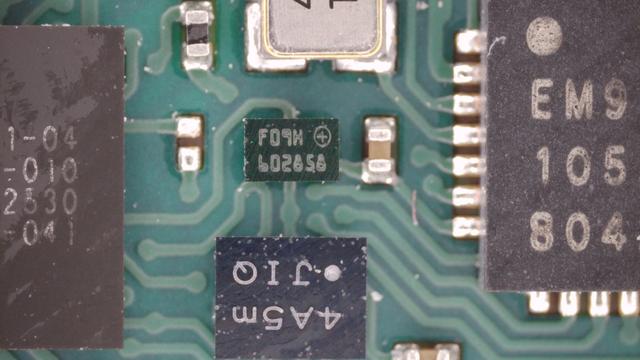
also, here's a close-up of the markings on the tiny WLCSP between the BGA and QFN

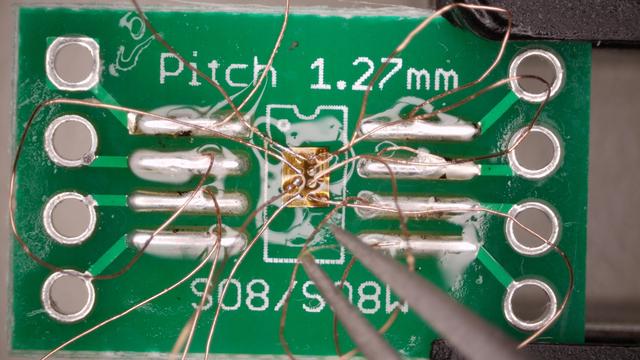
decided the next thing to do would be to dump the presumed Winbond flash WLCSP

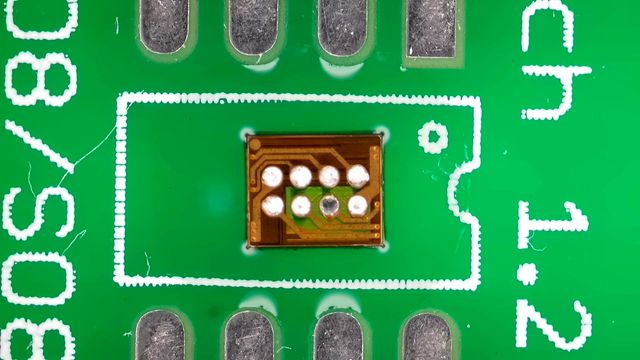
here it is mounted on a SOIC-8 pinout with a tiny bit of UV epoxy, like a particularly exotic dead bug

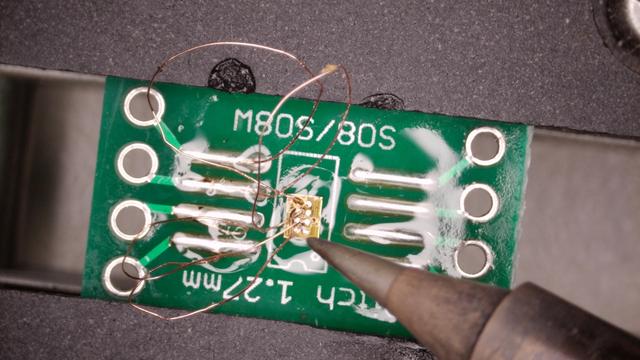
connected half of the pads

this is my first time soldering a 0.3mm pitch WLCSP, so it took me a bit to set up the workspace the way that makes it possible, but it's not too bad

finally done. no shorts and (as far as i can tell under mag) no opens
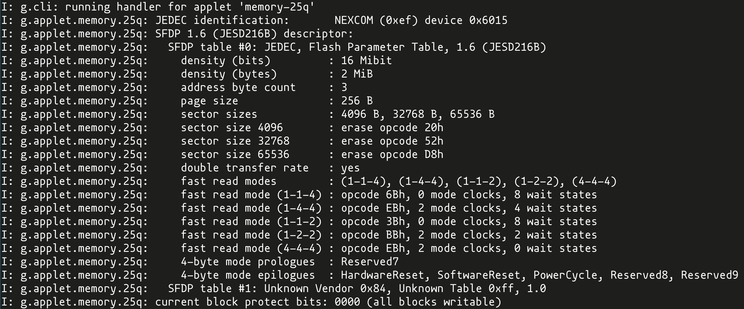
complete success
@whitequark What are you using to dump the chips?
Glasgow Interface Explorer

A highly capable and extremely flexible open source multitool for digital electronics

@whitequark @drwho oh boy i want one so bad, shame i don't have the time of day to use it though