
B-doubling down on electric trucks: The EV revolution is moving on from light to heavy vehicles, and doing so at an astonishing pace - overseas usage & current trials in Australia show they far outperform diesel on both overall cost & efficiency. https://www.thesaturdaypaper.com.au/news/economy/2026/04/11/b-doubling-down-electric-trucks
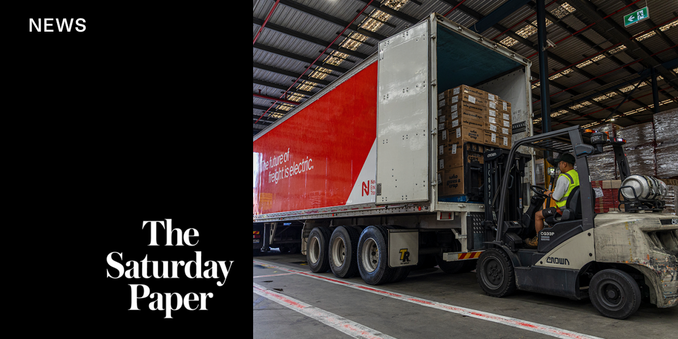
B-doubling down on electric trucks

Bridget McKenzie, the National Party’s leader in the Senate, was contemptuous. During an urgency motion on March 30 about the government’s response to the global fuel crisis, she fired up over suggestions that Australia should look at electrifying the country’s heavy vehicle fleet. “To hear the ridiculous contributions from the Labor Party senators, who somehow think you can hook up a B-double full of cattle, coming down from Rockhampton to Brisbane, and actually use an electric truck? Seriously?”

The Saturday Paper

@kcarruthers
The technology now exists to rapidly electrify all land transport. Government's key role is to support role out of heavy vehicle, and rural and regional charging infrastructure.

Key side effects of this approach not only include reduced dependency on an imported commodity, but also a reduction in shipping emissions (less shipping of oil), and increased productivity (in the transport sector).

@jwi @kcarruthers
Is the issue that the technology doesn't exist?
Or is the issue that fossil fuelled billionaires and the subsidies to them via the Australian government exist, and there's no sign of either changing?

Bloomberg: A country fueled by subsized diesel is running dry:

https://www.bloomberg.com/opinion/articles/2026-03-25/iran-war-a-country-fueled-by-subsidized-diesel-is-running-dry?srnd=undefined

archive: https://archive.md/ORsCL

@gusseting @kcarruthers
Subsidised fossil fuels is an issue. But, in last few years we have hit a point where electric trucks, buses and cars are on a total cost of ownership are cheaper than fossil fuel cars. The stumbling blocks include disinformation from the fossil fuel industry, and lack of heavy vehicle charging infrastructure.

However, I think it might be a while before truck charging facilities will be readily available in remote locations.

@jwi @kcarruthers
You're not answering the question:
Is the issue that fossil fuelled billionaires and the subsidies to them via the Australian government exist, and there's no sign of either changing? <--yes, that is the issue, and here is the information that backs that up from bloomberg:
https://www.bloomberg.com/opinion/articles/2026-03-25/iran-war-a-country-fueled-by-subsidized-diesel-is-running-dry?srnd=undefined
@gusseting @kcarruthers
Definitely for cars. For heavy vehicles, not so much. Upto the last few years its been technology, product availability, and raw economics. Trump and Netanyahu will probably accelerate the change and counter misinformation.

@jwi @kcarruthers

"Upto the last few years its been technology, product availability, and raw economics. "

I respectfully disagree:
At Chile’s Collahuasi mine, electric dump trucks cart rock to the processing plant.
At Vale SA’s S11D in Brazil, electrical machinery crushes ore in the pit, cutting emissions by three-quarters and costs by 15%.
Canada’s Macassa gold mine, 80% of ore is dug by electric machines.

Indian farms, some 13% of irrigation pumps are solar-powered.

@gusseting @kcarruthers
Mines have the advantage of being physically small and the operator has to provide all infrastructure. Many plants have used fixed electricit motors for decades. Replacing diesel generators was a no brainer even for climate change deniers due to simple economics.

Solar powered small devices, including irrigation pumps have grown over many years.

Land transport requires appropriate range, properly spaced fast charging infrastructure. Its only in the last few years that vehicle range and charging times matched the legal requirements for maximum driving time and minimum rest time.