Hey #Australia #AskFedi - if I want a CO2 monitor at home, do I just go ahead and buy an aranet4 or are there other makes and models I should also consider? Where should I buy one from?

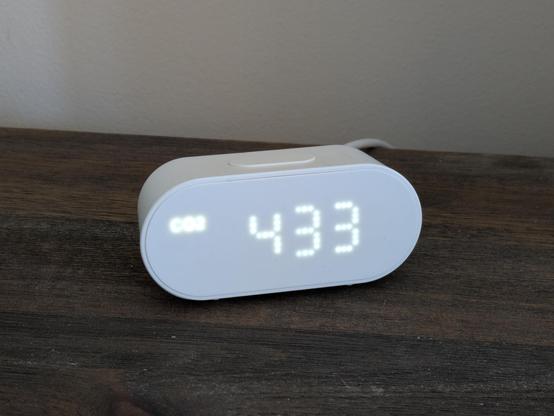
For a home #CO2 monitor, I ended up buying an #IKEA #ALPSTUGA for AU$50.

tl;dr: If you just want to keep an eye on relative CO2 levels in your home, this is the thing to get. It's only accurate to within 100ppm-ish, but that's enough for my use. It also does PM2.5, humidity, temperature, and the time - and the display dims very intelligently at night, making it an excellent bedside clock. Recommended.
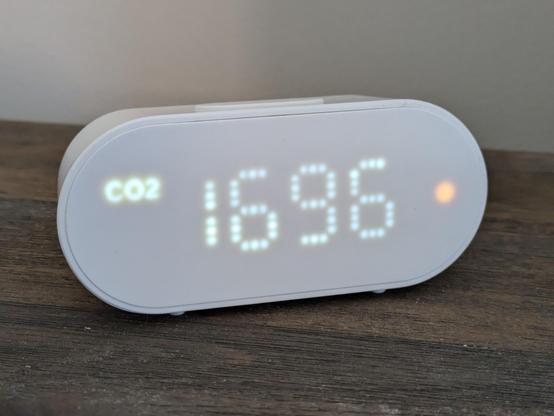
One of the designers of the STCC4 sensor package used in the ALPSTUGA showed up in a Reddit thread I saw while researching to explain how it works. It measures the thermal conductivity of the air, which is affected by CO2 concentration, and corrects for humidity and temperature changes, so it's not directly detecting CO2 itself. But this is still more accurate than cheaper sensors that measure concentration of VOCs to measure CO2 by proxy. https://old.reddit.com/r/homeassistant/comments/1pjpazi/ikea_alpstuga_air_quality_monitor_running_great/ntfzers/

The ALPSTUGA can connect to a Matter network, so it can do some smart home stuff, but Matter hubs are 2-3x the cost of an ALPSTUGA, so my research into that aspect of it stopped right there. My eyes also glazed over reading the instructions to turn a Raspberry Pi into one.

It's weird and annoying that my phone can detect its existence but not actually connect to or do anything with it without additional hardware. That's not very "smart" to me.

My two biggest complaints about the ALPSTUGA are that it has no internal battery whatsoever - if you unplug it to move it around to a different room, it immediately loses the time and has to be reset - and the button on top to change the display mode is very loud and clicky and echoes in the plastic case, making it sound loud and cheap (especially loud in the dead of night if I'm sleepy but curious). That's it.

It's built down to a price but actually does what it says on the tin very well.

If either of the environmental readings go over a certain level (1000 for CO2, 15 μg/m³ for PM2.5), and it's showing the time, a little orange dot appears warning you that something's awry. If you leave it on the clock mode, you can use this as a simple warning to open some windows. Or to stop exhaling directly at it.

Also every photo I take of this thing makes the display look super blurry, but it's not - that's just my phone blowing out the bright colours. It's much sharper in real life.

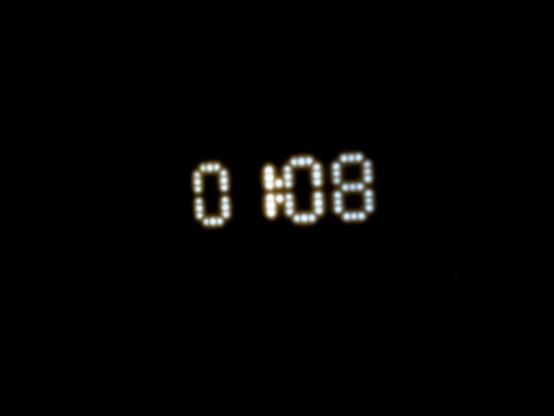
As an indicator of the built-down-to-a-price thing, different numbers display at different brightnesses on this thing - 0 and 8 are dimmest, 1 and 7 are brightest, because it lights a different number of LED elements to display each number. This is mostly visible at night, and makes zero difference to actual usability - just thought I'd note it as something I noticed as it says something about the internal design.
Anyway - if you want a CO2 sensor for home, I do highly recommend an IKEA ALPSTUGA. Or several - you can buy a few for the price of a single aranet4 if you actually want readings in different rooms. 🏁

An unexpected result of monitoring my home air quality is discovering all the things that ruin it.

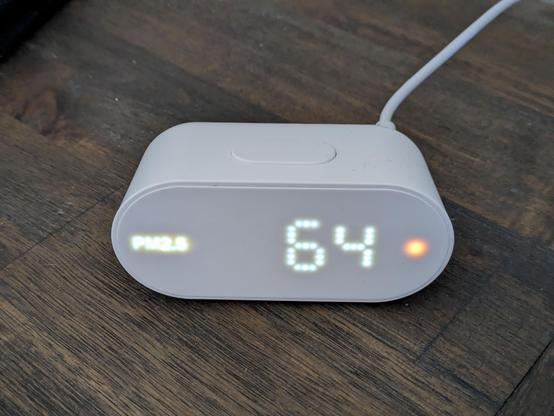
This is a PM2.5 reading of 64µg/m³ in an upstairs bedroom, half an hour after cooking breakfast, and it only started dropping once I opened some windows.

The Australian CDC considers a 1-hour average reading of 50-150µg/m³ to be "very poor" air quality and in the range where folks sensitive to air quality should "take action". https://www.cdc.gov.au/system/files/2025-10/enhealth-guidance-pm2-5-air-quality-categories-and-public-health-advice.pdf

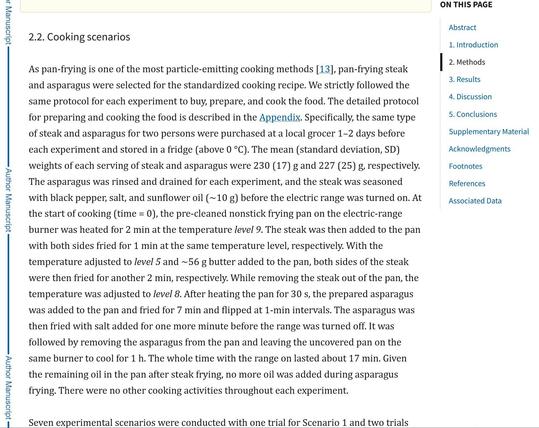
If you start reading enough about #AQI, you will start to see some rigorously scientificised recipes - this article, for example, suggests ensuring your steak (230g) and asparagus (217g) ingredients are within one standard deviation of their specified weights. https://pmc.ncbi.nlm.nih.gov/articles/PMC8224830/
Further "I bought a CO2 monitor" findings - my poorly insulated townhouse bedroom sits at around 650 overnight with external doors and windows shut (against a background reading of ~450 with cross ventilation), my partner's apartment bedroom hits 1300 overnight. Strong advertisement for good insulation but also why mechanical ventilation with heat exchangers are a good idea in modern buildings.
Also yesterday was particularly cold and rainy, so I did have everything shut, and after cooking dinner downstairs my bedroom Alpstuga read close to 1500. At the same time, I tried to sit down and work on my CV a bit, but found I basically couldn't think constructively at all, so opened some windows and by the time it read 600 or so I felt like my brain cogs could turn again. I'm now *looking* for differences and am biased, but that makes sense to me.
@timixretroplays I would never have thought to look in atmospheric science methods sections for meal recipes. Although I don't know if I trust this one, seeing as they cooked a steak in a nonstick pan.
@iris ssshh, you don't want to draw the ire of the stainless pan enthusiasts
@timixretroplays I wouldn't call myself an enthusiast, but... I only have a ceramic coated pan for eggs. I hate scrubbing eggs off the steel pan.