 sblank
Nowhere Is Safe

The first part of the parabellum quote matters - we have to let the people who want peace prepare for war.
The Smedly Butler book was eye opening to read for me.
Diplomacy and trade works wonders when the enemy still wants you to buy things.
Sanctions work when they've got things to sell (and raw materials to buy), not bombed out craters where their factories were.
Si vis pacem ...
aposiopesis is followed presumably by some latin phrasing of prepare for war?
[edit, found the real version https://en.wikipedia.org/wiki/Si_vis_pacem%2C_para_bellum ]
adapted from a statement found in Roman author Publius Flavius Vegetius Renatus's tract De Re Militari (fourth or fifth century AD), in which the actual phrasing is Igitur qui desiderat pacem, præparet bellum ("Therefore let him who desires peace prepare for war").

I often see these angles, how we should have prepared better or attacked this instead of that, or the unexpected strategy from the adversary. What about not bombing? The best safety trick the US can use is not bombing others.
Well yes, and actually instead of wasting billions creating understandable cause of hate, this could be injected into domestic social spendings, and there would probably still be a lot staying on the table to throw in humanitarian endeavors around the globe creating love through so called soft power.
The US is a country of violence and war. Founded from a war, massive civil war, almost perpetually at war for the last many decades.
Military spending costs a trillion a year (Trump wants 1.5 trillion). It’s big business and makes some people very rich.
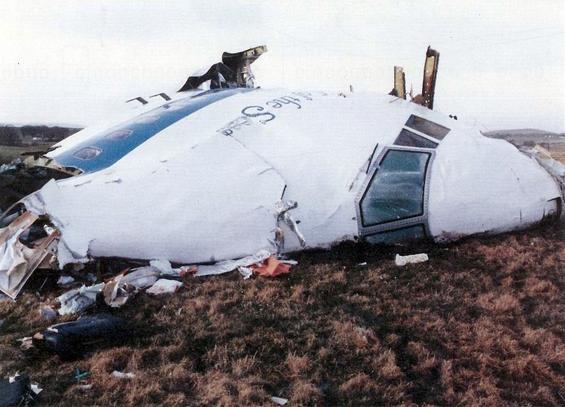
Who did the US bomb before 9/11? Who did the US bomb before Pearl Harbor? Who did the US bomb before its embassies in East Africa were attacked? https://www.fbi.gov/history/famous-cases/east-african-embass... Who did the US bomb before https://en.wikipedia.org/wiki/Pan_Am_Flight_103 ?
I would love for nobody to bomb or kill anyone. Did Ukraine bomb Russia? Is Taiwan bombing China that declares it is going to take Taiwan by force?
There isn't a single conflict in the world today where I can see that someone can just say "we're going to stop" and they'll be safe. There is always something more to it. If Ukraine says we'll just stop attacking Russian soldiers is that war over? If Russia says we'll just stop attacking Ukraine and stay where we are is that war over? Is there any other conflict where the answer is simply stop and it'll be fine?
> Who did the US bomb before 9/11?
Iraq, during the Gulf War.
> Who did the US bomb before Pearl Harbor?
Japan, though the US didn't bomb them, it instituted an oil embargo and asset freeze.
> Who did the US bomb before its embassies in East Africa were attacked
Iraq, during the Gulf War.
> Who did the US bomb before https://en.wikipedia.org/wiki/Pan_Am_Flight_103 ?
Tripoli and Benghazi, Iran Air Flight 655.
I don't understand the purpose of these questions. Were you thinking the US was just minding its own business and some bad guys came and attacked it?
The US are also the major enabler of Israel's colonial expansion and ethnic cleansing of Palestinians. This was clearly expressed by Bin Laden himself as one of the motives behind the 9/11 attacks.
> Were you thinking the US was just minding its own business and some bad guys came and attacked it
As I remember, this was exactly the way the US explained 9/11: "they hate us for our freedom".
There is always an excuse. US presence in the middle east. US presence in Europe. US meddling with Ukrainian elections. NATO's expansion. Colonialism. Oppression. Capitalism.
How about we extend the idea of not using violence to everyone, state and non-state actors, not just the US?
Why does Iran need its missiles and proxies and 60% enriched Uranium? What about use of violence internally, is that ok?
The US did enable Israel's withdrawal from Sinai when peace was signed with Egypt. So clearly an enabler of colonial expansion. It also enabled the peace process with the Palestinians that led to the handing over of territory including Gaza and areas of the west bank to Palestinian control.
You asked "who did the US bomb before 9/11" and you got the answer. Now you're arguing that they shouldn't have reacted even if the US bombed them before (calling it "an excuse")?
As for the peace process with Palestinians, it was always a sham. The US (as it's evident now to many) are entirely unable to apply any sort of pressure on their "ally". What they've done is just buying time for Israel to expand its colonisation under the temporary pretense of some "peace process".
It's Iran. When the choice is "let Iran have nukes" or "bomb Iran", you bomb Iran every time. One North Korea is already one too many.
Iran has been the driving force behind a lot of instability in Middle East for decades now, and not at all shy about it. They support armed proxies and radical insurrections in the entire region - many of them internationally acknowledged as terrorist organizations.
I'm not at all mad at the US government for deciding to get rid of Iran's regime. Long overdue, the moment was picked reasonably well, the military has performed well. The broad scope planning, however, simply wasn't there. What transpired reeks of Russia style "we only planned for the absolute best case scenario, why didn't that scenario happen?"
> When the choice is "let Iran have nukes" or "bomb Iran", you bomb Iran every time.
There was also the choice of “Iran let us verify that they are not making nukes, and in return we remove economic sanctions from them”. It was called the JCPOA, and according to non-proliferation experts it worked. And then on the 8th of May 2018 Trump unilaterally withdrew from it.
Let’s not pretend that there were no other options.
Hmm...
Interestingly one does not look at the solutions to de-escalate conflict. Despite the proxy wars we've had a relatively peaceful world since WW1/WW2. Please humor me here, I'm not saying the world is horror free.
The emphasis I would hope would also be for improved negotiation tactics, better resource sharing and goal alignment between groups of people.
Why is it that we can dream up more conflict but not peaceful scenarios? Fear is a better attention grabber than the slog of compromise and mutual understanding.
Edit: Fell into the trap of commenting on politics. To an actual curiosity technical position. Has anyone seen any good content on living underground from an energy efficiency point of view?
The US spends more on its military than the next 10 countries combined.
When all you have is a hammer…
I mean we could just go back to talk softly and carry a big stick. There are options between pacifism and boisterous rabble rousing and picking fights that don't particularly need to be fought without good plans.
The theory behind the US having a large military is that it acts as a sort of fleet in being - that the US prefers other methods of engaging with countries, and having a stronger military precludes other countries from engaging militarily. In turn, having stable global relations and protected global trade provides the US with a huge economic boon to fund its large military.
That's the theory anyway - our Idiot King and his idiots have completely missed the point of the US military existing and are using it as a primary method of engagement, which is causing the economic boon used to fund the military to evaporate.
As an aside, it's not a huge issue, but China's military costs use different accounting than the US, and seem lower by comparison. Apples to apples, China probably spends about half what the US does on military.
> the US prefers other methods of engaging with countries, and having a stronger military precludes other countries from engaging militarily
If the US has such a strong military why are they always begging European countries to help them with their various totally-not-a-war "actions", like most recently in Iran?
Last time the UK got into something in the Middle East with the US we lost more people to "friendly fire" than enemy action. There's no real appetite for that any more.
> Apples to apples, China probably spends about half what the US does on military.
With fours times the population
> Why is it that we can dream up more conflict but not peaceful scenarios?
Sadly, war is often a driver of economic growth. WWII pulled the US economy out the Great Depression and transformed it into one of the most prosperous in human history. I'd argue that the proxy wars the US has been waging largely exist to satiate a military industrial complex that is focused on growth. Hard to grow when your business is war if there are no wars to fight.
And I'll wade into political waters. The US government has no problem waging war because it's not unpopular enough of an issue to threaten an administration. We're spending $1B a day now to fight Iran but we somehow can't find the political courage to improve healthcare or hunger here at home.
That's a property shared by any large scale government spending.
The difference between pouring 80B into a war and pouring the same into infrastructure is that one gives you a more developed MIC and a lot of munitions, and the other gives you... infrastructure, and construction industry.
An big part of this is that apparently, any president can unilaterally decide to go to war and spend $1B per day destroying things, but building infrastructure for Americans requires the agreement of 60 US Senators.
Pre-emptive strikes are “national security”, but ensuring nutritional food for children in schools, safe bridges and potable water, and healthcare are not “national security”.
Look what Biden had to do to try and get Americans a piddling amount of paid sick leave and paid parental leave. And still 60 votes couldn’t be mustered. But if he wanted to bomb another country to the stone age, that was well within his capacity.
I think the reason we can imagine conflict easier than peace is pretty structural. Wars usually happen because of disequilibrium, and we're sitting right in the middle of a big one.
The world order we know was built by and for the US when it was the uncontested superpower. Thats just not the case anymore. Countries that spent decades being the West's cheap labor pool have risen up, industrialized, built real militaries, and they are not going back to where they were. But the West isnt going to voluntarily get poorer to make room for them either. Both sides have real competing interests, this isnt some misunderstanding that better diplomacy can fix. Its a genuine redistribution problem.
Thats why peaceful outcomes are so hard to picture. They require everyone to accept losses and nobody is lining up for that.
I don't think there are major unresolved economic tensions between US and Iran or the likes. US isn't, somehow, mad because Iran or Venezuela are suddenly very rich and prosperous and independent - that simply isn't true.
The closest to your dynamic would be that between US and China, and those two aren't at war as of yet. Iran is vaguely supported by China, but it's a low level of support, and it isn't China's proxy.
Globalization offered the model for this. When the economy is globally linked there is more pressure for stability than conflict. I think that theory still holds. The fallout of the last 10 years is that the distribution of the wealth created in that system has not been even at all, and we are seeing huge wealth gaps. Jobs were redistributed to poorer nations and lost in a lot of wealthier markets.
If nations can solve wealth and job distribution under globalization then I think we return back to peaceful times. The current problems stem from people getting left out and then voting in leaders who do not understand diplomacy or the global market at all.
I'll add to this by saying that globalization works as well as it does because the average person would suffer dramatically from a major war and the resulting breakdown of global supply chains. People who are wealthy enough to move anywhere in the world (including to a military-grade bunker somewhere remote like New Zealand) if their current domicile is negatively affected don't have as strong of an incentive to maintain peace.
Against subsonic, low supersonic threats, short / medium term it's still about magazine depth and interceptor economics and sheer attrition math, i.e. PRC can build cheap interceptors at scale... has magnitude more targets due to sheer size, many of which are hardened, entire underground civil/mic infrastructure etc etc.
Physically, there is nothing preventing near 100% interception rates on subsonics and low supersonics. But once high end supersonics proliferate, things get spicy.
> what if the Army could cut and cover 100 meters of precast tunnel segments in a day
If you have the precast tunnel segments to do that why wouldn’t you just plop them down on the ground? What benefit does cutting and covering provide?
Also how would you protect your construction crew and construction supply chain as they are slowly plodding along 100m a day?
Once built, could this cut and cover tunnel be disabled by hitting it anywhere along its length with a “bunker buster” amunition? Or a backpack full of explosives and a shovel? Or a few cans of fuel down the ventillation and a lit rag?
And if the answer is that you will patrol the topside to prevent such meddling, how do you protect your patrols? And if you can protect them why don’t you do the same for your logistics?