 powera
Many African families spend fortunes burying their dead

> Modernity is about not doing what your family says
The flip side is that rich and modern people feel lonely and sad that they don't have strong social bonds.
That is more of a self inflicted wound than an intrinsic aspect of modern society.
I wish it was self inflicted. Instead, it seems to be an artifact of modern society. I posted “How to Be Alone?” exploring this issue somewhat:
https://news.ycombinator.com/item?id=47296547 690 points, 500+ comments.
I’m not trying to get pity, but it would be mistaken to say that I brought it on myself. My wife didn’t bring it on me either. We simply eroded over time. But when marital bonds erode, it turns out they take family bonds with them; or at least, her side of the family. My side isn’t much, so hers was my primary source of social interaction.
This is a self inflicted wound in the sense that I could have formed a lot of social bonds with people other than my wife. And I tried to, sometimes. But when you’re spending 20 years with one person, it’s hard to make time for anything else, especially if you want to do good work (in the researcher sense).
So it’s more of a “pick two: family, friends, work”. I went the family and work route. I don’t regret it, but it means that now all that’s left is work, which can be a hollow existence.
Luckily, modern society has a surplus of ways to help motivated people form social bonds. Once I get my car back, I’ll be going to the local therapy groups, one of which is wood crafting. Random hobbies like that with random people sounds fun.
The thing to avoid seems to be dating apps. Jumping from one relationship into another is universally known as a bad idea. I’m hoping that casting a wide net (going to groups, reading clubs, DnD, or other activities) will fill the void.
Honestly though, what helps the most is that I have a daughter. She’s almost 3. I’m very happy we had her, and just remembering that she’ll have a nice life helps me appreciate my own.
Modern society makes it easier than ever to isolate yourself. I spend my days sitting in a house alone, having Amazon drop off USB-C cables, with my biggest social interaction of the week being the door to door salesman (who, ironically, is trying to sell me a door) that’s coming by tomorrow. That’s the default state; you have to push back against it, and that’s hard. But it’s probably mistaken to say that those who go with the flow are suffering from self inflicted wounds. Societal flow used to be towards social groups (church being the most obvious example) instead of paths that end in loneliness.
Hello friend. I responded to your post and have thought about you since. Yet had you not referenced your post, I would not have made the connection.
It's too bad there's not a way to more easily recognize people on this site, a way to build more community.
[dead]
Speak for yourself.
Ok, so better to be poor and backward, eh ?
Basically my whole family have signed our bodies over to the local medical school. They make all the arrangements and pay for everything as soon as they're notified upon death. They'll normally give you the ashes upon cremation after a year or so, but personally I've given them permission to completely skeletonize me and keep the skeleton indefinitely.
This helps society by helping student doctors learn, and it removes all funeral hassles and expenses. We can still do more low-key memorial ceremonies without needing a body. I realize this path doesn't work for everybody, especially those with certain religious beliefs, but we all just love the idea.
And for folks that do want to bury the body, it can be done way cheaper than the funeral industrial complex would have you believe. Our church keeps a simple coffin on hand that the family can use at cost. And we have folks who will prepare the body and bring it to the church. The only part we don't usually do is dig the grave. Cemeteries usually include that in the cost of the plot.
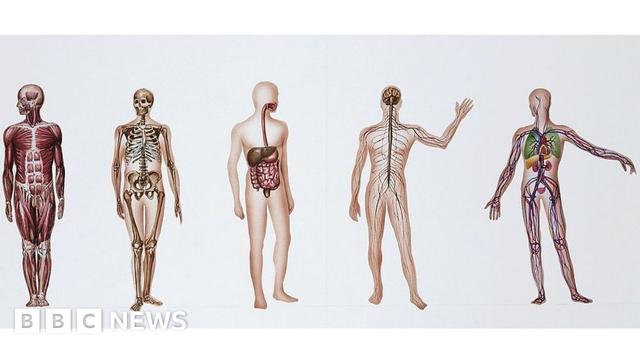
This is what both my parents and myself did. When my mum was diagnosed with Stage 4 melanoma, it was one less thing to worry about arranging and trying to find money for.
She went from diagnosis to death in two months so things were a bit disorienting and just getting a RESPECT form (aka DNR) completed was such a struggle as everyone I spoke to had no record of my previous conversation with the last person I spoke to.
When mum was admitted to the hospice, despite explaining the arrangements we’d made and showing them the paperwork, it was only by chance that one evening I happened to overhear a nurse mention that mum had ascites, which is one of the few things that disqualified her from being able to donate her body. I googled it and realised we would need to arrange and pay for her body to be collected, stored and cremated.
She died the next morning and luckily I was able to get that sorted about 2 hours earlier. I suppose the point I’m trying to make is that if you go through the process of arranging to donate your body to a teaching hospital (which you must do yourself ahead of time) don’t assume it’s on medical records or that anyone will advise you that the body isn’t suitable for donation for any reason. Like all NHS-related things in the UK, the systems are breaking or broken and so are the poor staff, so you need to advocate for whoever needs it and never assume what you said one day will be passed on to the next shift.
I'll just mention that when my mom was starting to deteriorate, my dad hired a healthcare advocate and set up legal authorities such that if he was incapacitated when mom needed medical decisions in hospice, or logistical details about funeral arrangements, the advocate could represent what mom and dad had discussed prior as their wishes.
Then, a year or so after my mom passed it became clear dad was heading that way, and he set up the same arrangements with the same advocate.
It was a great decision. The advocate shielded the family from a lot of unpleasant details, allowing us to focus on spending as much quality time with dad in his final weeks. In particular it was a huge benefit for my aunt, who's the oldest surviving part of that branch of our family, was very close to my father, and struggled through severe emotional turmoil in the situation. Without that advocate and dad's prior wishes being made very clear, she would have felt duty bound to try to run his cremation and remembrance personally in a way that would have been even more horrific for her.
So for anyone who is facing these situations on the horizon, I strongly suggest looking into something like this. Having a 3rd party that isn't the hospice staff, and that isn't a relative in emotional duress, was fantastic. The advocate dad chose previously was managing director of a care home, and switched to doing advocate work as a sort of soft retirement. So she knew in detail how all of that world works and was excellent at getting stuff done for dad.
This article seems to establish that kinship leads to the failure of wage growth and ultimately wealth, people will hide their wages because people will ask for money. This seems like the issue rather is is that wealth accumulation in sub-saharan africa is limited to a small subset of population, I don't think this wealth tax by family members exists when you have a larger group of individuals making more money.
You can observe this in the US, and presumably in the rest of the world, when wealth is concentrated to individuals, your family will probably ask you for money. The difference is here, there is less income inequality and more people have the ability to make more money.
I do like the look into funeral culture, but I don't think this assumption that kinship and family-peity is the cause of the lack of economic mobilty.
This is the most insightful comment in this thread. Unfortunately Oks decided to use a clickbait title that made people jump to conclusions.
The difference is that it's pretty acceptable for you to reject family requests for money, it doesn't make you a pariah and being a pariah doesn't carry the same consequences when non-family institutions govern society.
The article spends a lot of time belaboring this point: you don't have to do what your family asks you to do in developed countries. On the other hand, becoming outcast from your family in a kinship-dominated society means you have nowhere else to turn to which is enormous pressure.
Ghana's GINI index is only a couple points higher than the US (43 vs 41), and the same as Mexico.
I don't think wealth inequality explains this at all. But what rigid social institutions of any kind tend do is inhibit mobility. Moreover, kinship groups like this tend to lock-in relative wealth by lineage--the wealthiest family of a kin group from 3 generations ago will be much more likely (relative to other cultures) to be the wealthiest family 3 generations from now. Greater mobility means productivity increases faster, which raises absolute wealth for everybody even if relative wealth disparities across the entire population remain constant.
The factual material about funeral spending costs is very interesting, but when it gets into "Kinship societies are wealth-destroying societies" it seems rather… unsupported? That's a sweeping statement that actually requires understanding the whole picture, and the whole picture is not being presented. Is there reason to think the author truly has all the context to make these claims?
>Kinship societies are actively hostile to economic growth, because economic growth undermines the basis of kinship: that is why kinship societies demand constant, visible sacrifices of wealth—funerals being the most spectacular—that make it extraordinarily difficult for any individual to accumulate capital, reinvest their assets, and pull ahead. The funeral is a window into a system of wealth destruction that serves, above all else, to keep people poor
This reasoning is flawed. Consumer spending is not "wealth destruction" -- who makes the fantasy coffins? Who prints the banners? Local businesses!
Ghana is sitting at a 5.6% GDP growth rate; for reference developmental success India is at 6.5%. Ghana's GDP in 2000 was $5B, today it's $82.B. Its per-capita GDP has more than doubled in the same time period.
> Consumer spending is not "wealth destruction" -- who makes the fantasy coffins? Who prints the banners? Local businesses!
This is the parable of the broken window [1].
[1] https://en.wikipedia.org/wiki/Parable_of_the_broken_window
