RE: https://thepit.social/@peter/116376219055579156

I know a lot of people, in software and otherwise, who are feeling things along these lines.

Hold on, whatever tools you’re using, just hold on to your sense of purpose and meaning. There are a lot of forces at work in this world that want to rob you of that. Your feeling of losing that is not recognition of some new fact of our reality; it is you experiencing a psychological weapon.
One advantage of being an artistic weirdo who makes completely commercially non-viable music is that I have a •lot• of practice forging that sense of purpose and meaning for myself when the world is aggressively not handing it to me.

Software development has been coasting on a wave of profitability / employability for several decades, and as a discipline perhaps has an underdeveloped sense of intrinsic purpose. Now is a good time to for us to redevelop that as a community, regardless of future job market prospects.

Tips I can give you from my experience as a musicial weirdo if you’re looking to redevelop a sense of intrinsic purpose and meaning:

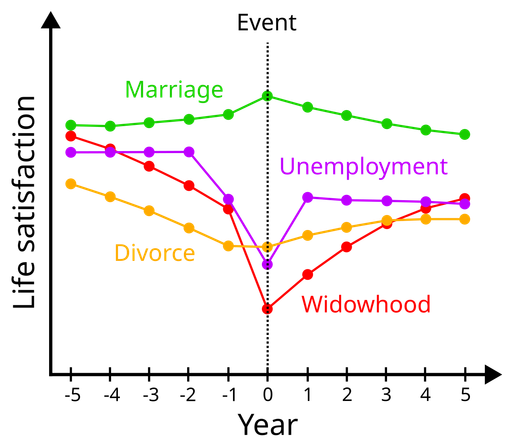
Beware of leaning on extrinsic validation (winning a contest, getting a grant, getting a job) for your psychological well-being. Those things may be important for practical purposes, but psychologically they are all empty calories.

Three •good• sources of purpose and meaning in your work that can sustain you:

- your own sense of satisfaction in your work
- sharing work via meaningful, sustained human connections
- the sheer joy of making and doing

A particular dissonance in my musical life is the aggressive non-interest of the world in my music in competitive circles (commerce, grants, whatever) and the warm, passionate enthusiasm it receives when I share it with people in person.

What’s worked for me: creating contexts of joy and mutual support where I can share with people — not just share generically in general, but sharing with specific actual people where there is a human relationship underlying the sharing — and then sharing.

These contexts by and large don’t just exist on their own; we have to •make• them. It’s not a thing you can just decide to do and then it’s there. It’s damned hard.

Software folks should pay more attention to the musicians and artists who are creating artistic spaces: neighborhood festivals, house concerts (whether “salon” or punk band in the basement), converted warehouses, street art, that kind of thing. Watch how artists on the margins don’t just •look for• space, but •create• it — and how it’s rooted in community. That’s a model to follow.

My piano teacher — a lifelong professional who’d played Carnegie Hall and had one of his trio’s recordings featured in…Time magazine or something, I forget — said to me in his 80s, “I think I’m finally learning to be a true amateur.”

https://mastodon.ie/@lexiconista/116376590498767397

Michal Měchura (@[email protected])

@[email protected] I've rediscovered programming for fun. For the first time since I was 14.

mastodon.ie

Here’s an attitude that can nourish and preserve.

https://hachyderm.io/@benjamineskola/116376642565704885

ben (@[email protected])

@inthehands One positive for me, I think, in the recent wave of nonsense, is that it’s sharpened my sense of what matters — that I actually enjoy doing it and being good at it.

Hachyderm.io

Tech jobs are highly cyclical and lots of the gen AI stuff is ridiculously overhyped, and I’m hopeful that the wheel will keep turning and the professional prospects of software developers will improve again…assuming human civilization survives, that is.

But what I said above applies regardless. We should all be doing this meaning-making work all the time, even in the best job markets. In fact, that work is a part of •making• human civilization survive.

I suppose since I talked about my life as a musical weirdo, I should link to it! I don’t have a Soundcloud; I have a completely bespoke personal web site I made from the ground up because of everything upthread.

Something dreamy and old-school:
https://innig.net/music/inthehands/brahms-ballade-10-4

Something dreamy and new-school:
https://innig.net/music/scores/words/

Something with a long dramatic arc:
https://innig.net/music/albums/brokenmirror/

Brahms Ballade 10.4 – In the Hands – Music – innig.net

@inthehands Just browsing through, and I note your Chopin 28/4 is from twenty years ago now; I wonder if your interpretation would change if you were to pick the piece up again? Don't think I've heard it with quite that denouement before.

(Currently working my way through 28/15 [Raindrop] myself, it's slow going...)

@Two9A
I don’t think my interpretation of the E minor prelude has changed significantly since I first learned it circa 1995. (Some of the others on the site I play quite differently now!)

I’ve read through the Raindrop but never properly learned it. Here is a video of my teacher playing it in his home, well into his 90s at that point:

https://www.youtube.com/watch?v=RTYbF9u4T_c

Raindrop Prelude

YouTube
@inthehands Don plays it wonderfully, and with such efficient low-movement attack. And I might have picked up a hint or two on how to tackle the last bars of the C#m section; thanks on both fronts.
@Two9A
I love those videos of him in his later years. He doesn’t have the technical agility of youth (compare to https://innig.net/music/albums/betts-dimensions/#betts-dimensions-liszt-mephisto-1) and has very little left to prove; his playing is just stripped to the heart of what mattered to him, and that gives it a kind of piercing clarity.
Dimensions – Albums – Music – innig.net

@inthehands

One advantage of being the sort of person who will write software for fun as well as professionally is that it's a survival strategy. I'm now working on a particularly difficult project in part because it will help keep those skills from atrophying.

(The project, BTW: https://codeberg.org/suetanvil/loom )

loom

The initial implementation of the Loom Programming Language

Codeberg.org
@inthehands what a beautiful thread. Thank you for sharing, and I hope you inspire many folks on here
@inthehands The coding work I do on my own feels much more meaningful (even if it takes way too long to get done) than my paid work was ever allowed to be, even when I had opportunity to bend it in meaningful directions.

@inthehands Currently out of work, and I've been struggling with this. On the one hand, I have a strong conviction that what I do matters, and will continue to matter, and is (among other things) a form of art. On the other hand, it's incredibly jarring for the economy to do such a rapid 180 on whether I have anything useful to offer, and it leaves me feeling like a leech on my partner's salary, wondering how long it's going to be before I can bring money to the household again. I think it's going to be a capital P Process to figure out how to carve out a niche in this broke new world.

Thanks for this thread, btw. It helps.

@inthehands I love it!

After all, the definition of “professional” is to do an activity for money. Amateurs can do something for the pure enjoyment of it.

@angst_ridden
Yes, I’m sure that is precisely what he meant!
@inthehands And participate in those spaces that already exist - the odd corners of the Free/Open Source software space, some corners of the indy/amature gamedev space (The roguelike community comes to mine, as one I've had ties to directly) & game jams, retro-comp hacking, all have non-commercial - and largely uncommodificatable - clusters in them of people doing weird creative/expressive/fun things that are often great, but, usually unrecognized by the more corporate-employable side of things.
@inthehands Insightful and helpful to read this. Such a boost. Thanks!
@inthehands The second one seems hard to do for programming.
@datarama
Certainly in professional circles it is, unless you really really luck out with your employer.

@inthehands

i think the original Stoics would approve this advice

@karawynn @inthehands

Yeah its bootstraps ideology… 😥I recognize it every time I see it.

@inthehands Process not product, yes, but how do you cultivate that sense of "sheer joy of making in doing"?

A "life hack" I've been trying is to make things _completely in secret_. Like you promise at the beginning that you aren't going to tell ANYONE about it.

Not only does this help you find the excitement of failing, which is the only way to play or learn, but it actually _trains_ your brain to realize, "Hey, no one saw this, no one told me it was good, and I still had a lot of fun and fulfillment making it"

@audiodude @inthehands Not telling people about projects also increases the chance you’ll complete them. If you tell people “I’m going to…” then your brain gets the dopamine hit immediately and then you can slack off. If you don’t tell anyone, you have to actually do the thing to get the reward.

@mathew @audiodude @inthehands

What if neither works for you? And only extrinsic rewards works?

@Energetic_Nova @audiodude @inthehands You can still enjoy extrinsic rewards, even treat yourself to rewards, the trick is making sure you don't let yourself feel rewarded for telling people about things before you've actually done them. The most effective way to avoid that is to not tell them.

It's certainly difficult, because if you want to do something then by definition you're going to be enthusiastic about it, so you're going to want to tell people about it and share the joy. Unfortunately that can harm your chances of doing it.

There are some cases where telling people can help. "Accountability buddies" can help you stick to something you've committed to, but it's by supporting and motivating you, rather than by rewarding you.

@mathew @Energetic_Nova @inthehands This is something I'm actually working on in therapy, if you believe it. The problem with relying solely on extrinsic rewards is that you kind of learn to "tolerate" them after a while, even when you get them.

https://en.wikipedia.org/wiki/Hedonic_treadmill

Hedonic treadmill - Wikipedia