 rickcarlino
PicoZ80 – Drop-In Z80 Replacement

I had been pondering about doing more or less the same thing for 6502 (6510).
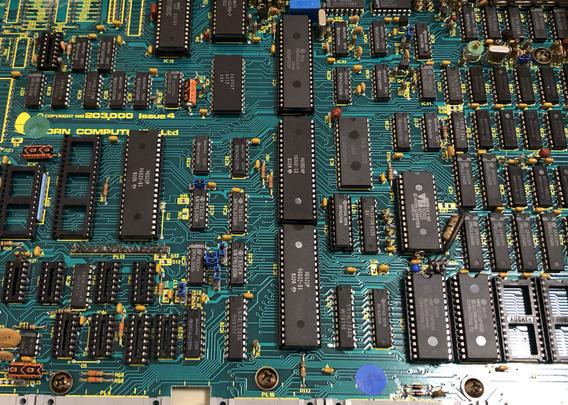
It was always the dilemma of whether to pull the CPU out of a C64 and replace it like this, do it as a bus mastering cartridge, or replace the RAM.
I have been leaning towards the cartridge plan to avoid the requirement of doing machine surgery. If you get the RP2350 to pretend to be the RAM then the video hardware could read directly out of it which makes all sorts of shenanigans possible (every line a BADLINE).
At some point it would look like just plugging A VIC-II and a SID into a board with the RP2350 though, The cartridge approach means you have to do transfers across into the computer's RAM, but you could also write to hardware registers every CPU cycle, which would enable some potentially new modes that would not be entirely dissimilar to every line a BADLINE.
Right now I'm mucking around with getting the RP2350 to output video constructed a scanline at a time, using as little CPU as possible. I got three layers of tiles and two layers of sprites each with different pixel formats working yesterday. Quite pleased with that. The CPU calculates a handful of values per scanline, but fetching tilemap data, then tile data, then conversion to pixel values, transparency and palette lookup are all DMA and PIO. Does 1,2,4, and 8 bits per pixel, each tile/sprite/imagebuffer layer with independent 24 bit palettes.
You have such ponderings in common with engineers@work:
"and palette lookup are all DMA and PIO"
PIO is a revelation.
I do love the PIO. I want to show it to a computer engineer from the 80s.
It's great, but I think the critique from the other day was also pretty valid. and offered an alternative.
https://www.bunniestudios.com/blog/2026/bio-the-bao-i-o-copr...
I think, for my use, just having the ability to write to DMA registers would have been a big advantage. It feels wasteful to have A DMA waiting on a FIFO just to write what it gets to DMA registers to do the transfer you actually wanted.
Looking at the Architecture diagram It seems like it could have allowed that and stayed on the same side of the AHB5 splitter.
This is less of a “CPU replacement” and more of a bus-level participant.
Once you control the bus cycle-accurately, the CPU abstraction kind of disappears.
You’re effectively redefining the whole machine behavior from the outside.
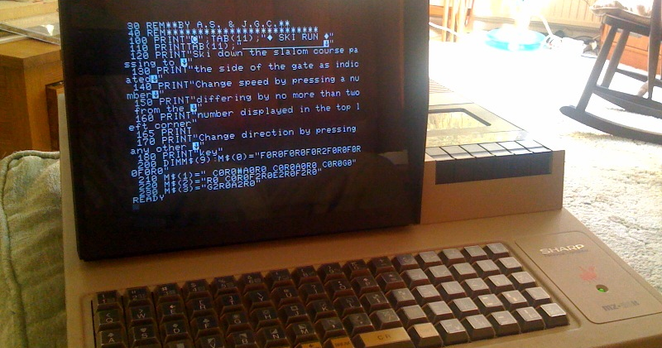
Oh wow. Enhancements for the Sharp MZ line! Wonderful. I spent a lot of time with those machines in the 1980s and own a few. Being able to emulate the Sharp MZ-80K's (https://blog.jgc.org/2009/08/in-which-i-switch-on-30-year-ol...) MZ80FD would be cool.
Hot tip: Ignore the RP2350 design sheet and use a standard 1.2V LDO in to provide the internal vCore - you save having to use that weird inductor and can clock it at a 300Mhz much more reliably at 1.2V.
What was the reasoning behind that? Were there specific features of that inductor that led them to choose it, or did they choose it and then found some of their design relied on atypical generic inductor behaviour.
The problem with going off design sheet is you don't know what might change. There's usually a good chance that you are not depending on the difference, but it's the not knowing that gets to you.
They are suggesting bypassing the RP2350's internal switching regulator (which only needs an external coil and some caps) and replacing it with an external linear regulator (which is actually supported by the datasheet)
Switching regulators have much lower power draw (which is important when running off batteries) and generate less heat, which sometimes leads to a more compact footprint (though I'm not sure the RP2350's core uses enough power for that benefit to kick in)
The power/heat savings don't really matter for this usecase, and linear regulators have the advantage of producing more stable power, though you are hardwiring it to 1.2v (a small overvolt) rather than using the ability of the internal regulator to adjust its voltage on the fly (adjustable from 0.55c to 3.30v)
I want to make something like this as a classic CPU ICE, with trace memory, disassembly, etc. (note that you need a crystal oscillator circuit for many CPUs- 6802, 8085, etc.)
It would be useful for debugging classic computers like Altair 8800, etc. What you do is get a boot trace (record the first 100,000 instructions) of a working machine and diff it with the one from your broken machine. This finds the problem in like 5 seconds.