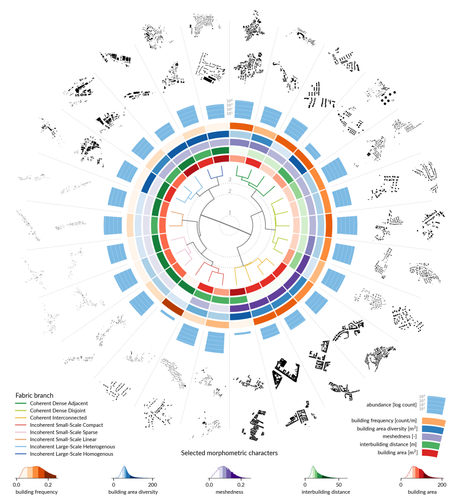
We have a new paper out! Named "The hierarchical morphotope classification: A theory-driven framework for large-scale analysis of built form”, it provides an overview of the method we used to build our Urban Taxonomy dataset.

https://authors.elsevier.com/sd/article/S0264-2751(26)00279-9

Morphology often hits scalability limits. This method is able to break those as shown by classifying over 90 million buildings (in the paper, we have 150 million + now).

1/n
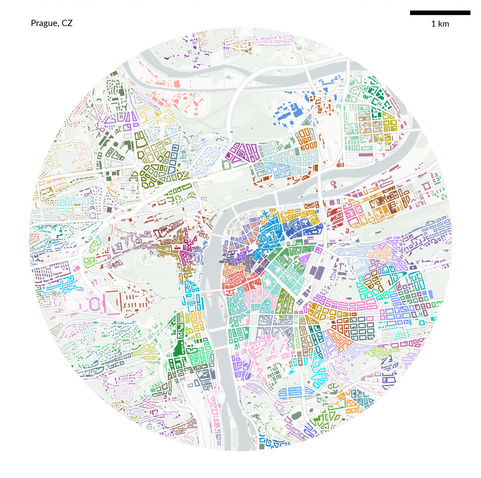
At the same time, the “data-driven" nature of quantitative methods tends to be disjoint from morphological theory.

We took concepts known from 80s and re-conceptualised them for urban morphometrics. This leads to identification of "morphotopes" (as biotopes), the smallest morphologically homogeneous regions.

And because there's a lot of them, we have organised them into a taxonomy.

2/n

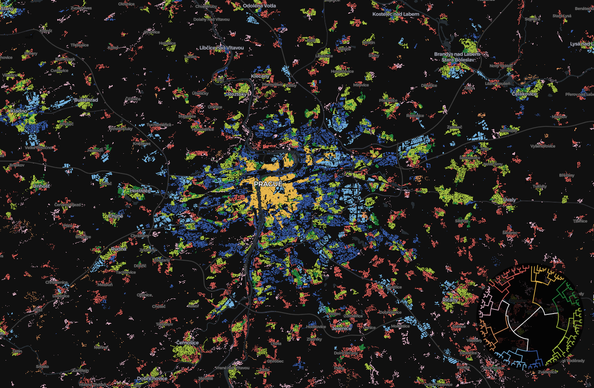
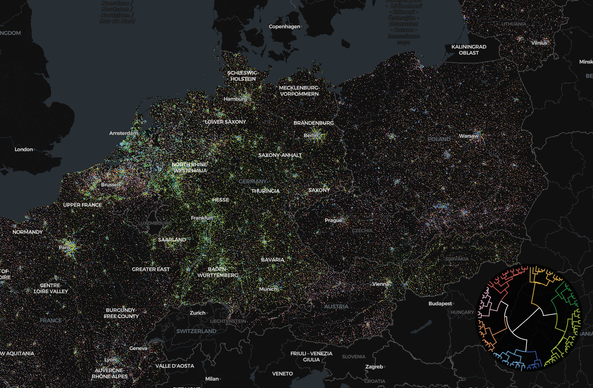
Though papers are boring, so we have something fun for you - a map. If you head to https://urbantaxonomy.org, there's a beautiful interactive map of the resulting taxonomy waiting for you. Just a piece of warning - it can suck a lot of time!

3/n

@martinfleis
@konstantinosd you might be interested
@glocq @martinfleis This is fascinating -- thank you!