 anon6789
No Leg to Stand On
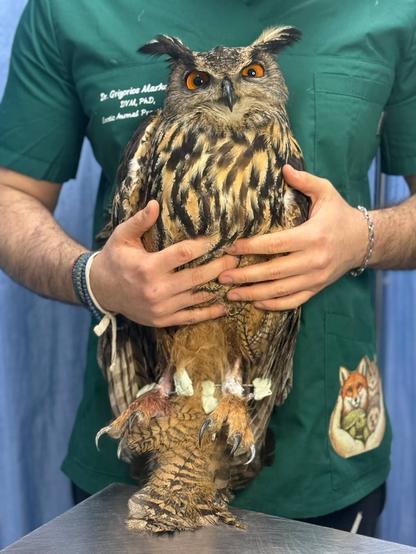
The linked pelican story shows the pelican standing after surgery. The pins stabilize the bones in place, so they should be fixed in place and not cause issues.
I haven’t seen this in person yet, but my wife works in the hospital and helps people get this procedure. For humans, she says it’s largely a temporary procedure until the person can receive a longer term fix, but bird birds heal much quicker (usually a matter of days) compared to mammalian bones. One of the advantages listed in the textbook was that the pins can be removed without anesthesia, which is rather tricky to give birds due to their very different respiratory system.
With bandages, I see many places using distraction tabs, which are just spare strips of tape stack to the outside of the real bandages that are there purely for the birds to pick at, somewhat like a “smash cake” you give a baby to mess up so they keep their hands off the real cake for everyone else.
We did have a crow in our clinic that was unable to stand due to injuries, and they gave it a water bath to float in to relieve a lot of the body weight, and also a harness to help it stay upright, so there are some creative means available to help the birds stay upright. Adult birds don’t really lay down, so perching is their natural behavior.
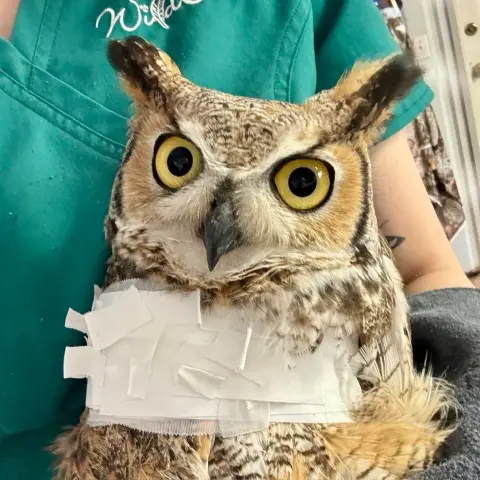
From Wild Care Oklahoma [https://www.facebook.com/100064938571910/posts/pfbid02xXs6gTKPnG7N6Hn8ybtEdJMdeCx763X9cxvvUJcCXp3adf5yU9d1cCFaPbqKQoTEl/?app=fbl] > Great horned owl patient 24-8120 arrived last month from northwest Oklahoma. Pictured wearing a body wrap, this patient arrived with a mildly displaced humerus fracture, underweight, and dehydrated. The body wrap helps hold the wing in place giving it time to heal correctly. The raggedy pieces of tape on the wrap are actually distractions intentionally placed on the wrap. Rather than the owl tugging the wrap itself, it can tug on those tabs without disturbing the wrap itself. Pretty ingenious!
Thanks, now I’ve correctly read that last paragraph, the moment I’ve saw the word squeamish I avoided all links without reading further. 😅
I love the concept of distraction tabs.
 Eat_Your_Paisley
 Regna
Regna Pope-King Joe