 Taggart
This is the one.
Although I would have preferred it not be called "Earthset," good grief.
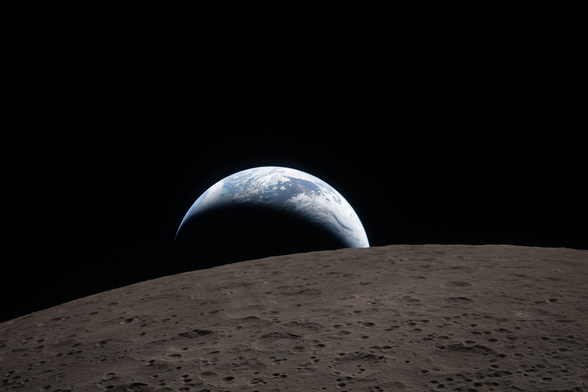
This is the one.
Although I would have preferred it not be called "Earthset," good grief.
Oh my. On the other hand, here's an eclipsed sun
https://images-assets.nasa.gov/image/art002e009301/art002e009301~orig.jpg
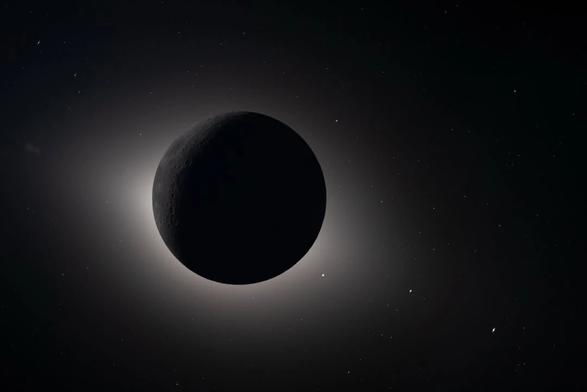
Here's another gem. I was unprepared for modern cameras to capture this and what it would do to me.
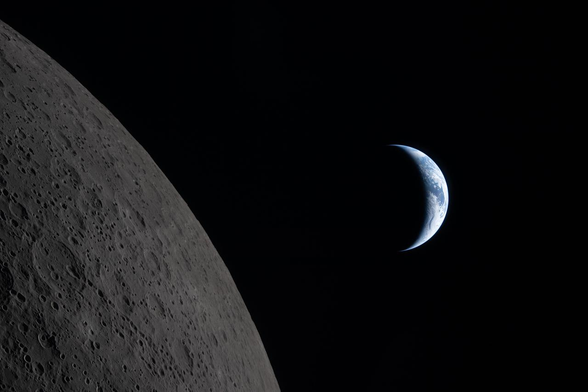
@mttaggart THIS. As awesome as the original earth from space photos were, captured with (I think) Hasselblad large format cameras on film - modern digital cameras have far more resolution than all but the best film had back then.
It also reminds us that as close as the moon is, the environment is harsher than even the harshest earthside environment (except maybe the under water).
Humans are not meant to be in oxygen free environments - we belong on Earth!
@what @mttaggart Hmmm, I have always believed ISO 100 film in 35mm format was about equivalent to a 10 MP sensor.
The Hasselblad C500 had a 56x56 mm image size, for about 4x the 35mm size so the equivalent would be about a 40 MP image.
For sure those old Hasselblads were awesome and the optics were incredibly good - and those first images of our blue marble made the world stop and think hard about our little rock with water and oxygen.
Either way, those new images are fantastic!
@mttaggart just in case you're not already following, Perseverance sends us snaps from Mars *constantly*.
@mttaggart given how they all seem to form a short arc centred on the middle of the shot, I think it's an optical aberration rather than visible galaxies
still, it's a frickin' cool photo
@mttaggart Awe inspiring!
But sorry, there are no galaxies visible on this photo, only stars and planets distorted by the thick window of the Orion spacecraft.
 Dave
Dave XennyG
 Mike Torr
 rhempel
 esc key
 Alastair Temple
 Ruby
Ruby DoomsdaysCW
 Consensus Tullyality
 Louis A. M. 🇨🇦