
๐Ÿ‡บ๐Ÿ‡ธ ๐—–๐—ฆ๐—”๐—ฅ ๐—š๐—ฟ๐—ผ๐˜‚๐—ป๐—ฑ ๐—–๐—ผ๐—น๐—น๐—ถ๐˜€๐—ถ๐—ผ๐—ป

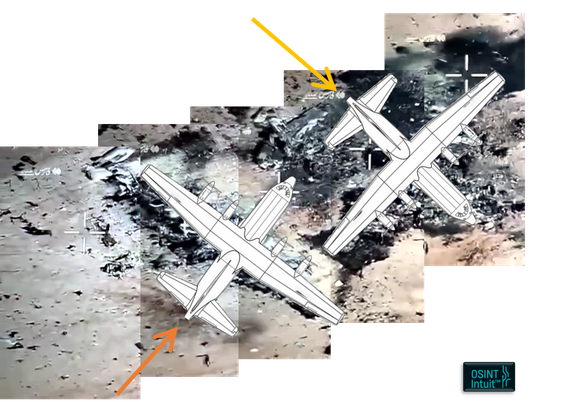
Corrected composite image and infographic of the site where two USAF MC-130J aircraft and at least two AH/MH-6 Little Bird helicopters were scuttled in Isfahan province, Iran.

The working theory: the MC-130J on the right, conducting CSAR for the missing crew of a downed F-15E, was forced into an emergency landing due to mechanical failure or enemy fire.

A second MC-130J, on the left, was dispatched to recover the first crew.
1/4
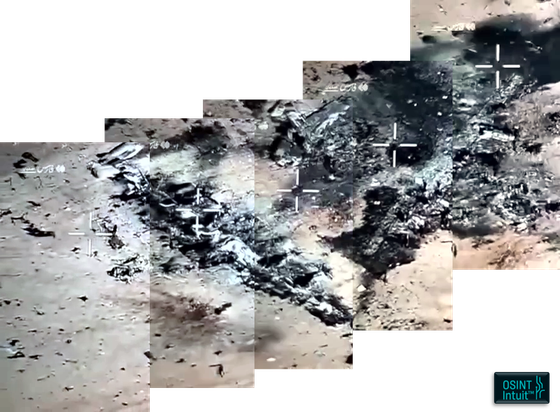
Landing at night on an unlit improvised strip, it collided with the disabled aircraft, rendering both unflyable.

A third rescue element, described in reporting as arriving in "faster" aircraft, extracted all personnel.

Scuttling charges with timers were set. Both airframes and the Little Birds were destroyed in place.

Why is it a collision?

1. If one aircraft is stuck in the mud, you would not risk landing another aircraft on the same terrain to rescue the other crew.
2/4

If a damaged plane landed safely on compacted hard ground, and was unable to fly out, you would.

2. You would not park the planes in this configuration in case one was disabled, thereby stranding the other.

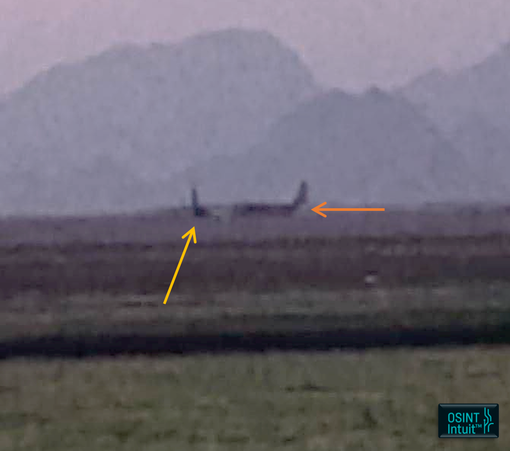
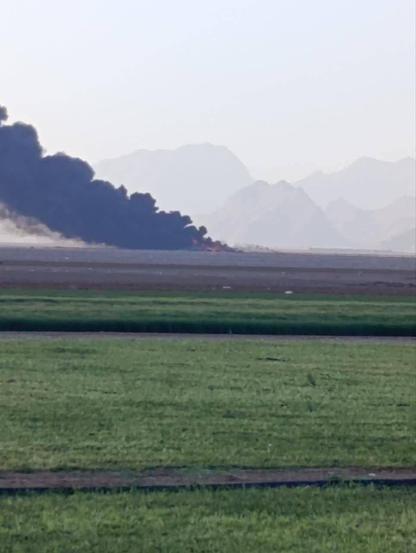
3. A ground-level photograph confirms both aircraft are in close proximity at convergent headings before the fire, ruling out the proximity as a result of the destruction.

4. The key here is that two aircraft are in the same location at the same time and they both were abandoned.
3/4

If they were stuck in the mud, they did not get stuck 20' from each other on a collision course.

#OSINT #Iran #OperationEpicFury
4/4