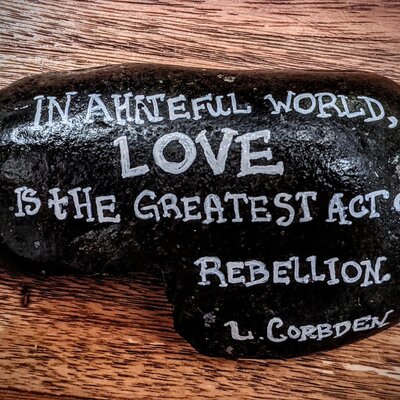
 Mx. Luna Corbden 🐸
I first got online in 1992. This gives me quite the view of internet history.
When I wonder why there are hardly any successful, popular, creative internet projects anymore, I always circle back around to how much less money there is at the lower tiers of the economy (anything below $1b).
It's always money.
Those without any money are extremely stressed, sick, and/or dying, and don't have time to contribute to projects or explore the work of others.
Those with jobs are working more hours to make ends meet, and have less time to spend on exploring other people's projects or making their own.
Those with small investment capital at the low-end are far more rare than they were. The filtering process for investing big is warped into being all about whatever the hype trend of the day is, which is always a finely honed grift.
In 1997, when I was just starting my tech career, poor single parent, my rent was $500/mo. Even as a single parent of a special needs child, I could make rent on my $7/hr. I had enough breathing room to chase the next thing online, which was always free of cost and almost always just some website made by some guy in Notepad. I could make my own little website or server that did this or that on old hardware that was cheap or free.
In spite of the spell Facebook has cast on the population, there are still plenty of people with ideas and willingness to make and use cool new things, and old unenshittiified technology to built it on. There is, in fact, a thriving indieweb out there that I have not had energy to explore.
I've got plenty of my own ideas, too, really cool things I want to contribute. But you know what I'm doing instead? I'm using my last sick, exhausted breath looking for freelance editing work from a pool of other writers who are just as broke as me.
Money equals time. It all comes down to a lack of money circulating at our layer of economy.
 Rob Zazueta