Restoration thread:

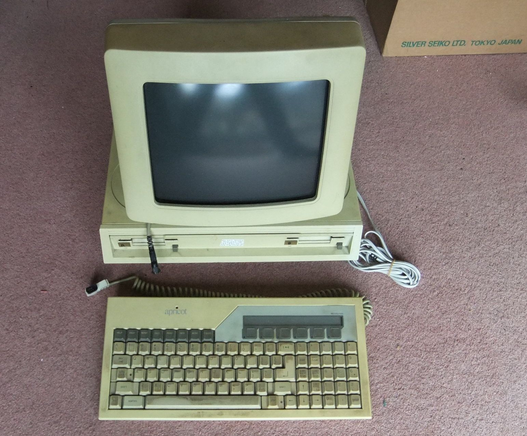
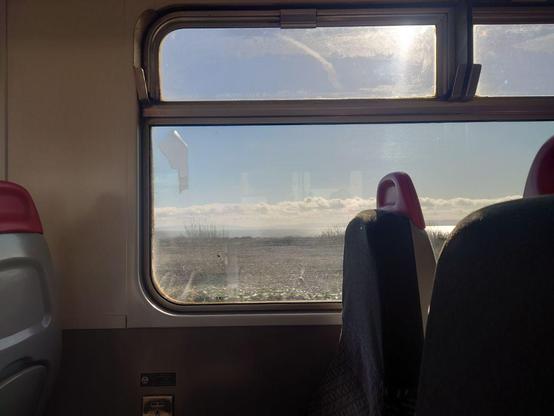
Saturday I hauled a full Apricot PC setup from South Wales back to Nottingham via the train

I had been after one of these machines for a while, I was fascinated with how cool the Apricot F1 and Portable are, this is the machine that they were based on, and with dual drives and multiple expansion slots it will definitely be useful in supporting my other Apricot machines

#apricot #apricotcomputers #actapricot #vintagecomputing #retrocomputing #dos

Getting this thing on my bench, I started pulling this apart, I immediately noticed the telephone cable and the sign talking about being approved to use in telecommunication systems

We have a modem card! This is super cool, Apricot expansion cards used their own interface, and so not many cards exist any more, finding this is super cool and I can't wait to play around with it

Disconnecting the power supply and powering on to test the voltages... caused all my lights to turn off, OK, the PSU needs work

Looking deeper and yeah, blown Rifa capacitors, suuuuuper common, I de-solderded these and carefully restested, now more tripping breakers, but it did make a high pitched noise rhythmic chirping noise and all the voltages looked weird and were jumping on and off; if there are other bad caps it may very well be making the switch mode PSU act up, so I took and inventory of all the capacitors and placed an order, which was gonna take a few days

Moving on to other areas of the computer I can test, the drives.

These are early Sony 3.5 inch floppies and I am *scared* of them, they are very early, so are electrically and dimensionally non-standard, are usually in a system where the case is moulded to the shape of the drive, and they are *VERY* prone to breaking

Specifically they are prone to the grease turning to paste, making the eject mechanism not work quite right, and pushing the drive partially out but not fully retracting the heads, allowing unwitting user to pull the driver out and do anything from significantly damage or rip off the heads

This was the case for both of my Apricot Portables, so far the only Apricot I have had with a working drive is my F1, and this machine has 2 of them  thankfully since ACT/Apricot used the same drives in all of their machines, I can use my F1 to test

I first made sure to very gently clean the heads which thankfully were still in place and were visually OK, and placing a cardboard floppy drive protector in there, the mechanism worked perfectly, whew

Placing each drive in my F1 with a bootable disk... the F1 booted riiiight up first try, for both drive, HOLY CRAP, we have 2 working drives in a dual drive machine

That was *really" cool, but I still had time to kill whilst I waited for all the capacitors to be ready, so I continued testing the PSU components, I ended up testing *all* of the PSUs semiconductors out of circuit, they were all fine, so hopefully this is a capacitor issue

I better continue this threat for #aprilcot

Full capacitor replacement later, I did a power on of the PSU and and the high pitched rhythmic clicking noise returned - ANNOYING

After checking and ruling out basically all of the active components, I was stumped, until prompted to try it under load, not wanting to hook the main board up just yet, I sourced some high power resistors, and bingo, clicking gone and voltage all normal

I had heard legends of PSUs that need to be under load, just managed to avoid them until now

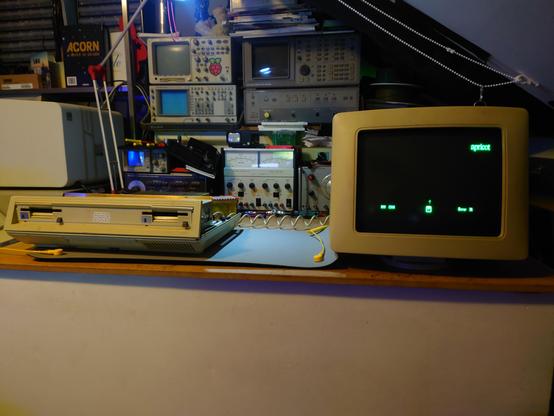
Reassembling the machine and powering everything on, it works! And now on to boot disks...

@crashtestdev I keep a sacrificial harddisk around as test load, since almost all power supplies for computers I'm interested in have a connector for those...