do you make music on Linux, and what's your favorite software to work with? and what do you miss the most from Linux music/audio software that exists on other platforms?

@mntmn I feel like tagging @aeva here (in case you don't follow each other?) since I know she works on both OSes... and writes her own stuff, too.

I haven't done anything more serious than just having 'play sessions', rather than "let's make a song!" sessions so my insight probably isn't as valuable as others, but I like Ardour as much as I think I can get comfortable with any DAW and I enjoy using Helm and
https://zynaddsubfx.sourceforge.io/ for various software synth stuff (they have a plugin you can).

I enjoyed playing around with the Bitwig Studio demo but I don't know how
good it is for stuff. But the synth options were pretty awesome and easy to use for someone who isn't overly familiar with a lot of the standard types of levers to manipulate, so to speak

About ZynAddSubFX

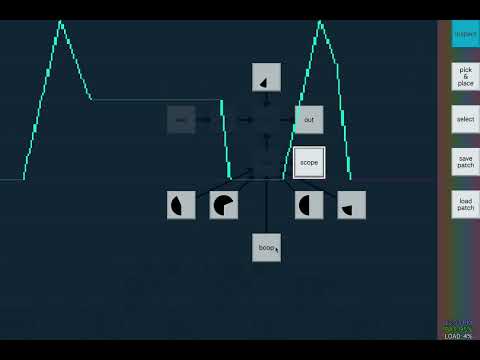
@aud @mntmn my favorite Linux music software is #mollytime, but I'm biased because I wrote it.

Rosegarden handles realtime playback completely wrong, but it is ok as a MIDI editor. I've been using Tenacity for simple edits of recordings and to converting WAVs to other formats.

I don't really use Windows for music (beyond keeping the windows version of mollytime more or less at parity), and I've never used Macos for music.

@aud @mntmn fwiw I actively dislike most music software in general, which I guess is the sort of thing that usually motivates people to write weird music software instead
@aud @mntmn to save you time, mollytime also does not support arm64 at the moment (for lack of a suitable device to test it on)
@aud @mntmn I don't see any reason on paper that would prevent mollytime from running nice on a MNT Reform or Pocket. My current minspec is a desktop I built in 2012.
@aeva @mntmn would a test build on a pi-like device be a good test for getting support running? I wouldn't mind trying that out myself, honestly, if it would lead towards MNT Reform/Pocket support.
@aud @mntmn the RPI-400 i have on hand only has 4 GB, which makes the device very infuriating to use for normal tasks like "opening websites in firefox", so I haven't tried to use it for much of anything else. I tried to use it to tide me over when my laptop broke a while back, and it was so bad I ended up buying a steamdeck instead. In theory 4 GB should be significantly more than enough to actually run mollytime. I don't remember what the clock speed is on the device.
@aud @mntmn supporting arm64 (and riscv) is something I want to do eventually as libre software running on libre hardware is a niche that is near and dear to my heart
@aeva @aud mollytime looks cool, i hadn't come across it yet! can try to build/run it on our hw soon
@mntmn @aud This is where the source currently lives https://github.com/Aeva/mollytime "excelsior" is the main branch. README.md walks through the basic installation instructions, BUILD.md documents everything necessary to build it and what all the mollybuild.py wraps (as well as what dependencies you may need to install yourself), and BUILD-linux.md contains some additional notes. iirc most of the dependencies are automatically cloned from upstream repositories by mollybuild.py
GitHub - Aeva/mollytime: virtual synthesizer

virtual synthesizer. Contribute to Aeva/mollytime development by creating an account on GitHub.

GitHub

@mntmn @aud if you try it out let me know!

also if you get it to run, there's a hoard of patches in the (poorly curated) examples folder. "drums4.beep" is my current goto for confirming if basic functionality is working. "breath_of_the_world.beep", "tape_loop.beep", "central_dynamo.beep" are probably the main highlights for hearing something pleasant, and in general it is a good idea to keep your volume down low when opening an unfamiliar patch.

@mntmn @aud the patches in examples/midi are all midi instruments. I usually use aplaymidi to feed midi streams into them or use a midi controller. molytime has 32 lanes of polyphony for midi patches by default which makes them a lot more expensive. starting mollytime with `-p 16` will set it to use 16 lanes instead, etc. Generally you want to see the LOAD indicator run below 50% for midi patches, below 20% is better.
@mntmn @aud I'll be happy to help if you run into any problems getting it running.
@mntmn @aud also as a stopgap for not having proper documentation, this video walks through the basics of how to write and manipulate patches https://www.youtube.com/watch?v=7gWxtttdr0s
mollytime basic operation

YouTube