 Adam Greenfield
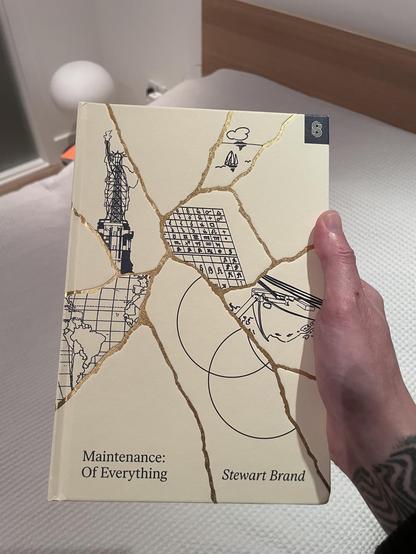
OK, it’s, admittedly, gorgeously produced. And I’m willing to give Stewart some considerable benefit of the doubt, given how primordially foundational his work has been for so much of who and what I am.
But opening it to see an ESR quote, in this day and age, feels greasy and retrograde and gross – not quite as bad as getting some DHH on you, but not far off, either. And it gets worse: I wouldn’t have bought the book in the first place had I known Stewart devotes an entire (brief) section to the design “of” Elon Musk, as if Musk had ever designed anything more elaborate than a stealthy excursion to a Black Sea hair-transplant clinic. That bit is all-but-disqualifying in itself, and tends to make me ashamed to have the book on my shelves.
The deeper issue, though, is Stewart’s narrow definition of “maintenance.” The book feels like it’s sidestepped a whole generation of discourse on the topic, to its detriment. I’ll let you know what I wind up concluding.
 carla joy