upofadown
Iran strikes leave Amazon availability zones "hard down" in Bahrain and Dubai
https://www.bigtechnology.com/p/iran-strikes-leave-amazon-availability
Iran strikes leave Amazon availability zones "hard down" in Bahrain and Dubai
https://www.bigtechnology.com/p/iran-strikes-leave-amazon-availability
This may have been long discussed, but I feel like this war is the first time I've really thought hard about how big a target data centers would be in any sort of modern peer war and how that's an entirely new thing since the last time it was really on the radar (end of CW) right? We've built trillions and trillions of dollars in infrastructure in the peace time since, and it seems fairly concentrated. AWS is amongst the biggest there is, and according to mappers like [0] there are only around 240 operational total worldwide with another 130ish under construction. Like, in one respect that seems like a bunch, but vs the kind of attacks we see done in a matter of days in modern wars it's a pretty small number for the whole planet isn't it? In the first 24 hours of the war the US and Israel launched on Iran, they hit something like 1500-2000 targets. How hardened are the data centers? Are they in structures that handle some level of explosives? Do they have counter measures like internal blast walls dividing things into cells so a few hundred pounds of high explosive in one area doesn't damage outside the cell? I mean, of course like all data centers they'll have considered extensive countermeasures to fire, environmental threats, grid issues and so on. But has "nation-state level attack via mass drones or bombardment" been part of the threat model over the last few decades? Hardening of telecoms was certainly considered for old Ma Bell and such back in the CW days but that was a very different environment.
I guess it makes me think about what a soft underbelly this could be for a lot of modern society. There's always been consideration of threats to refineries and power stations and industrial production and all those big metal deals. But like, forget any sort of nuclear exchange, any sort of crazy super Starfish style big EMP, just purely a few thousand drones nailing data centers. Nobody even directly dies, just a lot of wrecked computers. What would be the cost of losing all the clouds and colo stuff? How long to replace, at what cost? How much depends on it?
----
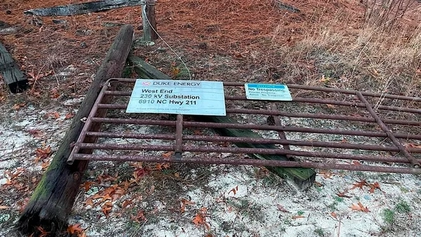
Instead of targeting data center itself, it's far easier to target the electrical substation that powers the datacenter. It's relatively simple to do. Transformers require oil to cool themselves, and if the coolant reservoir is damaged, then they overheat and shut off. This exact infrastructure attack occurred in North Carolina in 2022 [0], where someone fired bullets into the coolant reservoirs and caused a several day power outage. The perpetrator was never caught. It's speculated a foreign actor did this to gauge the response in a future wartime scenario.
Most data centers have a dedicated electrical substation that powers it, so it's possible to target the data center without affecting anywhere else.
[0] https://en.wikipedia.org/wiki/Moore_County_substation_attack
>Instead of targeting data centers, it's far easier to target the electrical substation that powers the datacenter
That has a lot of collateral damage that may or may not be desirable though. Simultaneously it might have quite a different long term effect right? If all the actual computers are unharmed they can be powered in other ways in an emergency, even if at much higher cost. Or powered back up later, the time lost might be militarily very significant but they're not gone.
But how many people and companies actually have full functional decentralized clones of all programs and data? How many people and companies have devices that are locked to remote hosts they expect to check in on at least once in awhile even if they're not "cloud dependent"? What if all that was literally gone, a few thousand missiles or drones and data centers are all just completely erased including tape backups, everything, suddenly we're in a world where all that compute and data is poof. And without hurting anything else, no traditional war crimes either, no power or direct food or transport disruptions. Everyone is fine and healthy, except with this huge societal exocortex gone.
Any cloud engineer worth their salt is going to have their programs be stateless and their data replicated across multiple data centers. Many cloud engineers are not worth their salt, but working in Big Tech, this has been table stakes for 20+ years. There are regular disaster drills, both scheduled and unscheduled, that test what happens when a datacenter disappears. Ideally everything transparently fails over, and most of the time, this is what happens.
The bigger problem is that a war is likely to hit multiple levels of infrastructure at the same time. So the datacenters will come under attack, but so will the fiber cables, and the switching apparatuses, and the power plants, and likely also the humans who maintain it all. High-availability software is usually designed for 1-2 components to fail at once and then to transparently route around them. If large chunks of the infrastructure all disappear at once, you can end up in some very weird cascading failure situations.
> worth their salt
That's a big assumption. Often there's no time to do things right, or no money, or lack of oversight, and so on.
Not every company is staffed by empowered and highly motivated staff
See also: https://en.wikipedia.org/wiki/Metcalf_sniper_attack
(Perpetrators also not caught)
In any significant war the Internet is going to go down. That's what has happened empirically in countries undergoing significant wars or social unrest, like Russia, Iran, Yemen, Ethiopia, Syria, Myanmar, and Afghanistan. While IP packet routing itself may have been designed to survive a nuclear war, there have been many centralized systems built on top of it (DNS? Edge caching? Cloudflare? Big Tech) that are essential to the functioning of what we know of as the Internet.
If your threat model includes war and you want to have some of the conveniences of the Internet, you should make plans for how to host local copies of data and develop local-scale communications for the people you regularly talk with. The Internet is too big of a security and propaganda risk for governments to allow it to continue to exist when they are engaged in a real existential war.
Some systems are anycast and available in many datacenters for bandwidth cost reasons. Netflix used to deploy content caches in ISP edges.
But any single central point of failure might break them. Things like, is this account paid? Dunno!
I recently wrote a little on this https://generalresearch.com/detail-oriented/how-to-seed-a-cl...
While we're completely at the mercy of datacenters that we can colo out racks / power / upstreams from, it's a worthy discussion for any technology company that wants some amount of digital sovereignty over their presence online and ability to provide their service independent of a hypervisor / cloud provider (or even just a centralized location).
The best option is simply to anycast from any many distinct countries that are either neutral, or unlikely to be involved with any global or regional conflicts at any given time. You don't want them getting bombed at the same time!