
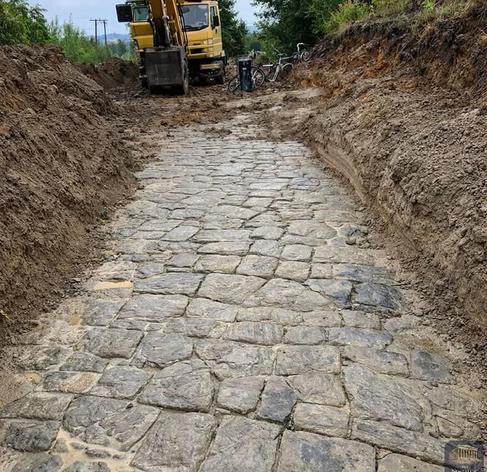
In 2023 in England, construction work exposed a Roman road built around the 1st–2nd Century AD. The tightly fitted stones remain stable after nearly 2,000 years underground.

The discovery highlights the durability of Roman engineering. The exposed stretch is limited, and the broader route is still unclear. The preserved surface offers a snapshot of construction that once supported movement across Roman Britain, leaving its original connection within the wider network open.

#archaeohistories

@archaeohistories this is a great example of how oil industry creates pollution - we use cheap road surfacing materials that needs to be replaced frequently, is made of toxic carcinogens and ends up costing more long-term... But it's so cheap now.

Using petrochemicals is just buying on the kids' credit card. No need to worry about it, that's a problem for somebody else some other day.

@thesquirrelfish @archaeohistories Bumpy as heck though those cobblestones.
@nini @archaeohistories looks more comfortable than the smaller more rounded cobblestones I'm more familiar with
@thesquirrelfish @archaeohistories Just a different vibrational frequency, it'll be smoother but you'll still note the bumps.
@nini @archaeohistories built in speed control :)
@thesquirrelfish @archaeohistories As long as you're on a flat surface, going down hills you might not want to stop too suddenly and too hard.