anarbadalov
'Backrooms' and the Rise of the Institutional Gothic
https://thereader.mitpress.mit.edu/backrooms-and-the-rise-of-the-institutional-gothic/
'Backrooms' and the Rise of the Institutional Gothic
https://thereader.mitpress.mit.edu/backrooms-and-the-rise-of-the-institutional-gothic/
The Backrooms have always reminded me of House of Leaves and the Navidson Record within specifically. (I think maybe that's a deliberate influence in the lore?)
So I like how the movie's plot seems to be similar as well.
I don’t really get the nostalgia angle as it seems as many of those who are into this kind of thing are too young to have ever been in such a space, let alone worked in one.
I’ve worked in a place like this that was well past its prime and though uncanny, it’s certainly not creepy.
The illusion of infinitely twisting, identical corridors simply doesn’t hold up when you’re actually in a space like this, but only works if you’ve only ever seen these kinds of spaces from a still photograph on the internet (which is why the audience for this sort of thing is too young to have ever experienced it themselves).
Yes, it looks exactly like the stifling, sprawling suburban office complex I once worked in, but then I also remember the feeling of walking out the exit into a beautiful spring day.
For me, the feeling these “back rooms” evokes is more akin to being in school waiting for the bell to ring so you can go outside and play.
It’s strange when your own mundane experiences are fodder for a new generation’s horror fiction. Sort of takes the bite away from it.
I disagree. I too have worked in these environments. As mentioned in the article, and in numerous other references about the Backrooms - the creepiness stems partially from the "liminal" feeling of walking around large, man-made spaces that are totally empty. Think walking around a shopping mall after hours. I had several odd jobs before I was in college where I had to work overnight shifts, sweeping the floors of large department stores. That feeling of "empty watchfullness" was definitely a thing, and it's captured well by a lot of the Backrooms content.
The other aspect of "creepiness" stems from the idea that the Backrooms represent an endless, malevolent labyrinth. One of the scarier aspects of being trapped in the Backrooms (for me) is that you would just wander around until you died for lack of water and food, in a bland corporate office corridor with fluorescent lights buzzing overhead.
Day vs. Night are what makes the difference. The sprawling suburban office complex from the 70s was, like you said, just boring and a bit oppressive during the day. At night though, a sea of cubicles. Endless hallways. Nothing but blackness outside the windows. Lights are all on motion detectors so only your area is lit. And only lit for a time. Eventually you'd have to stand up to make the lights switch back on. And when you do, you look over the fields of cubes to see a shadowy figure slowly slump its way across the room. Headed vaguely in your direction but never quite reaching you. You think it's Mark from Accounting, but you'll never know for certain.
For me, I've always called it the "school at night" phenomenon. The horror, or unsettling feeling, one gets from seeing a place at night that's usually only seen in the day. Had that constantly as a kid when going to school at night for performances or teacher meetings. A place bright and loud that's now quiet and dark. You know where everything is, but it all seems like it's just an inch or two out of place.
> The illusion of infinitely twisting, identical corridors simply doesn’t hold up when you’re actually in a space like this, but only works if you’ve only ever seen these kinds of spaces from a still photograph on the internet (which is why the audience for this sort of thing is too young to have ever experienced it themselves).
I'm not sure if that's true. I've definitely been to places that feel intentionally confusing; the basement of my college, several hospitals, etc. Where you walk between two buildings, and suddenly go from Floor 4 to Floor 6, or where you're sure you entered facing north, but after making three right-hand turns, you exit a building facing south.
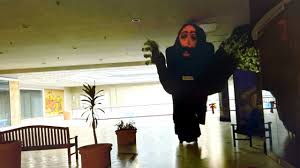
Never got around to The Backrooms, but the follow on Oldest View / Rolling Giant series of videos are absolutely fantastic. It captures the tension between curiosity and dread perfectly, which seems to me what all of this fascination with liminal space is all about.
On a technical level, his work is brilliant. With no budget, he puts me in a CGI space that I really can't tell is CGI, and invokes all of the feelings that are familiar to anyone who has snuck around where they really shouldn't be.
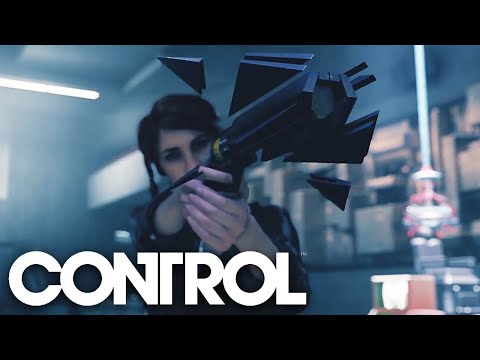
The article has a screenshot of the Stanley Parable, but misses an opportunity to reference Control (2019) which is much more directly influenced by the "liminal space" concept, and imagines a non-euclidian space called The Oldest House at 34 Thomas Street (a reference to the brutalist, windowless AT&T Long Lines skyscraper at 33 Thomas Street, New York City).
https://www.youtube.com/watch?v=F74LLDhAhhI
It also very much ties in with the shared SCP universe, which itself has a number of Backrooms-like anomalies, such as SCP-3008 (https://scp-wiki.wikidot.com/scp-3008), which is like a typical IKEA, except its maze of twisty passages run to infinity.
> which is like a typical IKEA, except its maze of twisty passages run to infinity.
For the 4 people on HN who don't know, "maze of twisty passages" is a reference to the this (the?) text adventure game: