 novaRom
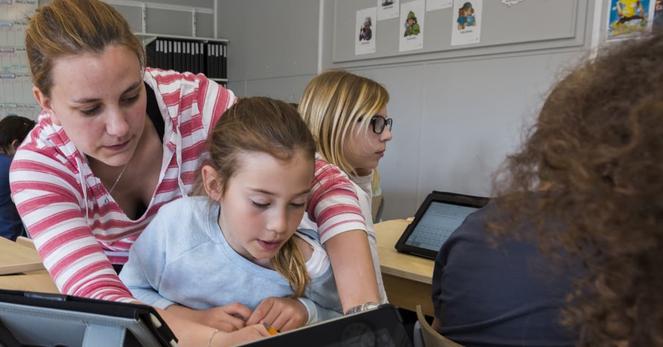
Sweden goes back to basics, swapping screens for books in the classroom

A very similar development is going on in neighboring Finland. There are schools that use almost exclusively paper books (instead of digital ones) again. The overall consensus among parents is that books are way better than screens for kids, all the way up to high school. Hand-writing and free drawing with pen and paper provide many advantages to fixed screens. You cannot open a new tab to Youtube in a book. The significance of these things is finally recognized now. Parents are also worried about the short video brain rot and psychological "capture" of our kids by social media companies.
Naturally, the kids should learn AI and AI workflows also. And personal AI assistants can probably help many kids in their studies. Learning AI should be its own subject but that should not ruin the way kids study other subjects where there are proven old ways to get to great results.
Source: I have 10 Finnish kids
Edit: FYI: an old (2018) link to an article about a finding about the matter: https://yle.fi/a/3-10514984 "Finland’s digital-based curriculum impedes learning, researcher finds"
I don't see the advantage of learning 'AI workflows'. I am in the US and there seems to be a FOMO plague infecting our school system when it comes to technology. In practice it seems more destructive to the child.
I keep hearing this at work but so far no one has explained what “learning ai” actually means. It seems to just be nonsense like those people selling prompt recipes or claiming to be prompt engineers.
No one needs training in prompting AI. I could understand if they meant a deeper layer of integrating tech with systems but all they ever mean is typing things in to a text box.
Especially since kids these days aren't even very good at using computers:
http://www.coding2learn.org/blog/2013/07/29/kids-cant-use-co...
It seems to me that if someone can read and think critically-- they can RTFM and get much better much quicker at computers and AI than people who spent all their time tapping an ipad to watch the next video.
It's not FOMO. The line level people actually educating the children don't give a crap about the technology. They will generally make the best of whatever resources they have and procure wisely. Like everything else in government it's an administrative racket and all the suppliers fan the flames because they make money. Ain't no different than how your local building or environmental inspector finds himself screwing people doing nothing wrong and approving absurd stuff because that's what the rules big business ghost wrote and paid to have the government adopt say he must do.
Kids are using crappy subscription education services for homework and doing all their reading on screens (and educators are toiling away to work with these systems) because the people who make money off the services and screens paid to have the incentives distorted such that buying their products is the least shitty option.
I don't think they need to learn 'AI workflows' (whatever that means). But I think it makes sense to use the LLM's as a resource.
I've used them when studying new languages (human languages not programming languages) and ML algorithms and they've been really useful.
Learning to check the citations it gives you is a useful skill too. I wish many adults were more sceptical about the things they are told.
The same thing is happening in Norway now too. The general attitudes have shifted quite a lot in the last few years. In recent months the Department of Education has committed to reducing screen usage across the board, but particularly in grades 1 to 4.
https://www.regjeringen.no/no/aktuelt/endrer-skolehverdagen-... [link in Norwegian, no English source available]

"screens" can be great for research and there is a lot you can learn online.
The main problem mentioned in the article you link to seem to be distraction from what they were supposed to be doing.
Distraction is not always bad and kids can learn a lot by being distracted by something that catches their interest. it depends on the approach and its more of a problem following a fixed curriculum in a classroom. Probably more of a problem for uninterested or younger children.
I think video can be a big problem, particularly given the tendency of sites to try to keep you there.
~20 years later on all the "Digitalisation of Schools" brought us is waning attention spans for children but billions of sells to Big Tech for software, and e-devices that after a few years become electronic waste to be shipped to a poor country stripped for rare earths and finally ending in landfills in Africa or Asia to poison the ground water.