
This "careful" "AI Safety" company that just accidentally leaked its entire source code to the world is the one that African governments are entering into agreements with to include in infrastructures from health care to god knows what.

These are the products people have to use to make sure that they don't get dinged in their performance reviews for "not using AI."

These are the products teachers have to use in schools so that "students aren't left behind."

https://www.theguardian.com/technology/2026/apr/01/anthropic-claudes-code-leaks-ai
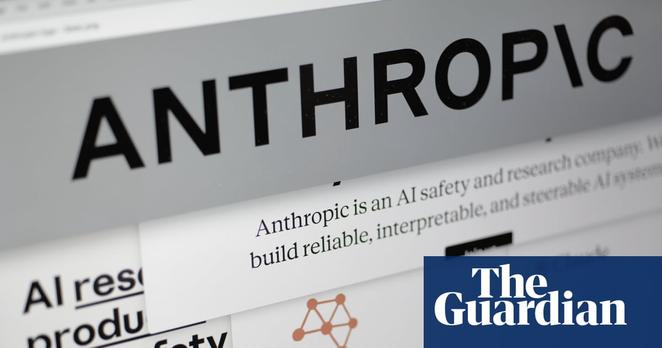
Claude’s code: Anthropic leaks source code for AI software engineering tool

Nearly 2,000 internal files were briefly leaked after ‘human error’, raising fresh security questions at the AI company

The Guardian

I appreciated this article by @mttaggart
infosec.exchange.

I get the temptation especially in this world we're all living in where you have to produce something super fast all the time.

But my question is, what are people's arguments for how functioning software can be created with these tools?

What about new architectures, new ways of thinking, new programming languages, etc? Who will create those?

https://taggart-tech.com/reckoning/

I used AI. It worked. I hated it.

I used Claude Code to build a tool I needed. It worked great, but I was miserable. I need to reckon with what it means.

I'm not even talking about the data stealing, exploitation, environmental pillaging, pollution, environmental racism etc.

I'm talking about the way people use the tools. Like what do advocates of using these tools say will happen to software engineering in the future? That it just won't need to exist because everyone will be able to create software using these tools?

That it will just take a different form, which is fine?

@timnitGebru Yes. To a large degree, I think it's fine.

And the old forms will still be there in a lot of cases and contexts. And, if we build the future well, we won't put hard barriers to digging in and finding out what's going on. If we build it poorly and let platform rentiership win, that's a big problem loomng.

@aredridel
I worked in software preservation for a few years and i think "the old forms will still be there in a lot of cases" is massively optimistic about what software and coding knowledge will be preserved. We've already lost a lot of knowledge from previous generations before gen AI joined the party. Digital forms of knowledge can't continue to exist without intentional preservation interventions, which is not currently happening.
@timnitGebru
@aredridel
Show me one case in mass-market computing history where building the future went well for the commoner.
@timnitGebru
@ozzelot the personal computer, the pc revolution, arguably the iPhone and cell phone both.
@aredridel
All of those are by and large corporate controlled. I can for example only install an alternative OS at the mercy of my motherboard (and CPU - thanks, AMD PSP and Intel ME) vendor.
Cellphones, whilst allowing for communication across arbitrary distances, still depend on networks operated by cartel-like structures and usable for consumer surveillance by unsavory authoritarian entities. Not much good in that.
@aredridel
The iPhone? Are you kidding me? It was a shiny, but useless slab of materials at first, and the App Store introduction only forced consumers to get into a walled garden and enjoy it. Along with, well, being a cellphone.

@ozzelot Wow your worldview is dismal.

Is something good only if it's _purely_ good?

@aredridel
I find some parts of personal computing good - but largely, it's been "let's put computers where they don't belong, make a bunch of solutions in search of problems, and make someone a bunch of money." What I enjoy about computing (that is, some parts of FOSS/OSHW) exists largely despite the dreams of those who mass-market computers, not because of them. If I look at the so-called PC revolution as a whole... Meh. At best, meh.
@ozzelot @aredridel PCs are way more open than phones. ME and PSP and similar are new inventions, and you can practical computers predating that, and MISTer is completely open. You also have qemu etc.
@pavel Yes this is true, but the question was whether any of these technologies have been good for ‘the commoner’ (I'ma ignore the elitism in that construction). The original phrasing was ‘building the future’ which I'm not sure we agree on the meaning of, but c’est l’communique.
@pavel
I know, and I do keep such puters around. But does my uncle? Do schools which make massive deals with Microsoft and Google? Once again, computing done in good and pleasing ways exists despite market needs.
@aredridel

@ozzelot @pavel Yes, but the question is “good for the 'commoner’" — and that means looking at the actual _good things_ that this has enabled for people. The actual systems they use, and what they actually do with it.

(I'm not so much an optimist or pessimist as an “it's complicated"-ist here, but I think that seeking a pure good is folly and often causes a lot of external harms)

@aredridel
Yeah, I guess in the way I said it, you got me (or I got myself; and apologies for my word choice as well.)
A Spotify subscriber, for example, may see the good in having access to ~infinite music for very little, while not privy to the fact that Ek prefers funding war to paying artists. Do we wish to spoil the user's joy, that is the question.

I would also like to say the war Ek funds isn't good for anyone. Out of pacifism I shan't be tooted.
@pavel

@ozzelot Yeah. That's actually a really good case study. What it replaced was better, and the rentiership is nasty.

But: the thing before is _also_ a part of that history of computing, and the sheer explosion of that era was gorgeous.

@ozzelot @aredridel Well, poisoning kids with Microsoft sw is huge problem. Nonfree firmware is a problem, too, but not in same ballpark.