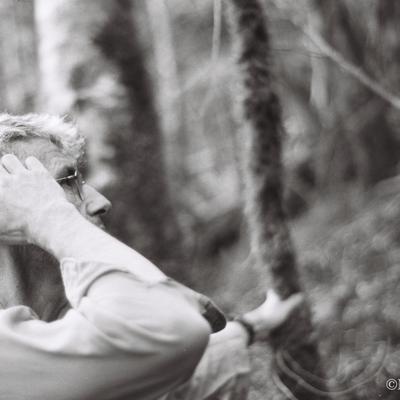
 Yannick Guédon
Bonjour à toustes,
Ce message pour vous annoncer le concert en hommage à Éliane Radigue que nous donnerons avec Julia Eckhardt et Caroline Profanter à 19h le 19 mai 2026 à l'AB (Ancienne Belgique), Bruxelles.
+ d’infos ici : https://www.abconcerts.be/en/agenda/hommage-a-eliane-radigue-screening-live-set-diffusion/a10Qw00000HddqvIAB
J'en profite pour vous dire que le CD L'insistance des possibles (Edition Wandelweiser) est désormais disponible sur Bandcamp à l'adresse suivante :
https://editionwandelweiserrecords.bandcamp.com/album/linsistance-des-possibles
Au plaisir de vous revoir,
Yannick Guédon
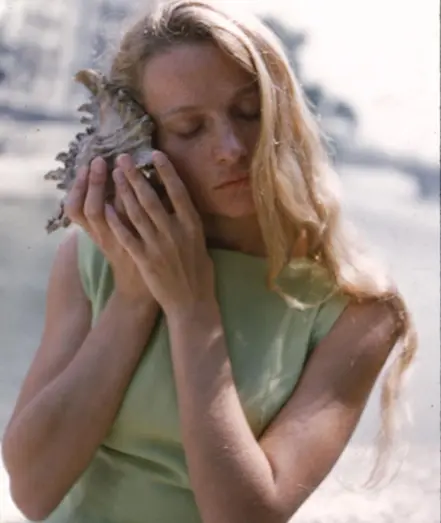
Hommage à Éliane Radigue: screening, live set & diffusion - Tue 19 May 26
February 23 saw the passing, at age 94, of Éliane Radigue, one of the most important French composers of recent decades and one of the pioneers of electronic music. Her minimalist, meditative pieces – at first made using tape and feedback then later the synthesizer – inspired entire generations of artists.In tribute, we present the screening of a documentary about Radigue, a live set by Julia Eckhardt & Yannick Guédon and a performance of one of Radigue’s acousmatic works by Caroline Profanter. Delve deeper into the life and work of Éliane Radigue via this biography, this article, this piece from The Quietus and also this The OCCAM Ocean Issue.Screening: Éliane Radigue, l'Ecoute Virtuose / Virtuoso Listening (dir.: Anaïs Prosaïc, 2011, France, 61 min., ov, sub.: ENG)This film paints an intimate portrait of Éliane Radigue, one of the most important female pioneers of electronic music. The film looks back on her early years in the 1960s and 1970s, when she worked with the ARP 2500 synthesizer and minimalists like Terry Riley and La Monte Young. Through interviews and archive footage, the documentary shows her patient, almost meditative way of working. Most of the film follows the performance of her recent instrumental compositions during the Spitalfields Music Festival in London, performed by contemporary musicians and laptop collective The Lappetites. The film emphasises how Radigue, now of age but still curious and present, sees her oeuvre brought to life again by other artists.Julia Eckhardt & Yannick Guédon, Occam River XIX for viola and baritone Julia Eckhardt (°Berlin) is a violist, curator and co-artistic director of Brussels-based Q-O2, where she is active in experimental music and sound art. She works internationally as a performer and developed a broad artistic network within contemporary music.Eckhardt is best known for her long-standing and intensive collaboration with composer Éliane Radigue, with whom she realised numerous projects. She was among the first musicians to perform Radigue’s acoustic work from the Occam Ocean series, thereby helping shape this new chapter in Radigue’s oeuvre.Her deep knowledge of Radigue’s artistic practice led to the book Éliane Radigue – Intermediary Spaces, which she developed together with the composer. As well as performing, Eckhardt publishes on music, gender and listening practices and she teaches at various institutions.Yannick Guédon is a composer, singer and performance artist born in France. His work focuses on subtle variations in timbre, as well as on subjective notions of time and silence. He creates listening environments in which the audience is invited to experience the time and context in which the musical act takes place, whereby the sound, visual and light elements are revealed. The primary instrument in his projects is always sound, but this is often augmented by questions relating to the body and the performer’s presence within the specific context where the performance takes place. He has worked recently with Ensemble Dedalus, d'incise, Catherine Lamb, Karl Naegelen, Laurent Pichaud, Éliane Radigue, Sébastien Roux, Marc Sabat and Laura Steenberghe.The work Occam River XIX for viola and baritone is a part of the Occam series, a long-running project of Éliane Radigue’s (since 2011) in which she works exclusively with acoustic musicians. It consists of a growing number of solo works (Océan), duo works (River) and ensemble works (Delta), all developed in close one-on-one collaboration with individual performers.Radigue composes without a written score: each musician brings their own techniques, sound research and material, which (under her guidance) are moulded into a unique piece that can only be performed by that(those) specific performer(s). sources describe this as a series of works in which duration, micro-variations, the role of overtones and the space itself are focal.Caroline Profanter, Danse des Dakinis (1998, 24:32 min, acousmatic performance)Danse des Dakinis is probably the only work in Radigue’s remarkable body of work that is so unique in nature. The piece was created in 1998 based on tapes she had made in the 1960s, as a sort of self-portrait in sound: a kaleidoscopic glimpse into Radigue’s sensitivity to sound, a memoire and a hall of mirrors that prismatically reflects the many facets of the ‘self’.Due to the many phases of her career from which it draws, the work is a fascinating hybrid. Field-recordings from the early 1960s (made on the shores of the Mediterranean and a stream recorded on the campus of Mills College) are combined with feedback elements from 1969 and later interventions on her ARP 2500 synthesizer.Independent of her larger compositional body of work, yet intrinsically related to it, Danse des Dakinis refers to the dakini: a female deity in Vajrayana Buddhism or a female demon in Hinduism. This creates an intriguing link between fierce female forms and the elements of nature, which in Buddhism – a central force in Radigue’s life and work – also represent the absence of ego or mental obstacles, allowing nature to reveal itself.Here we encounter the composer again in a darker, meditative state, one in which she weaves sounds of nature with those of her ARP and feedback to create a complex inner landscape that blurs the boundaries between abstraction and raw emotion, electronica and organic sounds.