 Rxiv cytoskeleton
https://doi.org/doi:10.1136/jitc-2025-013134
https://pubmed.ncbi.nlm.nih.gov/41912267/
#Cytoskeleton
RASA2 deletion rescues immune synapse dysfunction, enhancing CAR T cell efficacy against DMGs
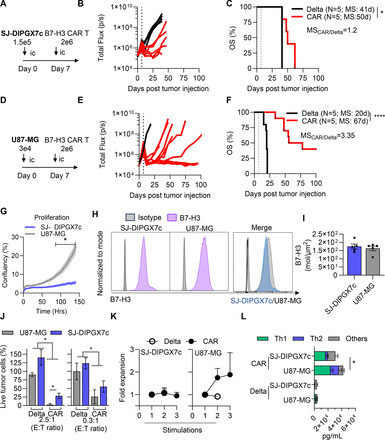
Background Chimeric antigen receptor (CAR) T-cell therapy has demonstrated safety and modest efficacy against diffuse midline gliomas (DMGs), a highly aggressive pediatric brain tumor. However, mechanisms of CAR T-cell resistance in DMG settings remain unknown.Methods We compared the efficacy of B7-H3 CAR T-cells between SJ-DIPGX7c (DMG) and U87-MG (adult glioblastoma) patient-derived cell lines and showed impaired efficacy both in vitro and in vivo. We performed live-cell imaging and single-cell RNA sequencing to investigate deficiencies in immune synapse (IS) formation between CAR T-cells and DMGs. Lastly, we genetically deleted RASA2, a negative regulator of T cell activation, and evaluated the resulting impact on IS formation and quality, as well as in vitro and in vivo functionality.Results We show that limited efficacy of B7-H3 CAR T-cells is due to DMG-mediated inefficient interaction between CAR T-cells and DMG cells. Specifically, DMG cells impair the IS formation, resulting in poor CAR T-cell activation, cytokine secretion, and limited anti-tumor response in vivo. RASA2 deletion improved CAR T-cell activation through the formation of a more functional IS. RASA2-deleted CAR T-cells exhibited enhanced calcium flux, increased accumulation of activated signaling molecules and lytic granules at the synapse, and increased actin cytoskeleton dynamics, which produced larger synaptic areas and resulted in enhanced migration ex vivo. Further, RASA2-deleted CAR T-cells demonstrated improved in vitro functionality and superior early in vivo anti-tumor responses against DMGs compared with controls.Conclusions Our study highlights the importance of understanding tumor-specific factors that limit CAR T-cell response and using this information to design superior next-generation CAR T-cells. Specifically, we identify cytoskeleton remodeling and T cell motility as therapeutically actionable targets for future engineering approaches.