On the strategic situation of Iran

Clausewitz "War is the continuation of politics by other means" is one of the most misunderstood sentences in history

Most people (including the current U.S. government) think this implies that if you cannot reach a goal by political means, you just send in the marines.

What Clausewitz really stated is the primacy of politics. Military power is no miracle component of politics, but any use of military power must be based on a political concept.

As we see the preparation of ground troops being deployed, I want to point out the political and strategic considerations that should have be taken into account (and of which I am sure of that they were not happening in Trumps brain).

  • Iran has very little military power left. Air force and Air defense are virtually non-existent. Command and Control is spotty at best. Except for drones and rockets, military technology is at cold war levels (at best).
  • But the country is huge and while the regime has no popular support, it's power base is (for autocratic regimes) rather broad. There are probably still hundred of thousands still willing to fight for it.
  • For a significant part of the regime (even in the middle management), a regime change will imply they being killed. They have murdered ten thousands of protestors. If they lose power, there will be a bloody payback.
  • So while the military in Iran is hundreds of times less powerful than that of the U.S., the regime will fight quite literally to the death.
  • While Iran can do little to damage the U.S. directly, it can inflict tremendous damage on it's neighbors and therefore on the world economy.
  • The damage done to the neighbors will be blamed on the U.S. and Israel. Any remaining prestige is currently being flushed down the drain.
  • Even a quick and decisive victory of the U.S. forces would destabilize the region for decades. The infrastructure to feed the 90 millions Iranians was shaky before the war. There is a danger of huge masses of people being displaced.
  • I don't believe there will be such a quick victory. I rather expect a drawn out conflict with disproportionate losses on the Iranian side (military and civilian).
  • Ground operations will be similar to the 2001 invasion of Afghanistan, but with more fighting in urban areas. The U.S. will win every pitched battle, but will get an endless supply of ambushes.
  • Any newly established regime will only exist as long as the U.S. delivers military support. As much as the U.S. recently propped up the son of the last shah, they will most likely try to establish him as new leader.
  • For the U.S. to "win" the conflict, they would have to eradicate the current regime and install a moderately stable new government that is not hostile towards them.

    The U.S. have brought themselves into a situation, where any persistence of the current regime will be considered for the U.S. to have lost the war.

    And that is what makes the current situation really dangerous.

    Politics: On the stability of authoritarian regimes

    If you read about the current situation in Iran, you will quickly encounter wildly different assessments. The only thing this conveys with any certainty is that we don’t know shit. This article is an attempt to explain why…

    Literarily Starved

    What is the current status:

    • The U.S. has eliminated several Iranian leaders
    • The Iranian regime in total is currently not being seriously challenged
    • Air Defense, Air Force, Navy and C&C infrastructure of Iran is practically non-existent
    • Iran still has their enriched Uranium, the status of enrichment facilities is unclear
    • Weapon stocks on both sides are dwindling fast
    • The supply situation for the Iran is more difficult than for the U.S.
    • Iranian financial revenue has doubled compared to four weeks ago
    • Iran has now de facto control over the street of Hormuz
    • There has been significant damage to the infrastructure in the gulf states
    • The relationship between the U.S. and it's allies (NATO and gulf states) has worsened significantly
    • The U.S. has removed "opening the strait of Hormuz" from their war aims.

    This is not what an U.S. victory looks like.

    The Shot Exchange Problem

    I noticed that the sentence:

    The supply situation for the Iran is more difficult than for the U.S.

    was easy to misunderstand.

    There are two aspects to it:

    • the total economic situation and
    • what is called the "shot exchange problem."

    What is the problem?

    Let us assume the Iran shoots a Shahed drone at the AWS datacenter in Dubai (happened). This drone sets the Iran back about 20.000 to 50.000 USD. That is a nice amount of money.

    Now let us assume that Dubai spots the drone relatively late as it flying at low altitude and the weather wasn't great (this has happened as well). The only weapon that can catch the drone now is a Patriot PAC3 interceptor. This shiny toy costs about 4.000.000 USD per shot. But because the drone enters an area where you find juicy targets of very high value, the operator presses the button anyway.

    The Iran has now spend perhaps 40.000 USD and made Dubai spend 4.000.000 USD. It was useful for Dubai to launch that interceptor, but expensive. They spent 100 times the money Iran spent. This is called a "shot exchange problem."

    If you think this is an academic problem, I have to disappoint you. Since the start of the campaign, the U.S., Israel and the Gulf states have burned through several times the number of Patriot PAC3 interceptors than the Ukraine has received in 4 years of war. And Iran has launched a tiny fraction of the missiles and drones that Russia has launched against the Ukraine.

    The Ukrainian advisors were "surprised" to learn that PAC3 interceptors were regularly used on things like Shahed drones.

    So if Iran can create a 1:100 shot exchange problem, why do I think that the supply problem for Iran is bigger?

    First: Not every shot generates a 1:100 cost disparity. Sometimes it is only 1:10 or even a bit less.

    Second: Even if the U.S. plus Israel plus Gulf States spend 100 USD per ever USD the Iran spends on rockets and drones. They can still afford this better than Iran does.

    I hope this explains that sentence better.

    If you want to understand where I get my numbers from, I can only recommend to start with this video: https://www.youtube.com/watch?v=UWS0kXVLCQ4

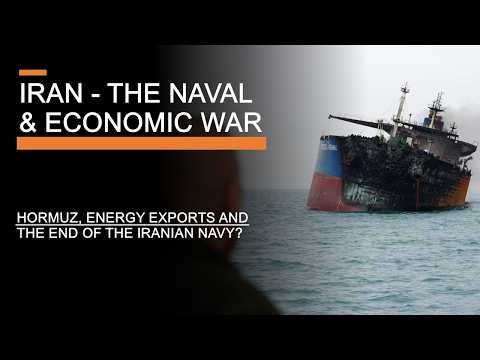
    The Iran Naval & Economic War - Hormuz, Energy Exports & The End of the Iranian Navy?

    YouTube
    @masek I think this only takes the amount of money spend in account but not the time rebuilding the ammunition, if there is also a disparity in favor for Iran this could also lead to trouble for US/Israal and the other countries involved..

    @lairsdragon The money is the best approximation for time and effort we have. And Iran loses a lot equipment even before it is being shot.

    There are also other effects coming into play: e.g. the U.S. is starting to use cheaper stuff. An example would be a B52 dropping JDAMs instead of tomahawks being used.

    The danger is less the U.S. running dry but they not having enough stock for another even bigger event.

    @masek I thought the weapon stocks is better for Iran, but I may have read bad sources. But unfortunately they only need to shoot one Shahed to close the strait. Whereas the US needs a peace deal or boots on the ground over the whole length.

    @do3cc There is an imbalance: a Shahed is much cheaper as 95% of the ammunition that is used to shoot it down.

    But the economic disbalance between the forces is more pronounced than the "shot exchange problem" that I described above.

    @masek not saying I'm even remotely actually suggesting it, but the situation is so bad, it just might make political sense for the current US administration to simply nuke the whole area.

    I better not dwell on that thought though, I want some sleep this week.

    @jollyorc I avoid that thought because the consequences would be even worse.
    @masek @jollyorc
    They probably would, if that wouldn't mess with getting the oil.
    @Garonenur Unluckily you could nuke the country twice over and it would not affect the oil. You may need new wells though 🙂.
    @jollyorc
    @masek @jollyorc I guessed it would mako working there hard, too. The oil in the ground (or even in storage?) would be fine.
    @Garonenur Storage: not so much. But the oil in the ground would be fine.