 Charlie Stross
RE: https://mastodon.social/@jef/116308472633215904
Can't park there, mate.
RE: https://mastodon.social/@jef/116308472633215904
Can't park there, mate.
@Steveg58 Wherever it wants to!
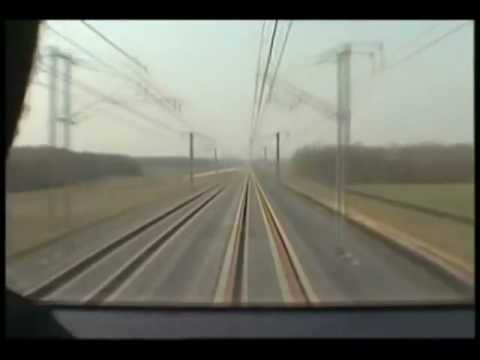
(But why are your locomotives so heavy? No overhead electrified traction and no electric multiple units—with a motor on every bogie—so only the loco has drive wheels and it needs mass to hold it in contact with the rails while it's laying down the torque, that's why. Primitive!)
@cstross @tudor
The numbers suggest the BHP train had about 50% more KE and it was all gravity powered. Gravity is not your friend (but you knew that already).
Edit: If my mental arithmetic had been operating that late in the evening it would have been clear that 300x3x3 = 2,700 tons equivalent not 27,000 tons equivalent so just a tad under 16 times the KE in the BHP train.
@Steveg58 @cstross "The UPS switchboard is physically set up in a manner that when facing the switchboard, the "A" system, is on the left side and the "B" system is on the right side. This is the exact opposite to the schematic diagram for this UPS system, where the "A" system is on the right side of the diagram and the "B" system is on the left side."
So so so so beautiful.
@Steveg58 @cstross back when I was working with several huge datacenters, communication was done with longish e-mail threads (and phone meetings). The subject of these e-mails usually changed accordingly - hey, there is this issue, outage, rca etc.
There was one, with the subject of "Non impacting power work" where everyone kept the subject very carefully. Some computers were not on a redundant power supply, but they should have been. Some important ones. It was a fun two weeks.
 Steveg58
 tudor
tudor Phil Sutherland
 😱
😱