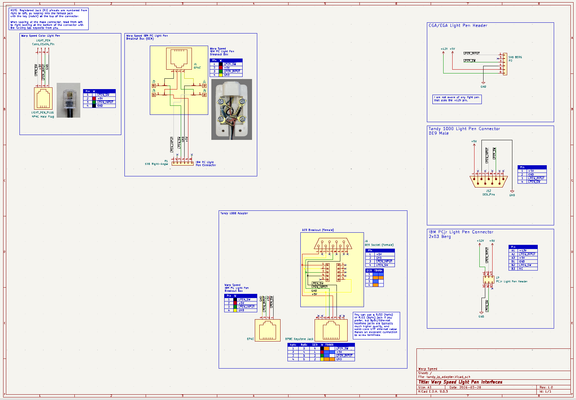
KiCad is pretty useful for documenting pinouts, even if no actual circuitry is involved.

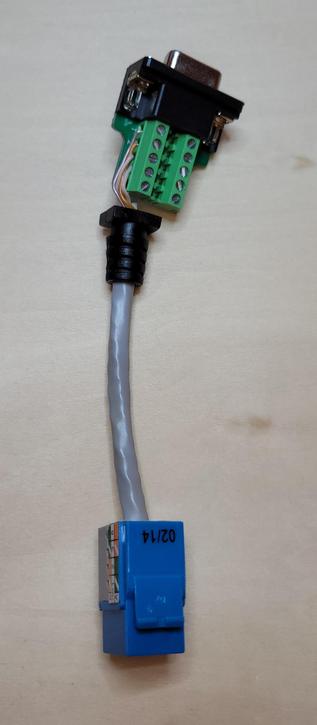
Here I have documented how the Warp Speed light pen for the IBM PC is connected, and how I wired up the Tandy 1000 adapter for it. Also the PCjr light pen header, because why not.

I'll just export this to PDF and include it with everything when I upload it to archive.org.
#retrocomputing

The adapter is pretty simple to make. You just need an inexpensive de9 breakout with screw terminals, some solid core ethernet cable, and a ethernet keystone jack. No soldering required!

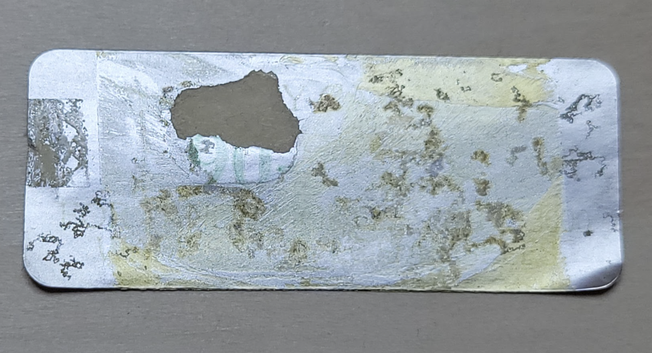
This silver sticker that was on the side of the box is in rough shape.

I wonder if we can work some magic in Photoshop to read what was on it.

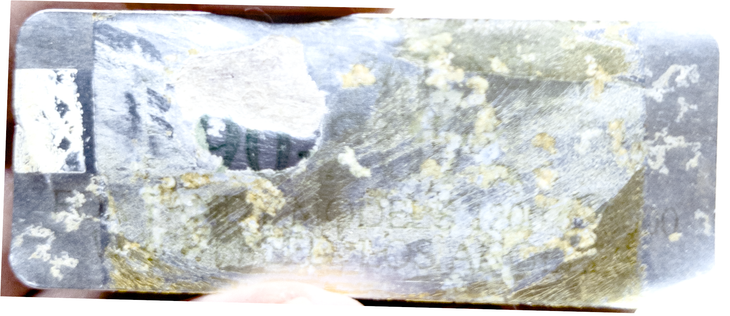
You can make out "LOS ANGELES" at the bottom faintly. That's where Warp Speed was headquartered. I think the last line probably says "WARP SPEED, LOS ANGELES CA"

The line above it says "MODELS" and some numbers. Then the large digits in the center are a model number for this pen, 90-207 perhaps ?

PROTIP: When doing research on rare retro hardware, do it before you publish a YouTube video with the name of the thing in the title.

Because after that, you will just be Googling yourself.

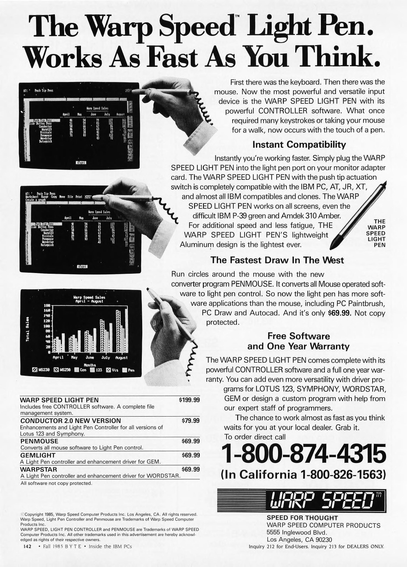
I did find this cool advertisement for the Warp Speed light pen.

"CONTROLLER" is their DOS shell, and it's actually not terrible - I will be making a video demonstrating it later.

My driver disk came with CONTROLLER 2.0. Reviews at the time praised it, but that's about all the praise this thing got - the drivers for Lotus 1-2-3 and other software were a bit glitchy.

#retrocomputing

There's also a "mouse driver" for your light pen.

The way the light pen works on the PC is not really amenable to this - there's no interrupt like you have on the serial port, so the driver would have to poll the CGA status register constantly. Rather than do that, they only check the switch every so often. So your cursor will not update until you poke the screen.

But unlike a normal mouse, the cursor will warp to an absolute position. This isn't exactly how mice work - mice report relative movement in Mickeys.

Thus the driver has to understand how various programs store the absolute mouse coordinate and modify it directly.

This is unreliable and error prone.

If you're wondering how you click if the one button on the light pen is dedicated to just moving the cursor around - simple, you double-click.

Doubleclicking is fairly easy to do on a mouse because of the short throw of the switch and the fast twitch muscle fibers in our finger (I just pulled that out of my ass but it sounds reasonable)

Trying to double-click with a light pen is not a great experience. You basically have to jerk your whole wrist. It starts to get uncomfortable surprisingly quickly.

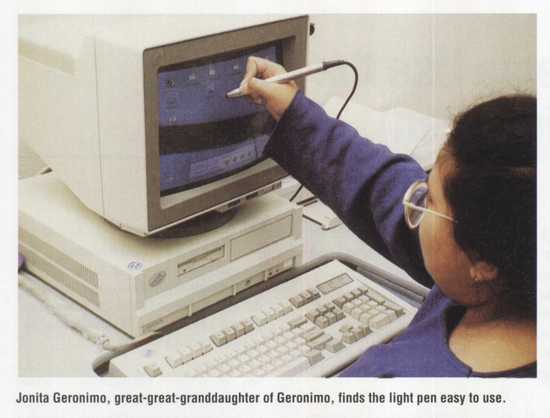
Here's a student using another Warp Speed light pen, on a much newer computer than I would have figured would still be using a light pen.

Light pens, in 1995??

Also, she's a direct descendant of Geronimo. I can't say I was expecting that. You got me there, Light Pen.

Here's the article:

https://archive.org/details/IBMPersonalSystemsMagazine/PersonalSystems_1995_MayJune/page/n13/mode/2up

#retrocomputing

Unfortunately "Warp Speed" was also the name of a column appearing in an OS/2 magazine, and there was a "Warp Speed DOS" for Atari Computers ... so there's a lot of false positives to sort through on the Internet Archive if I want to dig up more light pen goodness.

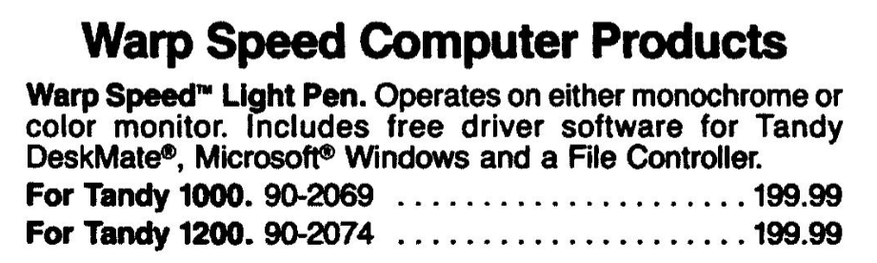
This explains what our particular Light Pen was doing being sold at Radio Shack.

The Tandy 1200 was your more standard XT clone, so it would have used the same CGA header.

I guess the mystery of what those numbers were is solved.

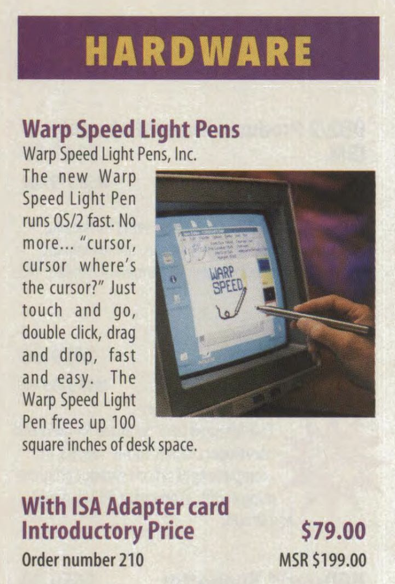
Below that is this ad for another light pen. It's slightly cheaper as well.

I've seen reference to this software disk before - I'd love to get my hands on a light-pen DOS enabled solitaire...

It's sort of sad how much obscure software may just be lost to us forever.

I'm calling bullshit. No way anybody actually drew that with this jank-ass light pen.

Finding information on companies from the 80's is frustrating - you'd think there would be all sorts of documents regarding establishing businesses, founders, bankruptcies and liquidations. Sometimes there is, but most of those records are just not online.

Even major news stories like the FCC raiding Seequa Computer - the FCC responded to A FOIA request saying they didn't know anything about it.

Bullshit. The intern you sent to check the file room took a two hour smoke break.

I can tell that sometime between 1986 and 1988, Warp Speed Inc. relocated from Los Angeles to New Mexico. Or at least, their PO Box did.

No shade on New Mexico - beautiful state, but that does not imply to me a successful corporate trajectory.

I'm honestly surprised Paramount didn't have "warp speed" trademarked.

Warp Speed calling their ISA card the "Phaser" is also super useful for googling anything about it in 2026.

Set Phasers to Unfindable.

If this little light pen adventure hasn't already been phallic enough, there was a light pen called the Trojan Penmaster.

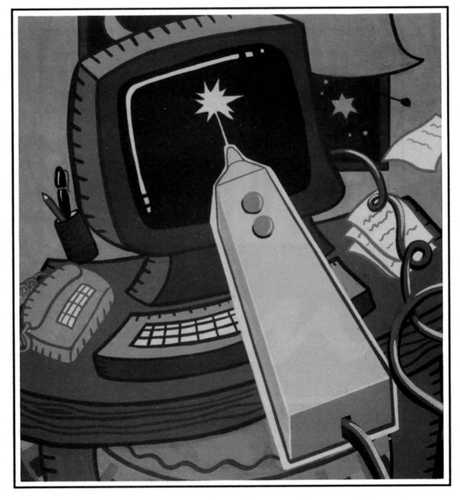
Look at this awesome 80's art. Pew pew goes your Trojan! Buddy, I think you have to be a little closer to the screen than that.

https://archive.org/details/Trojan_PenMaster_Light_Pen_Manual

This scan is ridiculously clean. What, did we have PDFs in 1986?
Oh, it's just somebody with ABBY finereader denying us a proper archival copy of computing hisotry. no biggie
See, you don't even need AI to deface the historical record. pew pew

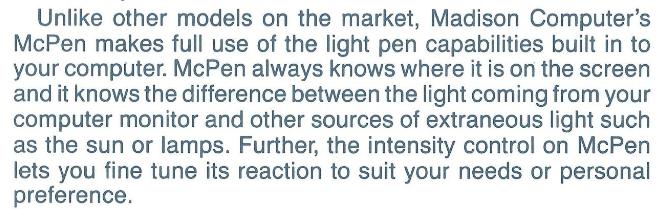
Here's a McPen. Maybe they gave these away in happy meals

https://archive.org/details/mcpenusermanual/mode/2up

MCPEN User Manual : Madison Computer : Free Download, Borrow, and Streaming : Internet Archive

MCPEN High Resolution Light Pen for use with Atari, Vic-20, Commodore 64 Computers. For graphics, games.... and more.

Internet Archive
Toot your own horn much, Madison Computer?
Ok, enough faffing around on archive.org. Time to record a Light Pen demonstration video!