 bob_theslob646
Founder of GitLab battles cancer by founding companies

The linked post about his treatment is basically a vanity article; low in useful information, but high in vague assertions and platitudes. There's also a link to a post griping about the red tape someone experienced while trying to self-treat their dog's cancer that's weird. I clearly live in a different world than these people.
Here is a video if you want more detail.
https://forum.openai.com/public/videos/event-replay-from-ter...
"Event Replay: From Terminal to Turnaround: How GitLab’s Co-Founder Leveraged ChatGPT in His Cancer Fight"
Event Replay: From Terminal to Turnaround: How GitLab’s Co-Founder Leveraged ChatGPT in His Cancer Fight - Video | OpenAI Forum
At a recent OpenAI Forum conversation, GitLab co-founder and Executive Chair Sid Sijbrandij joined geneticist Jacob Stern to discuss how they have used AI, advanced diagnostics, and personalized treatment design in response to Sid’s osteosarcoma diagnosis...
This is a common trope in the tech field- successful tech person who is good at tech gets disease and wants to help cure it. It's easy to generate a lot of data these days (whole genome sequencing, various tests) but the reality is that turning that data into actionable knowledge is remarkably difficult.
Much of the red tape exists to help people avoid making common mistakes that aren't obvious until you've been through the process a number of times (other red tape just exists to gatekeep unnecessarily).
It's wild to me to hear this being spun as vanity, like it's some influencer clickbait or linkedin slop. You could argue anyone posting anything online is driven by vanity, but in this case we're talking about someone who took agency in his own medical outcome, and essentially experimented on himself. Sure it was selfish in the sense that he didn't want to die and he bent all his effort and resources to it, so what? I don't see exercising ones will-to-live in this way being a huge moral gray area. Other commenters are saying why don't we fund more research? Well sure we should do that too, but it's important to recognize that the type of approach he took here only works because it was one individual willing to combine a significant amount of personal effort with his own moral authority to try out risky things on himself. Even with orders of magnitude more funding, you can't ethically do this kind of thing without the consent of the patients, and there's not enough data on these types of approaches to adequately describe the risks to patients if they aren't specifically motivated to lean into the details like this guy did.
This is the most supremely motivating post I've seen in a long time. I know what it is to be diagnosed with cancer, being rushed to surgery - it's amazing how quickly the medical-industrial complex can move once you've got a diagnosis (at least in Australia). I had a short period of contemplating terminally, because cancer claimed the life of most of my family. Thankfully, after surgery it was gone.
To see Sid use his motivation and resources to solve his own problem is the core message (IMHO) of the hacker community.
It makes me look at my own problem (Peyronies) in a different light; a disease which has affected my life in ways which cannot be overstated. Yet, all the money in the world right now can't fix Peyronies - yet in reading his journey my mind has been changed about this.
His slide title: "I'll talk to anyone, I'll go anywhere, and I can be there anytime" is certainly the mindset!
Thanks for posting this - I'm inspired to take similar action for Peyronie's. Anything is possible.
I commend you for speaking openly about Peyronie's, I imagine that isn't always an easy thing to do (or to deal with). Best of luck, and I hope you manage to make progress with it. Effective treatment wouldn't get as much airtime as effectice cancer treatments, but it would certainly have a positive effect on the lives of millions of men.
You are right on the mark. What triggered me was the slide in Sid's presentation: "Assessing Fibroblast Content of Tumor". Peyronie's is all about Fibroblasts. I actually typed my reply quite a few times, deleting mention of Peyronies and retyping it. It's a shameful condition for me, and I realize that I have to get over this. Peyronie's affects 1% to 20% of men, primarily because it's (if you're anything like me) - is impossible to talk about.
Again, you're completely right. Talking about the disease is the first step.
It’s not quite the same, but I had a frenulectomy done due to severe phimosis leading to pain and bleeding. It was absolutely horrible, and I was shocked at how hush hush we all treat conditions like this.
Thankfully there’s a straightforward surgical treatment for it, and I hope that you’re successful on your quest around Peyronie’s!
I had to google your condition to empathize, but wow - terrible. I'm truly happy for you that you could solve it! Thanks for your best wishes!
This reminded me of my own story, when I was 15 and had phimosis. I was embarrassed to talk about it with anyone, so in my desperation I posted about it on a forum that claimed to help kids in need of help. Someone responded and gave me instructions that they claimed had a high success rate at treating the condition.
I followed the instructions for a few months and it fixed it. I went back and sent the biggest thanks to the responder. I did not expect to get any help from a random forum.
There has to be swathes of kids struggling with "embarrassing" (in quotes, because they actually aren't embarrassing at all) issues like this. I hope today's internet can provide help to the ones that have nobody to discuss them with.
Several years ago I was doing advertising websites, one of our customers was (Pfizer? Bayer? both were customers) they had developed a drug against Dupuytren's contracture[1] and apparently found it effective enough against Peyronie's that we were asked to create a website describing this (possibly off label) use of that drug.
Honestly I have no idea if it was effective or not, nor do I know anything about the side effects, but just in case you were unaware of that particular option I want to put it out there.
From what I can find, doing an online search along that path it might have been Xiaflex/Xiapex by Pfizer.
(Not paid by anyone in this particular business anymore, just remembered it when I read your comment).
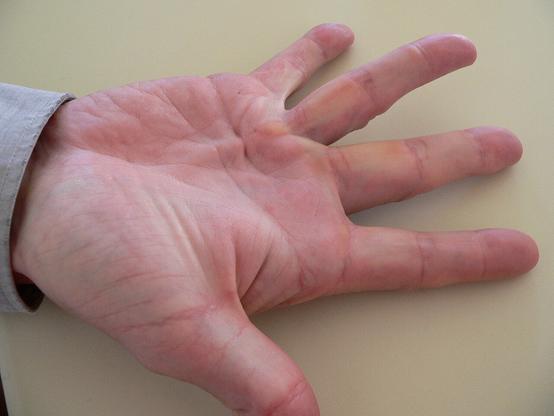
Thanks for your comment. I'm aware of Xiaflex, and it's been clinically proven to work against early-stage Peyronies. When the disease has reached the chronic phase (and calcified) - Xiaflex hasn't been clinically proven. Xiaflex is now on-label for treating Peyronies.
My mistake wasn't acting earlier, because I had no idea what was happening. But thank you again for your comment. Thank you!
Fellow Australian with Peyronie's here. Do you know about Dr C Love? I have just had a PIG surgery with him. It is too early to make a definite statement on the result yet, but things are looking a lot better than before.
I live in the EU at present, I haven't heard of Dr C. I've seen a little Doctor Worship on Reddit, but no doctor who can deal with Chronic conditions. In the NL the only option was Tunica albuginea plication (TAP) which results in a loss of length. I've read that PIG in 44% of cases fixes this, however... ugh... surgery. From the bottom of my heart I wish you success in this, and I'd love to stay in contact and hear of your recovery - but how on HN?
@ aol... so retro ;-) - sent you an email.
I am watching DTF St. Louis (which is not a terrible reality show about a third tier city like the title implies, actually a Jason Bateman kind of dark comedy/whodunit), and Peyronie's features in the story. The show also has the first commercials I've ever seen for a Peyronie's treatment, and apparently it's an official ad partner of the show. I wonder if some enterprising show exec decided to go pitch the perfect sponsorship or if the company making a treatment commissioned a show...
A cure for Peronies which is non invasive, works on chronic/non-chronics is worth countless billions.
Given your personal experience, I expect you know significantly more than I do, but I just wanted to note: about 20 years ago, I was part of a small company that filmed and edited educational, medical videos for various clients. One of the main things we filmed for a while were Peyronies repair surgeries. They were using a product called Surgisis from Cook Medical as a tissue scaffold to straighten things out. It looks like, sometime in the past 20 years, Cook may have moved on to a new product called Biodesign: https://www.cookmedical.com/surgery/the-path-from-surgisis-t..., but I don't know anything about that.
You may know all of this already, and it may not be relevant to your situation at all, but in the slim hope that my experience of editing scores of Peyronies surgery videos may help nudge you in a new or helpful direction: there you have it!
Thanks for your thoughtful comment! You're right - Biodesign can be used in Plaque Incision and Grafting (PIG) for Peyronies. Unfortunately PIG IMHO has (in some studies I have read) a 50/50 chance of erectile dysfunction, nerve injury, instability and so on. In essence, PIG might be rolling the dice to make a bad situation completely untenable. But again, I do thank you for your comment!
Thanks for the kind response, and for teaching me more about the possible risks and downsides. I was just involved in the editing of the surgical footage, so I never got the "here's the potential drawbacks" speech. I wish you all the best in finding improvement for your situation!
Let me tell you, I've seen more than my fair share of surgery videos involving "de-sheathing" in my research: I don't envy your editing work - but I envy your stomach ;-) But thanks for your reply, the community here can be great at times!
How do you deal with setbacks both in work and life, and show resilience and belief you can find a solution? Is this innate or something you worked on? Also, are there things you think are impossible for you to do?
I have worked as an architect in HCLS technology for 10 years with Google and AWS.
Listening to you stitch all the technology and innovation together, moving from the information world to the physical world, as a patient, almost brought me to tears.
You said this will be the standard of care in 30-years, but the capability is here today. Listening to your recording is a profound moment in my life.
Thank you for sharing your journey.
Such an inspiring read. As a bioinformatics researcher I'm awed by the depth of the deck. How do feel about the process of learning cancer biology and bioinformatics?
Ps. I work for BillionToOne oncology and we build some of the most sensitive liquid biopsy tests (https://www.northstaronc.com/). Feel free to reach out if it pique your interest!
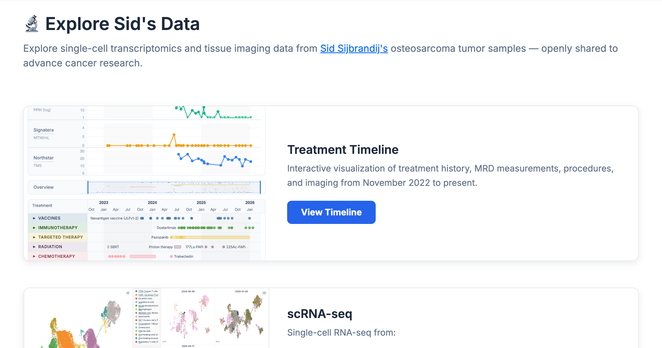
It wasn’t easy to learn it while dealing with the side effects of chemo. But AI helped a lot, also see the OpenAI forum talked linked on the page. Love BillionToOne, also see https://osteosarc.com/timeline/ MRD Northstar for my results with it.
I think you’d find Dr. Richard Scolyer’s story really relatable. He’s an Australian cancer expert who, along with his colleague, is using himself as "patient zero" for a world-first treatment for his own brain cancer. They’re basically doing the research and the treatment in parallel to find a new way forward: https://www.abc.net.au/news/2025-10-30/dr-richard-scolyer-sp...
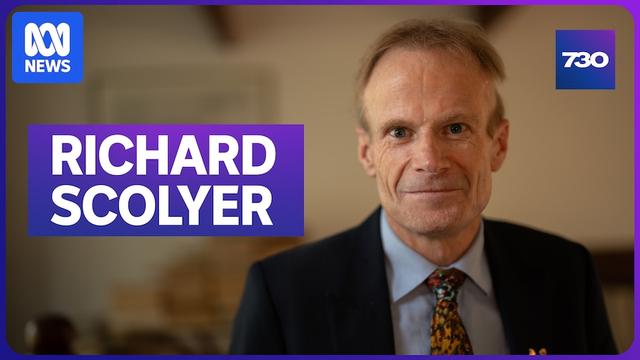
Unfortunately, I found this from 12 days ago https://www.dailymail.co.uk/news/article-15655909/Dr-Richard.... Glioblastoma is a horrible disease.
