> “Two young Englishwomen were hitchhiking when the car they were in hit a tree”; “Yvette and Nicole (both twenty years old) were secretly hitchhiking when they died on the way to their vacation spot.”5 In the 1950s and 1960s, at a time when road fatalities were reaching unprecedented heights, sensationalist headlines and brief news items suggested that it might be unwise to entrust one’s life to an unknown driver.

today, specifically women are usually terrorised about travelling alone with stories of rape or rape-murder, especially if they're young and pretty, with the thinly-veiled implication that if you dare to have adventures you're basically asking for it (there's an excellent feminist webcomic about this topic and because all search engines are broken it took me 20 minutes to find it, only by accident because someone reshared a page on facebook, so please go read it: https://homeiswheretheinternetis.blogspot.com/2014/04/dont-let-fear-stop-you-from-traveling.html ).

it's curious to think that in the 50s and 60s, the way they terrorised women was with the threat of *bad drivers*. I guess car accident is a higher threat model than random stranger rapist after all  not the least because like, someone who's driving is in a inherently vulnerable position, as long as you're willing to risk a car crash for both.

This paper questions how breaks of convention, such as those which exist in hitching a lift, impact upon the sensing of place and the encounter with road-scapes. As a method of travel, hitching ruptures normative journeys, whereby destinations are no longer extensions of the present. Hitchers act on a compelling need to move in an intensely free yet highly constrained manner; to seek heights of physical and mental experience and to do so as if travel, perhaps even life itself, were fleeting opportunities.

"Why did the Anthropologist Cross the Road? Hitch-Hiking as a Stochastic Modality of Travel", Patrick Laviolette

> Be good conversation: If you share a language with the driver, it often makes sense to try to engage them in casual conversation. Drivers often pick people up to make their rides more interesting. They are doing you a favor picking you up, you can return the favor in part by keeping them engaged.

r:  
e: ah *now* you want me to front lol

> Avoid dark or military clothes, they do not create a lot of trustfulness. Looking too much like a colorful hippie will possibly scare other drivers off. Take off your hat (unless it's a really funny one), don't wear gloves, open your jacket, even though you might freeze. Also helpful are t-shirts that identify you with something, be it a country, a football team or a band - Zenit has been picked up because of his "Switzerland" t-shirt more than once.

 the problem is that it's cold as fuck. all my windbreaker stuff is black bloc standard issue, I can see how that's a problem but I don't have money for new clothes  I have colourful clothes and fun dresses and whatnot but they're all too light to stay on the side of the road or rest stop parking lot at 5° with drizzle. I guess I could go with the white overcoat and take off the windbreaker when trying to meet people.

and I should probably spend money on a reflective belt or something, statistically *that's* a real actual danger, if you find yourself having to walk besides a highway late at night with no space for pedestrians—you think that's unlikely to happen but it happened to me in Heidelberg.

> Take off your hat (unless it's a really funny one), don't wear gloves, open your jacket, even though you might freeze. Also helpful are t-shirts that identify you with something, be it a country, a football team or a band - Zenit has been picked up because of his "Switzerland" t-shirt more than once.

oh no, an actual reason to wear the brazil T-shirt  well Mother Anarchy will forgive my sins if it's for a good cause, right?

but the problem is if I wear the brazil T-shirt here literally everybody will assume I'm for the football team, and I don't have enough knowledge of football to even fake a conversation >.>

I wouldn't mind learning a bit about football just for the sake of talking to people, I have no prejudices about hobbies and I mean have you seen Marta?!? but it's just that, there's so much to learn, the world is so full of interesting things. all my life I learn and learn and it's never enough, I wish I could live a thousand lifetimes and keep learning forever. (https://xkcd.com/1095/ )
Crazy Straws

xkcd

> Wear a short-brimmed straw hat or a light coloured cap as long as it doesn't hide your face too much. If it is raining, it's better to use an umbrella than a hood.

> Your mood is very relevant. So always be happy, or at least pretend to and keep smiling.

does not apply to Germany where if you smile at people they think you're insincere and crossing boundaries lol

though I guess maybe in the hitchhiking context you could get away with smiling since it's clear that you want something from them and they know what. if you smile at Germans in daily life as a matter of politeness they react like "what is this person trying to sell? is this a cult? are they hitting on me?"

conversely Germans in normal conversation will gaze right at you with direct eye contact (the famous "German death stare") and speak with a clear and loud voice in an intonation and facial expression that to the uninitiated feels like you're in an argument. they're not doing it to be scary, it's just a cultural thing. it's invisible to them and they're, as a general rule, very unwilling to understand or accommodate other norms regarding body language or conversation, so I can't imagine how uncomfortable it must be for Japanese people (who have the exact opposite conversational norms) to talk with strangers here.

(*does not apply to the neurospicy queer people who, as a rule, generally skip the death stare and value gentleness in conversation, though they still have the overall attitude that if a stranger talks to you they're being inconsiderate.)

when I'm having trouble with mistakenly parsing normal German body language as aggressive when it isn't, I imagine I'm living in the city of (fantasy) dwarves of Final Fantasy 1. "a short and sturdy creature fond of drink and industry", they're just missing the "short". when you imagine the dwarvish folk looking grumpy on the way to the mines but actually generously giving you food and drink at the inn, it's easy to parse the type of tsundere grandma who at first approach makes me feel like she's about to give me an earful at Netto, but actually gives me a sheet of discount stickers and leaves without elaborating

also the German witch grandmas who teach which weeds are edible in herbalism courses are very much dwarf-witch-coded rather than wood elf-witch-coded  

the only elf-Germans I remember are the forest occupiers and even then they're more of like, those wild wood-elves with sharp fangs whose bare feet grow lichen and who can hear the cry of a willow and will curse the logger for it

the Poles I find hard to summarise. yes they have a well-known resting angry face and Slavic folk have a reputation for being scary, but once you accept that the facial language as just a cultural thing, they way they talk and act is actually way less intimidating than Germans, and they're also culturally much more amenable to conversation with strangers. if you drink alcohol you have a big advantage in bonding. they will kinda shower you in souvenirs and gifts and handcrafted little wonders like the Japanese. I don't have as much experience with Slavic people generally but I found all the Ukrainians and Russians and Croatians I've talked to actually very easy to befriend, in contrast with their image in the West. like if you invite a Pole or Ukrainian to go somewhere they'll actually go with you. if I could pick I'd much rather live in a Slavic country than Germany (though I'd probably pick Croatia or Montenegro or something, for the climate, though they're still too damn cold…)

some cultural things: Poles like talking about negative things but they don't let it like, paralyse them. it's more a like "you think *this* is a bad neighborhood? back in Poland we went uphill both ways…" kind of thing. In many ways Poles resemble Asian cultures to me, they're unexpectedly collective-type in many regards. For example, expressing negative emotions is a form of bonding, if they do it that means they're seeing you as a friend, while pride is toned down even between friends https://journals.pan.pl/dlibra/show-content?id=99862 . this has to be navigated by us Brazilians, who culturally value optimism and looking on the sunny side of things. if you do it just right you can be the ray of sunlight for them, but that can be only possible if you are willing to engage with the "Polish culture of complaining"; to be accepted as sunlight you have to be open to the austere appeal of a snowy landscape, so to speak.

I don't know enough Polish people to make a judgement but in my limited experience, they are more like than the Chinese than the Japanese in that they can easily resent foreigners coming up and making pronouncements about Poland being this or that without really understanding it. interest in Poland is still appreciated, but you have to make clear a position of humility (remember it's a culture generally averse to boasting). the idea that Polish names are hard to read or pronounce is a very common sore spot, and here you can get a lot of bonus points by putting in the work to learn to pronounce things, and most importantly don't be like a USA person who keeps talking about other people's languages as if it was some impossible ordeal. conversely, Poles who learn English or other languages come from an education system that highly depreciates their own language traits—I can barely looks for videos on Polish phonology on youtube without having to wade through endless channels about "accent elimination"—and unless you know someone feels positive about that you should refrain from commenting on a Polish accent, no matter how pretty you think it is, as it's often a sore spot too.

one common experience between Slavs and Latinoamericans is that a lot of us are read as "white" in Western Europe, and that doesn't really fit the model of what they expect a "migrant" to be, so Germans will kinda completely erase the historical and socioeconomic gap between you and them and treat you as "just one of the guys", as if you were the same as a Frenchwoman or an Italian, with absolute incuriosity about your personal history in the Second/Third World or the state of your country and its history etc. it's easy to bond with Poles by complaining about how the Germans treat you :3

Emotional Frankness and Friendship in Polish Culture - Polish Psychological Bulletin - PAS Journals

Polish Academy of Sciences

one thing that worries me is if my tattoos will make people think I'm a capital-C Communist. especially with like, older folk and the like. I guess if the topic comes up I can talk of my genuine hatred for Communists, but the issue is that where a misunderstanding is most likely to happen would be precisely the people I don't have the language to talk about it. at least I got the three arrows on my right hand—everyone in the Polish left scene knows where that puts me, though I have no idea how it goes outside of the subculture.

two papers about Polish emotions: żal (≅ "sorrow") https://files.clickweb.home.pl/9d/f4/9df4f7b8-816d-4518-a371-4267d1abd512.pdf

and przykro (≅ "hurt") https://link.springer.com/article/10.1023/A:1026697815334

(elilla& lore enjoyers might remember that my HEMA montante is named "žȁlōst"; that's Croatian for żalness.)

> On truck rest stops called MOP (most times petrol station + parking + restaurant) there will most likely be free showers and restrooms. They're in a separate building that's fairly easy to find. The showers are pretty clean and have warm water. As long as you wait for your turn in the queue, no one will have a problem with you using them.

the one thing that's difficult to do when you're a futa

I wonder what's the cheap supermarket food in Poland that's vegan
there's always something that's cheap and vegan and stave off the hungry. in Tōhoku I subsisted a lot on nattōmaki from the village supermarket in every mura too small to have a kombini, which is like, basically every place I did research on

> Wawel brand peanut butter filled chocolate (Highly recommend!)

ooh *now* you're speaking my mową 

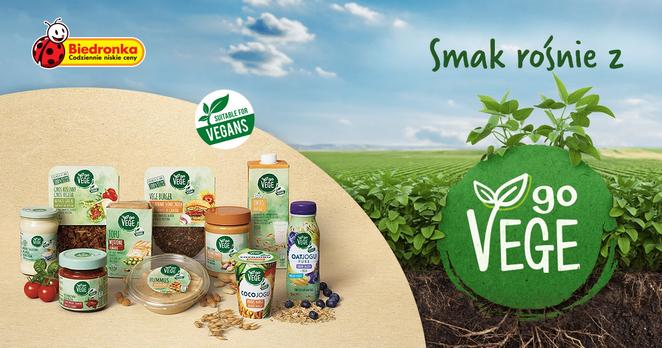
ok it looks like Biedronka Go Vege is the equivalent of what Netto is for me here
https://www.biedronka.pl/pl/go-vege
GoVege | Odkryj pole roślinnych możliwości w Biedronce!

Smak rośnie z GoVege. Odkryj pole roślinnych możliwości w Biedronce!

reportedly Żabka (Polish konbini) has vegan sandwiches too, sounds like way easier than Japan so far
sure hitchhiking to Poland would be way more fun if I had someone to share the experience with me, but all my girls are of the like "stay home cozy" approach to holidays
I'm happy to learn as many greetings as I can in one week but I think knowing English, German, Portuguese and Japanese will probably unlock most of the key demographics for my trip: scene punks, older people who travel to and from Germany to work, cute Brazilian immigrants and weebs

I was preeetty sure I had emailed the anarchist squat, using Thunderbird, but I don't see my email in the sent folder or anywhere, locally or IMAP  

well I just wrote them again, though not exactly with the same words cos I didn't save the other one, but who knows. this time it does show up on sent, so  if no reply until Monday or so I'll bother them on Instagram or some other social media, meanwhile there's a couple more hosts on bewelcome to try

@elilla ive occasionally had simmilar issues with thunderbird, but not recently
@elilla Wawel does have shitty and exploitative labor policies though.
@tagaziel sadly the norm, if they're not resorting to child slavery they're above Haribo for example
@elilla Can't escape capitalism, can we? Anyway, if you're ever going to visit Poznan, feel free to hit me up, couch is always available (I'd have made good on what I said earli r, but my life has... Complicated over the past year).
@tagaziel I'll be in Poznań next week!! probably Friday!! is there really a couch I haven't secured a host yet, can u DM me your matrix or signal 
@elilla
It depends. In bigger cities you can easily get hummus. Other than that? Canned beans?
@elilla sometimes I like to buy a bread roll, a container of hummus and a container of grated beet salad. Possibly it's not the cheapest option and you need a spoon to eat it.

@elilla When you have access to cooking facilities I recommend https://hortex.pl/kategorie-produktow/warzywa-na-patelnie/, with cooked green lentils these are brilliant, with pasta they are a light meal, and by themselves they serve as a meal in a pinch. Most of them come with a bag of spices included (fish it out before dropping them on a pan!), so it’s an extremely quick option for a very decent lunch. I think all of the Hortex ones are vegan (they don’t advertise it, but these are actually just veggies), and the non-Hortex ones are generally worse anyway, so try getting these.

(I don’t know how evil Hortex is, but if anyone wants to inform me then I’ll be grateful.)

Warzywa na patelnię - Hortex - Prosto z natury | Mrożonki i soki Hortex

Hortex
@elilla We have "żałość" as well. However, I have no idea how much it overlaps with Croatian "žȁlōst". Maybe @enza_paz can shed some light here 😊

@agturcz @elilla basically it's the same although I always associated "sorrow" with "tuga" (Polish "smutek"), while žalost sounds to me more like grief (Polish "żałoba") or the state / process of going though the sorrowful period. However, Croatian is not my native language so this is just how I would use these words as Polish native speaker.

The root "žal" is the same, However. I think that "żałość" in modern Polish feels more like the expression of pity for someone / something or even judgment when used ironically - It also feels very archaic when used in it's original meaning.

@elilla
Black fascism, Red fascism
Same,Same

@elilla Hey,
I'm German but also as you said Neurospicy.
First of all I agree on the death stare and the general directness. However there's also a regional tint in this. Depending on where you are from in Germany or any cultural German nation it's colored by where you are exactly from.

Even thou I'm Neurodivergent I do some of what you describe. I use intonation to color what I'm trying to express. I intonate the words depending on how I feel about something.

But from growing up in an area which experienced an influx of refugees from all parts of the very east of Germany there's a lot of mixing. I.e. we people from the West mixing with German from Prussia, Pommern and Schlesien.
Now when I grew up all that was gone but you can still notice that in the wild mix of people we have. Then I grew up around a lot of Slavic people like poles.
Especially after I moved to Finland I could feel how much I can relate to the immigrants I grew up with.
That affects your general attitude towards expression.
I noticed that in the north this direct passionate way can be seen as a aggressive. Some Finns are very intolerant towards such expression.
As a neurodivergent person that gets extra difficult when they don't see your own boundaries. The cross them only for you to express yourself like you do about being in duress which only makes it worse.
Outside of that if applied in the right amount the German directness can very effective and good thing. You just have to know when to keep to yourself sometimes.

@elilla my experience with Poles has generally been that they’re the most polite people in Europe. Genuinely friendly and well mannered.

(Though I’m saying this as a German, we admittedly have a low bar for politeness)

They’re also more fun than they let on.