 Brent Toderian
1. Here’s a thread on #NIMBY (“not in my backyard”) and the challenges of change in cities:
First off, although it might feel that way, NIMBY isn’t unique to your city, and it’s (probably) not worse in your city than anywhere else. It’s also not surprising, since it’s largely about human nature.
2. Many studies have shown that it’s normal to fear change to an unusual degree when it’s first proposed (see status quo bias) even when change is constant, & to weigh potential loss more heavily than we value potential gain. So #NIMBY likely can’t be avoided. Change will always be hard everywhere.
3. And to be clear, not all change in cities is beneficial, and of course everyone always thinks the change THEY oppose is an example of that!
But our cities DO need substantial change to address the many challenges and crises we’re facing, & we frankly need to be MUCH better at communicating that!
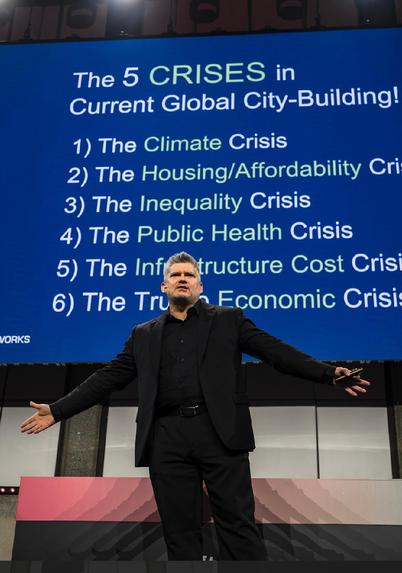
4. But fear of change and #NIMBY needn’t be debilitating when it comes to smart, responsible and badly-needed change in your city.
Cities that are skillful and self-confident listeners can learn a lot from NIMBY fears, and that learning can help make decisions better and approaches more successful.
5. But let’s be clear— listening & learning must result in TIMELY decisions for urgent crises. The tactic of always calling for “more process” is just that — a tactic. And there’s no avoiding that many of the biggest decisions facing cities WILL be initially unpopular. More process won’t avoid that.
6. We should ALL expect that our leaders, who are supposed to learn much more about the need/context for change than most of us will know, will be responsible enough to make the right decisions even when unpopular.
And NOT do the opposite, which is rage-farm populist lies about change to get votes.
7. I’ve said for years that if wrong decisions are made due to #NIMBY fears, it won’t be NIMBYs I mostly blame (altho given the obviousness of our crises, “human nature” doesn’t excuse them). I’ll blame decision-makers who knew better, had the information and evidence, and still did the wrong thing.
8. Too many engage in what I call “The Populist Playbook,” where lies and disinformation are deliberately spread and then used as an excuse to delay or derail badly-needed urban change in cynical ways. Chances are you’ve seen this where you live. It’s dishonest manipulation. bsky.app/profile/bren...
RE: https://bsky.app/profile/did:plc:ny5w2k6brb2kdubxnevke6li/post/3m53enq5d422l
RE: https://bsky.app/profile/did:plc:ny5w2k6brb2kdubxnevke6li/post/3m53enq5d422l
9. In my experience working in cities all over the world, the cities that are truly addressing our biggest challenges in serious ways, have honest community conversations about change, combined with real political will and leadership despite fear of change. #NIMBY is neither ignored nor pandered to.
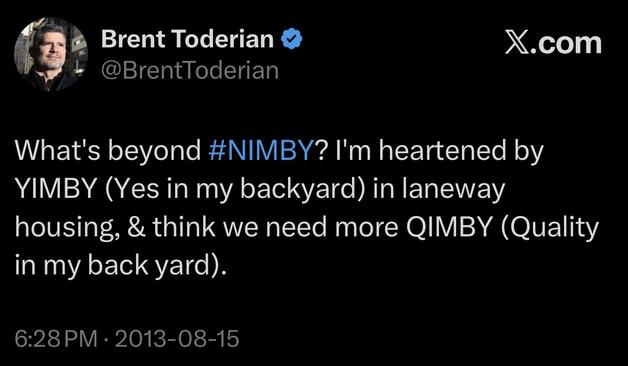
10. I’ll end by addressing the #YIMBY movement (“YES in my backyard”), which I generally consider a very good thing. Don’t ever let it become the extreme mirror image of the worst NIMBY approaches. The answer shouldn’t ever be an automatic yes or no about change, since neither has real credibility.
12. So I’ll keep calling for more badly needed density, more change, but always #DensityDoneWell. Listening/learning, smart design, multi-modal, with livable amenities.
Let’s keep talking about #NIMBY & #YIMBY. But let’s DEFINITELY not leave out my favourite, QUALITY IN MY BACKYARD #QIMBY.
Thanks.
ADDENDUM: My comments in this thread about #NIMBY and fear of change relate to what I might call “good faith” NIMBY. It’s important tho, to speak the truth that much of the history of NIMBY has been about much darker things, like racism & classism. That crap doesn’t get a pass based on human nature.