#meteors #astronomy
"Astronomers Say Recent Rash of Meteor Sightings ‘Warrants Serious Investigation’
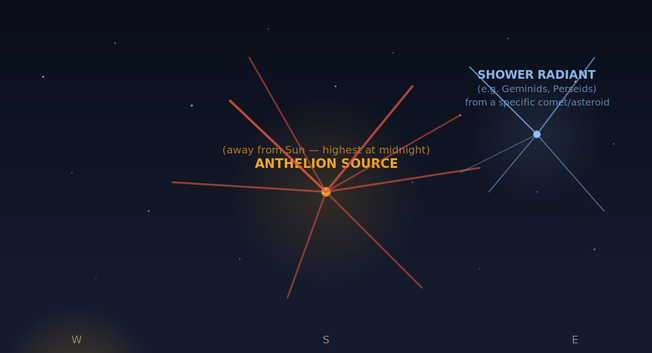
About a dozen of the biggest fireballs spotted by hundreds of witnesses across the sky are all coming from the same place, according to a new trajectory analysis.
Astronomers are still searching for answers behind this year’s unusual wave of loud and fiery meteor sightings. Over 3,000 people witnessed a slowly disintegrating daytime fireball over Western Europe. Hundreds more reported the sight—and sonic boom—of a 7-ton, 6-foot (2-meter) asteroid screeching above Ohio. March alone has already seen over 40 meteor cases, with yet another ripping through the sky over Texas last Saturday, breaking the sound barrier, before a fragment crashed into a north Houston home and ricocheted around one bedroom like a pinball.
Now, a new analysis published by the American Meteor Society (AMS) on Wednesday has confirmed just how much of a statistical outlier this 2026 barrage has been—as well as early indications of where all these rocks in our solar system might have come from.
'After years of stable baseline activity, something appears to have shifted, according to AMS researcher Mike Hankey, who manages the society’s fireball reporting tools. 'The signal is consistent across multiple metrics.'
(. . .)
'What makes 2026 unique is the combination,' Hankey wrote. 'Prior high-sound years like 2021 and 2023 had elevated percentages but moderate event counts. In 2026, both the rate and the absolute count are high.'
(. . .)
In other words, while the total number of meteor cases has not deviated from researchers’ statistical expectations, the percentage of loud and well-documented cases did."
https://gizmodo.com/astronomers-say-recent-rash-of-meteor-sightings-warrants-serious-investigation-2000738638
 Levka
Levka