 Brian Greenberg
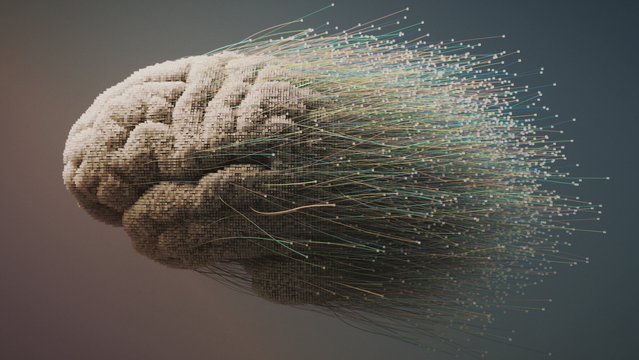
Your brain runs on 15 watts, less than most light bulbs, and claims 20% of everything you eat. One fiftieth of your body weight. One fifth of your daily energy budget. SFI Professor David Wolpert calls it "off-the-charts fitness cost." Nothing in biology comes close.
Last month, 15 neuroscientists, evolutionary biologists, and physicists sat down to ask the question nobody had rigorously modeled: what survival advantage does intelligence actually return on that investment? The group hit a wall immediately. Energy and evolution were easy to define. Intelligence wasn't. Is it uniquely human? Or is it better described as the ability to do nonrandom things in your environment to capture more energy? They found enough common ground to move forward, but the sharpest constraint turned out to be time. You can be remarkably efficient if you have unlimited time to think. You don't.
They're now drafting a perspective paper and building a mathematical foundation. One researcher emailed Wolpert after saying he couldn't sleep all week, too many ideas percolating.
🔬 The ROI of having a brain is still an open equation, and the people who can finally model it are now in the same room.
⚡ 20% of your energy, 2% of your mass. Where the math works out has real implications for how we build and evaluate AI.
https://www.santafe.edu/news-center/news/working-group-asks-whats-the-benefit-of-a-brain
#Neuroscience #AI #Leadership #Evolution
Working group asks, what’s the benefit of a brain? | Santa Fe Institute
The brain runs on about 15 to 20 watts, less than most light bulbs, but has still managed to evolve a voracious appetite for energy. In humans, it accounts for only about one-fiftieth of weight but consumes about 20% of our daily energy. Intelligence must confer some survival advantage to sustain such a formidable energy share, but that tradeoff has not been well examined. In February, SFI hosted a working group, “Evolutionary Costs of Energetic Cost of Intelligence,” to begin digging more deeply into that question.