
Inside the Systemd Age Verification Debate: Developer Responds to Criticism
https://europe.pub/post/10762385

Inside the Systemd Age Verification Debate: Developer Responds to Criticism - Europe Pub

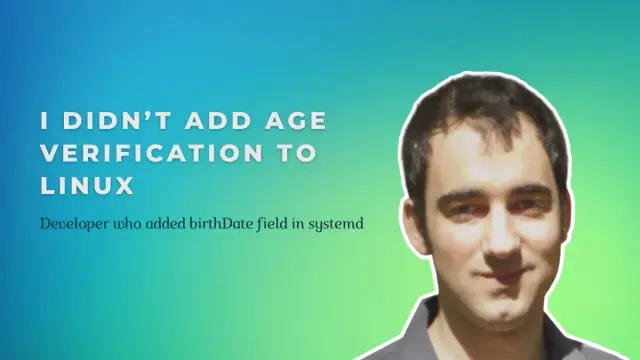
>Dylan M. Taylor is not a household name in the Linux world. At least, he wasn’t until recently. > >The software engineer and longtime open source contributor has quietly built a respectable track record over the years: writing Python code for the Arch Linux installer, maintaining packages for NixOS, and contributing CI/CD pipelines to various FOSS projects. > >But a recent change he made to systemd has pushed him into the spotlight, along with a wave of intense debate. > >At the center of the controversy is a seemingly simple addition Dylan made: an optional birthDate field in systemd’s user database.

One interesting thought I’ve had is actually that if we strip this signal to websites/apps and do not report an age range at all, but the vast majority of users DO, that actually gives us a more unique and trackable browser fingerprint.

As someone who is not a fan of adding the age field I’m curious what people think of this.

This is stupid. We block fingerprinting.

Just because some people are fingerprint able doesn’t mean all of us should suffer and bend at the knee to unjust laws

You can’t really “block” fingerprinting. You can obfuscate it a bit, but the fingerprinting process happens server side, not on your device. So whether or not your system sends whatever age verification signal becomes a part of its fingerprint.

Of course you can block fingerprinting. See Tpr Browser. Everyone looks the same.

Or you can change your fingerprint every 30 seconds with a plugin like chameleon.

You know it works when evil sites all ban you because they can’t fingerprint you and track you between sessions anymore

That’s not blocking the fingerprinting, that obfuscating the data. The fact that you are doing that itself becomes part of the fingerprint being built. Services like Tor or Chameleon don’t stop the fingerprinting process running, they just make it more difficult (but not impossible) to tie the fingerprint to your actual identity.
It’s making the fingerprinting efforts useless. Sure, they can do it, but many of us are blocking them from being able to uniquely fingerprint and track us across the internet