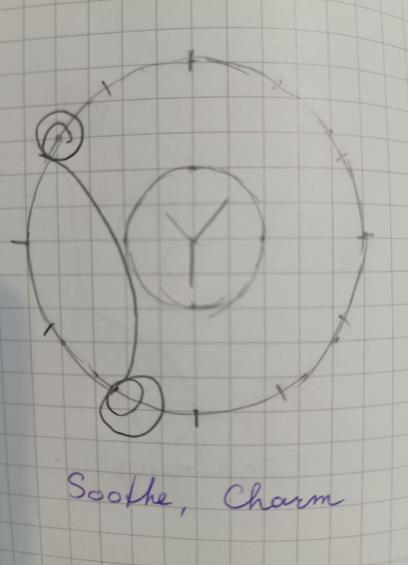
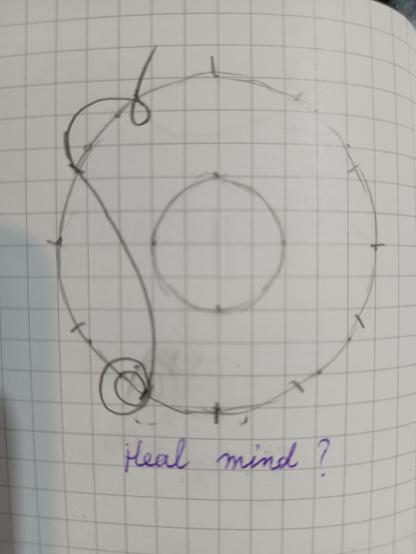
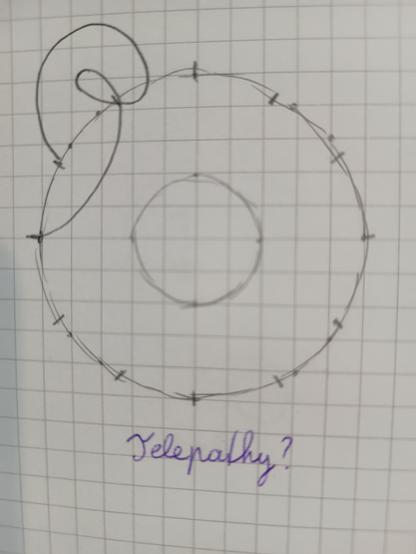
Everyone assumes a spellbook is, itself, magic. As if mere ownership of one is what makes you a Weaver. The reality is a spellbook is no more magic than your average cookbook or blueprint. A set of directions which the Spellweaver can follow to achieve a certain outcome. There is a certain artistry to it, of course, and the best Weavers tend to improvise around the basic patterns, adding their own personal touches and variations as the situation demands. No two spells are ever truly identical. They're a little like snowflakes in that respect.
You glance down at your spellweaving hand, surprised to find it intact and still attached to your body. You flex your fingers experimentally, dark eyes searching the room for the smiling man in the grey travel-worn cloak. Fully expecting to see him seated by the fire, sipping his soup, instead you find that he is nowhere in sight, so you take a seat warily at an empty table near the door and open your spellbook.
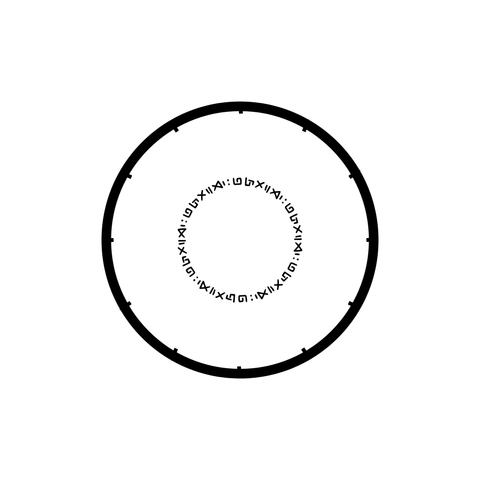
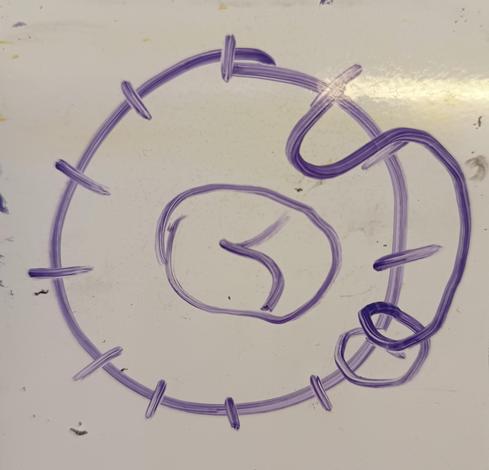
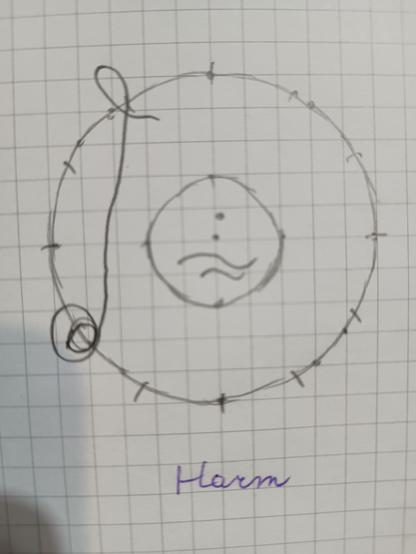
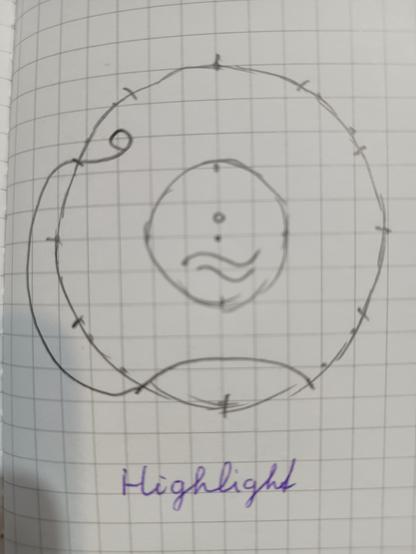
A typical spell consists of three parts: the components, called Threads; the shape or form, often referred to as the Pattern; and a catalyst, called the Cost. These three parts are arranged in diagram form by drawing a circle on the page, with twelve positions around the edge, like a clockface. The twelve o'clock position is traditionally held empty, and the other eleven represent the Eleven Threads of Reality. In order: ligna, aethra, pyra, aqua, terra, ferra, luma, umbra, tempa, mensa, and transa. A written spellplan then, consists of a node drawn at each of the required Threads. These nodes are connected by curved lines representing the order, or Pattern the Threads should be woven into. And in the center of the circle, a rune representing the Cost required to activate the spell. This is usually an action required on the part of the Weaver, but can sometimes instead be a spoken word, a phrase, or even, in one notable case, a set of performed musical notes.
All living and nonliving things are made of some combination of the eleven Threads. The scientists who study these sorts of things call this String Theory and claim they can make machines that can manipulate the Pattern as skilled as any Weaver. You remain skeptical. In your view, it takes a human to understand, not just the basic shape and components of a spell, but to weigh the Cost and judge it acceptable or not.
You finger the pages of your spellbook nervously, turning them one by one, studying the figurations. You know most of them by heart and could recite them easily, but you're looking for something - anything - that could help you understand what's happening here. Clearly there is some element of tempa at play. That much is obvious. And, with that knowledge, looking around the room, the signs of a tempa weave are everywhere in this place. On the people, on the walls, in the air itself. Tempa has been twisted and looped upon itself in strange patterns. But how? And to what end?
You study the other patrons a little more closely. There are the two riders at the table near the kitchen door, still playing their card game. The two lovers in their lovestricken gaze sitting in the corner, a pair of wealthy businessmen sitting by the fire drinking wine, a traveling bard in full costumed regalia at the table next to your own, and the regular smattering of local farmers, ploughmen, and day laborers measuring their troubles in pints of ale or mead. Plus the cook in the back. And of course the—
"I'm sorry you got caught up in the middle of this," the barkeep says in a quiet voice, sliding into the chair opposite you as if summoned by your thoughts. Goddess! She's quiet. "Can I get you something to eat? Drink?"
You shake your head, glancing around again for any sign of the smiling man. "No. No thank you."
"He's upstairs. He'll be down soon. Keep your voice low."
"Who is he?" You ask in a whisper. "No, better question. What is he? No, even better question. Am I dead? I think I died."
"I don't know, I don't know, and no, you're not dead." she says, ticking off the answers on her fingers. "At least I don't think you are. A lot of us do remember dying though."
"Why doesn't anyone just leave? Get as far away from this place as possible?"
The bard at the table near yours turns around in his chair. "Think we hain't tried? There's the door. Give it whirl." he says, sardonically.
"Don't be petty, Jimothy. They're new here. They don't know the rules." the barmaid says, a touch of sadness in her voice. "He is right though. It won't work. You just end up right back here."
The bard scoots his chair in toward your table. "Bunch of us tried it together a few hundred cycles back. Reckoned if we planned it all at once that beast couldn't catch an' keep us all. Turns out we was wrong though. Real wrong. Won't do that again no sir."
"Well there must be something we can do - some kind of way out. Time and space don't just fold endlessly in on themselves like this. Not without limits! Everything returns to the source." you find your voice rising a bit, as the barmaid tries unsuccessfully to shush you.
"There MUST be some kinda way OUTTA here," the bard throws your words back in your face sarcastically, the bells on his hat ring-jingling in a mockery of your panic. "Oooh hoo hoo look who just showed up an' thinks they know more 'an anyone else. Well go on, shew us up then. Shew us 'ow its done."
Just then you hear the clomp of boots on the stairs and spy the hem of a grey travel-worn cloak descending the risers.
What do you do?
#MastoDnD
 𝐿𝒶𝓃𝒶 "not yet begun to fight"
 Wynke
Wynke