One thing that absolutely should stop happening is naive liberals thinking that cops are going to impede, arrest, or investigate ICE instead of helping ICE and arresting protesters.

#uspol #ACAB

@richpuchalsky

I've been thinking about this. Mamdani took power and instantly became a cop lover. The weird ammosexuals took power and instantly stopped hating the idea of federal cops. Progressives are losing power and so are becoming less pro-cop. Communists love cops when they're in charge and hate them otherwise. Poor gay people chant "bottoms, tops, we all hate cops" but rich gay people support them.

I'm beginning to think that one's relationship to the police is not a matter of ideology, but a matter of specifically whether you have power or not. I think anyone who gains power (or who becomes part of the ingroup) is going to be corrupted into a cop-lover.

The implications of this, as an anarchist, are something I've been thinking through.

@passenger @richpuchalsky

Personally, I think politicians like Mamdani, and their families, are explicitly threatened by police when they take office.

Police fraternal orgs are national concerns; they can find and murder anyone without there even being an investigation.

Because otherwise it is *honestly* extremely hard to explain how not one single anti-cop politician has *ever* remained anti-cop after taking office.

The simplest answer is that cops are a national organized crime syndicate

@johnzajac @passenger @richpuchalsky

Cops threatening electeds is business as usual in Los Angeles and has been since forever.

Here's a timeline of LAPD spying since the 1920s, which has always included extortion files on city council members.

https://stoplapdspying.org/wp-content/uploads/2012/01/Timeline-of-LAPD-Spying-Surveillance.....pdf

For instance in 1927: "LAPD officers, working in conjunction with mob boss Alfred Marco, pay the sister-in-law of an LAPD detective $2500 to seduce married City Council member Carl Jacobson in an effort to discredit him. Jacobson had been critical of the close connection between LAPD and criminals running gambling rings in the city."

And this has continued unabated although mostly less explicitly down to the present. Not always less explicitly, though. Sometimes even now they'll even publicly menace them, as in e.g. this incident from 2020 when what looks like hundreds of LAPD officers surrounded council member Monica Rodriguez in a parking structure and yelled at her about perceived cuts to their funding:

https://x.com/jasmineviel/status/1268961412241473539?ref_src=twsrc%5Etfw%7Ctwcamp%5Etweetembed%7Ctwterm%5E1268961412241473539%7Ctwgr%5E%7Ctwcon%5Es1_&ref_url=https%3A%2F%2Fwww.redditmedia.com%2Fmediaembed%2Fgxebwb%2F%3Fresponsive%3Dtrueis_nightmode%3Dfalse

@AdrianRiskin @passenger @richpuchalsky

Yeah, I'm really at the point where Occam's Razor indicates that we should just assume that vast secret conspiracies of the powerful exist by default, and liberal insistence that they do not exist is literally an op.

@johnzajac @passenger @richpuchalsky

At least in Los Angeles, where I understand the machinations of the 0.1% at a disturbing level of detail, it's possible to actually watch zillionaire conspiracies in action because most of their work has a significant public component consisting of lobbyist communication, business improvement district proceedings, etc. They don't have to be secret because what they're actually doing is camouflaged by internalized myths about democracy.

They don't have one overarching conspiracy, but rather a lot of smaller scale conspiracies that network and cooperate and support one another. Since they essentially all want the same things they don't have to work hierarchically among themselves.

In fact, immersing myself in zillionaire politics here is one of the main things that convinced me that anarchism is viable. No laws control the power elite here. They form dynamic alliances with each other when it helps their individual goals. They defer to one another in their own spheres of control. If one of them gets out of line to the extent that it interferes with too many other elites' class interests they'll band together to rein them in or punish them, etc.

The slogan about socialism for the rich, capitalism for the poor, could be amended with anarchism for the ruling class.

@AdrianRiskin

This is very true in terms of small scale social cooperation among people who know (of) each other, and of course not really true in the sense that all of these people depend on the state in order to keep less-wealthy people in line.

@johnzajac @passenger

@richpuchalsky @johnzajac @passenger

I take your point, but the more I learn about it the more I think it works like this all the way up, so that the state isn't actually intrinsically hierarchical for the pure capitalists that depend on it. It's very like a cooperative for them. Co-ops might come together to form metacoops to promote their interests, e.g. agricultural coops form cooperative organizations of coops.

Similarly, local elites create institutions like state legislatures and state militias to handle problems that require larger scale cooperation, but it's very much the individual locally situated zillionaires that are running things. State institutions are tools of local power and from their internal POV it's very much anarchism.

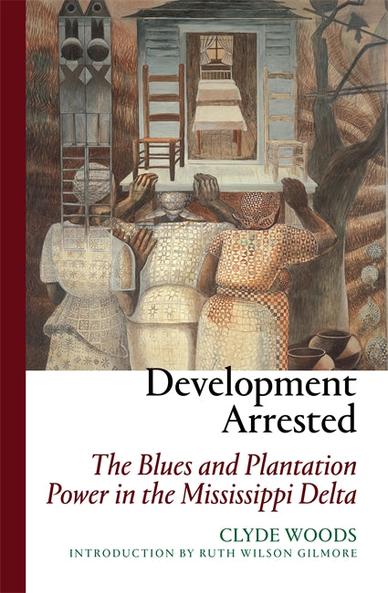
Clyde Wood's Development Arrested has detailed convincing explanation of how this has worked over centuries in the Mississippi Delta, but it's the same everywhere.

https://www.versobooks.com/products/1643-development-arrested

Development Arrested

@AdrianRiskin

Iain Banks, in this Culture novels, used to depict the anarchists from his Culture society as fitting very easily into aristocratic societies that they had to act as diplomats within, or whatever -- as long as they were supposed to be aristocrats.

@johnzajac @passenger

@richpuchalsky @AdrianRiskin @passenger

The Culture novels are extraordinary partly because Banks' presentation of the Culture is so nuanced and cynical, but also contains a germ of admiration for its ruthless practicality and confident indifference to most "threats" that aren't actually threats.

Anarchists, I think, fall under the latter category in this instance.

@johnzajac @richpuchalsky @passenger I need to reread these books. I first read them long before I had any kind of political consciousness.