 Liam
Liam 
In today’s lesson about integrating public transport, new technologies and private providers, and accessibility in urban design, here are two pictures: one is a kerb bus stop and the other is a major pedestrian underpass
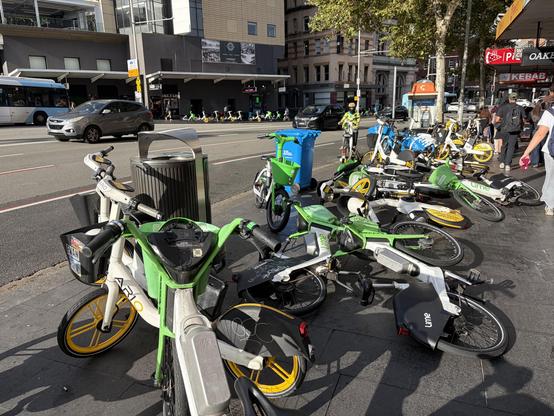
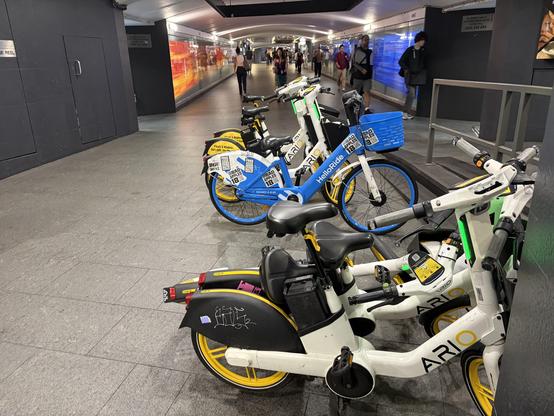
All transport modes impose some kind of externality. Trains need marshalling yards and a permanent way, and have a really serious ongoing maintenance budget. For public modes that’s planned in: bus routes get more roadwork, stops get isolated from parking, it’s accounted for.
For *private* modes like these there’s every incentive for companies to offload the externality (parking) onto the public, and specifically the spaces of the people least likely to be able to step over a tangle of bicycles.
@liamvhogan
@Kels_316 Sometimes it goes the other way though. Melbourne City Council tried to completely ban "dockless" sharebikes at one point and the state government manoeuvred to prevent them because something something green transport.
Yarra City finally got something right though, on scooters: "Sure you can operate here, but we will be providing no subsidy and in fact here's the license fee". Suddenly it was unprofitable and both companies pulled out all their scooters the next week.
 Adam
Adam Hugh
Hugh Julie
Julie