zdw
zdwChina is mass-producing hypersonic missiles for $99,000
https://kdwalmsley.substack.com/p/on-sale-now-china-is-mass-producing
China is mass-producing hypersonic missiles for $99,000
https://kdwalmsley.substack.com/p/on-sale-now-china-is-mass-producing
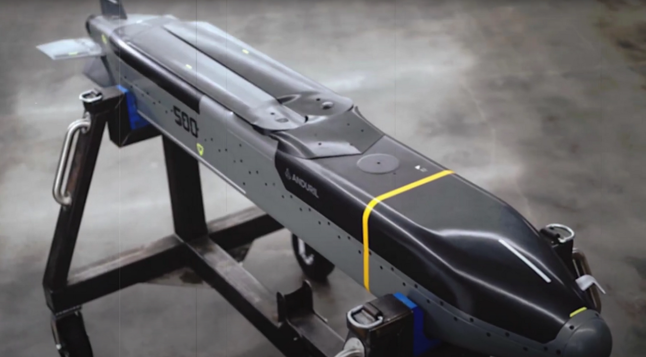
Not hypersonic, but there are upstart defense companies building and selling these types of low-cost weapons. See, e.g., Anduril's $200,000 Barracuda: https://en.wikipedia.org/wiki/Barracuda-M
Big firms like Lockheed nominally have similar products in the pipeline. See, e.g., https://www.lockheedmartin.com/en-us/news/features/2025/cmmt... Though given how long they've been in development one wonders if they're slow walking these things until competition forces them to commit.
I don't really follow the defense industry, but I imagine building cheap missiles isn't that hard. Rather, the difficult and expensive aspect would likely be the systems integrations (targeting, tracking, C&C, etc), especially in a way that let's the military rapidly cycle in new weapons without having to upgrade everything else. OTOH, if and when that gets truly fleshed out, firms like Lockheed might start to lose their moat, so there's probably alot of incentive to drag their feet and limit integration flexibility, the same way social media companies abhor federated APIs and data mobility. And if integration is truly the difficult part, I'm not sure what to make of weapons like the YKJ-1000 or Barracuda. Without the integration are they really much better than $100 drones?
The point of low cost weapons is to give you options on high intensity warfare: namely your high cost weapons take out air defense capability, so you can stop using them and use cheaper more numerous systems to hit the now undefended targets.
The other benefit is just complicating air defense: put a lot of incoming in the air that can't be ignored, and makes it harder to find the higher spec systems mixed in - e.g. stealth systems when there's a lot of unstealthy platforms or munitions also attacking are going to be much harder to find.
> wreck a $300million weapon with a slingshot.
I don't think "slingshot" is the right analogy here. There is a big change towards intelligent, small, and cheap drones. If it were just a slingshot, other countries could pick up what Ukraine is doing in no time, but they can't. Instead, there's an absolutely massive industry behind Ukraine's drone manufacturing, growing at 2x per year, which no other nation can currently match, including Russia.
The drone manufacturing has gone so exponential that they now have a shortage of drone operators. It's completely changed the war in the past few months, with Russia now losing ground, at basically zero additional Ukrainian casualties, and with Russia continuing to have massive ground casualties from sending poorly trained troops to die while hiding in a 30 mile wide kill zone ruled by drones.
The quantity of drones allows new tactics, reminiscent of rolling wave artillery. And deployment of a wide variety of types of drones has led to the depletion of Russian anti-air defense in both occupied Ukraine and in Russia itself, allowing the destruction of much of Russia's oil infrastructure. The recent Baltic port hit will be felt for a long long time, and nearly completely neutralizes the lifting of sanctions on Russia. All from novel weapons, which are decidedly more sophisticated than slingshots both in their construction and application. And the US is way behind, and too proud to let Ukraine share their knowledge and capabilities.
> I don't think "slingshot" is the right analogy here.
I think it's perfect - a very valid "David vs Goliath" reference.
There is also a cost aspect of it as well.
The long range drones that are being shot down are the "expensive products" of a military industrial complex.
The US solution to this problem is even more expensive.
For the cost the Ukraine's solution might as well be a rock: https://en.wikipedia.org/wiki/Sting_(drone)
Note that it is wrong to think that David was at a disadvantage. I know that is not how the story is taught today, but slingshot troops of that age we the snipers of their age: very deadly (not at the range of a modern sniper, but...).
If the fight between them was started at some distance, the David should have been the expected winner by pretty much everyone on the field. Think "bright a club to a gun fight" sort of vibes.
You're talking about the hardware. That is critical.
But what's evolving even faster is the software. And in real world use cases.
They arent paying for tank models and people to run around and try to chase to "test". They are very literally doing it live, with live fire testing day in and day out.
Furthermore they are rewarding results on both ends. Successful operators get to buy gear for kills in an amazon like store (talk about gamification). And there are paths for "innovation" to make its way to the front quickly: see https://united24media.com/war-in-ukraine/how-a-ukrainian-gam... for an example.
> If it were just a slingshot, other countries could pick up what Ukraine is doing in no time, but they can't. Instead, there's an absolutely massive industry behind Ukraine's drone manufacturing, growing at 2x per year, which no other nation can currently match, including Russia.
I'm all for good guys winning, but what are your sources? And why do you think Russia can't match Ukraine in this regard?
There's no single source, it's basically all the war reporting. My claims are not contentious. Even Russia's war bloggers are repeating the same now.
Russia could, in theory, use it's greater number of people towards producing drones. But it hasn't. Russia could, in theory, train its new recruits properly before throwing them into hopeless situations. But it hasn't. Russia could, in theory, operate by rewarding production contracts to the most capable teams rather than the ones with the best connections. But it hasn't. And even if Russia does, they'll have to catch up. They could!
Even the US could, in theory, start learning from Ukraine or even following in its footsteps, independently, but it hasn't.
Ukraine is fighting for its life, it's on Death Ground, in the terms of Sun Tzu. In Russia, perhaps only Putin is on Death Ground, and even then, there's many ways Putin could give up on the war and still stay in power. That produces far different results in people. And the cultures of Ukraine and Russia are fundamentally incompatible, which also produces very different results from people.
Maybe I'm crazy but isn't Ukraine also begging for the multi-million dollar weapons? Are Patriots and ATACMS not seen as highly valuable to them?
If anything, it's clear that a strategy of massing low-cost ballistic missiles and low-cost drones is a great way to provide hurt to neighbors (and maybe low-cost ICBMs will mean hurt to the world) but the US is proving in Iran and Ukraine, to a lesser extent, is proving in its defense that highly capable advanced systems are able to provide extreme offensive and defensive abilities.
Ukraine is also showing the value of low-cost drones in defense against drones! Something the US notably does not have and is suffering very real consequences for it.
> ... isn't Ukraine also begging for the multi-million dollar weapons? Are Patriots ...
Yeah they want Patriots but they want them for taking out relatively expensive Russian ballistic missiles. If those ballistics/hypersonics start costing $100k, Patriots will not be a viable defense against this.
This is what people should keep in mind when the statistic about US defense spending being higher than the next N nations combined or whatever it is now. If I buy a 30k Prius, and you spend 300k on a different car,
1) that doesn’t mean you can drive 10x as fast and
2) maybe you just bought an overpriced Prius, perhaps a gold plated one
This is a more general problem in politics, where the overall budget being allocated is reported rather than the practical result.
These don’t seem comparable to me. The sr 71 was never meant to be mass produced or to head to head against a mig. The sr71 didn’t even have any guns it’s a spy plane. The sr 71 accomplished its goal with flying colors and spotted nuclear test sites and information on the Cuban missle crisis.
The star fighter, or f15 or f22 would be more apt.
TLDR special purpose tool vs general fighter cannot be compared
It's a false comparison.
How many MIG-25s flew over the borders of the United States mainland during the cold war?
Yes the MIG-25 was a cheaper and more practical plane, but that wasn't the MO of the sr71.
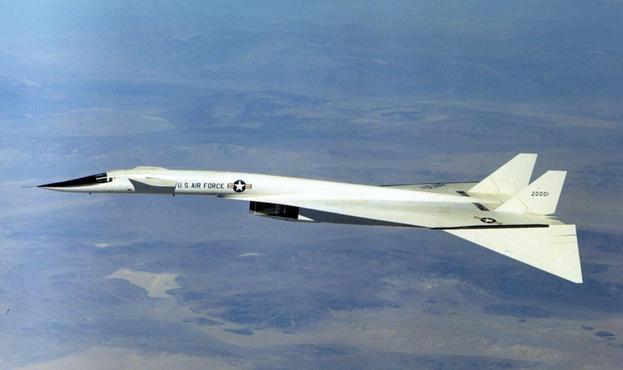
Not sure about the comparison to the SR-71, but the more interesting comparison was with the US XB-70[1] which ended up cancelled but the MIG-25 was designed to intercept[2].
Ironically the XB-70 was also stainless steel - but it still was pretty exotic. It partly relied on compression-lift and highly corrosive fuel to cruise at Mach 3 (in 1961!).
Edit: Wikipedia diving after writing that led me to the Sukhoi T-4 which was the Russian response to the XB-70. Only a prototype, but this one was titanium and it is an amazing, drop-nose machine [3]
[1] https://en.wikipedia.org/wiki/North_American_XB-70_Valkyrie
[2] https://en.wikipedia.org/wiki/Mikoyan-Gurevich_MiG-25#Backgr...
I think while these kinds of projects are cool, but I think the point of my parent comment is that volume matters. If you can do something, its interesting and great for bragging rights, but making and operating thousands of airframes (especially considering the breakneck speed with which technology evolved, timeframes were very compressed!).
While the SR71 was more capable than the MIG, if the Air Force would've wanted to build a thousand of those in 5 years, it would've been impossible, not to mention the maintenance burden.
So while the planes you mentioned might've been more capable, in a real conflict they wouldn't have mattered much, as they could not have sustained a volume of strikes to be relevant.
Interesting how quality and quantity have changed over the years: in WW2, giant factories pumped out airplanes on endless production lines by the tens of thousands, yet those planes couldn't drop bombs accurately.
In contrast, 4th gen fighters were made in still significant volumes, and their smart bombs could hit a target accurately enough so that a hundred pound bomb can do the job you would need a WW2 B-29 to drop its entire payload for.
I think that was a peak in quality X quantity in aviation.
Yes, modern jets have even more tech, and stealth and stuff, but their complexity and and difficulty of manufacture doesn't offset the drop in volume.
So quality went up, but quantity went way down, and as a result their total effectiveness is less than the generation they're supposed to replace.
The SR-71 wasn't trying to catch the MIG-25, it was trying to get away--and it worked. The U-2 proved vulnerable to filling the sky with cheap stuff--the missiles were ballistic by the time they got up there but when the sky was full of them the U-2 had no path to safety.
The SR-71 couldn't be defeated by the level of missile spam that Russia was capable of, the MIG-25 couldn't get close enough to catch it and they didn't have a missile that could actually work up there. (You need more control surface up there, but down lower more control surface costs you performance.)
(And the MIG-25 was a maintenance nightmare.)
Yes this is a great point. The great irony of the tech sector is that although tech creates efficiencies, the process by which tech is created is itself comically inefficient.
Almost nobody, especially those working for government actually looks at a complex, expensive solution and says "We should simplify this and make it cheaper." The government is paying for a LOT of unnecessary complexity. I would say that's most of the cost of essentially every tech project the government funds.
Reminds me of that 3-section meme about Starlink boosters showing how they simplified the design over time. This is the exception which proves the rule.
A lot of what you see was removed was just test sensors. The same happens in every engineering program, but no one else pretends that it's somehow innovation.
It's like removing test code when you ship a binary.
This is blogspam based on a tweet of the company's promo video[1] in November and some speculation by a guy on Chinese state TV[2]. As far as I can find there's no evidence since then that these have entered production, mass or otherwise. It was doubted at the time they could hit these costs in production, and there hasn't been any news since.
[1] https://xcancel.com/CNSpaceflight/status/1993158707056984359
air defense is much more complicated and difficult to build.
Iranian cheap drones/cruise missiles are efficient from another hand.
The S400 and the Patriot etc all suffer from the same problem: They only deny the enemy high elevation flight.
Russian doctrine has been based around big, fast things going high. NATO doctrine has been about smaller, slower things going very low. Going low leaves you very vulnerable if you get too close to a defender, but there's no way there are defenders everywhere.
An extreme example of the problem was the Moskova--big, fast missiles that couldn't see something coming in just above wavetop height. There were only two launchers that had any possibility of engaging and only time for one launch cycle--and that probably only if they already had a bird on the rails. (Exposed to the elements, rather than safe in the magazine.)
Whether these claims are real or not, they do illustrate one of the crazy things about technological progress. Capabilities that are difficult for states to develop eventually become something corporations can easily implement, and from there they become affordable for private citizens, first to buy, and then to DIY.
Two obvious and concerning corollaries are that state capabilities eventually become easy to obtain for non-state terrorist groups and, later on, unbalanced individuals. Consider what ISIS would have done with these, and then think about what the unabomber would have done.
I'd fully expect this particular company to face multiple hurdles in actually exporting any of these missiles. They might not be able to actually deliver at the quoted price-point. China might not permit it, due to the political blow-back. Israel and the U.S. obviously have an interest in making sure none of these missiles wind up in Iranian hands. The execs of this company are probably feeling a bit like a target has been painted on their heads right now.
However, controlling technology like this is ultimately a game of whack-a-mole. If this company fails, gets regulated, decapitated, sucked up by the Chinese military, etc., ten other companies will pop up all over the place that can produce the same thing or better, cheaper. There's also a supply chain of components behind this company that can now export critical parts to those building their own. We've simply reached (or are about to reach) the point where missiles of this sort can be made very cheaply.
Here's hoping missile defence gets better and cheaper fast.
Relevant philosophy paper: "The Vulnerable World Hypothesis" by Nick Bostrom [0].
In that paper, Bostrom floats the idea that it might be in humanity's best interest to have a strong global government with mass surveillance to prevent technological catastrophes. It's more of a thought experiment than a "we should definitely do this" kind of argument, but it's worth taking the idea seriously and thinking hard about what alternatives we have for maintaining global stability.
Cheap hypersonics don't threaten global stability, they threaten global hegemony. Which is really what I suspect irks most people afraid of them.
We've seen a shift towards cheap offensive capacity that gives middle powers or even smaller actors the capacity to hit hegemons where it hurts, very visible in Ukraine and the Middle East now. This leads to instability only temporarily until you end up in a new equilibrium where smaller players will have significantly more say and capacity to retaliate, effectively a MAD strategy on a budget for everyone.
Yeah after seeing what tiny DIY "racing quadcopters" can do I am really amazed that we haven't seen a swarm of them used for a non-state-actor ("terrorist" or otherwise) attack.
These things are way faster and more maneuverable than in the slaughterbots video. Those were like birds. These are like hummingbirds on meth.
They are totally noncommercial hobbyist/DIY products -- there's no firmware lockdown or geofencing like on the commercial products. You can fab the PCBs yourself.
Firmware controls on drones were always a silly strategy anyways.