 Reading Recluse
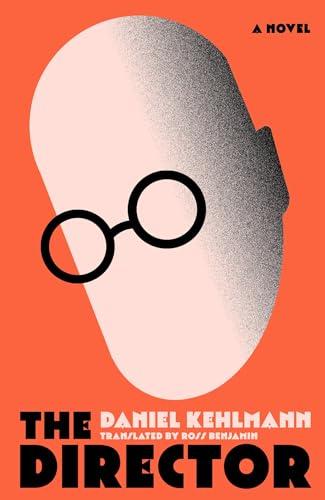
📘 "The Director" by Daniel Kehlmann, translated from German into English by Ross Benjamin
I'm sorry in advance to everyone who loves this book. It's my absolute least favorite of the IBP longlist. I'm even mad that I finished it. I feel extra salty about it because this book has already been nominated for other awards and comes so highly recommended, but I think it's lacking a lot.
This novel is based on G.W. Pabst, a director from Austria who fled Nazi Germany by going to the US, only to struggle with his status as an immigrant, stumble through the English language and fail to make it as a famous director. Fortunately he's good at sticking his head in the sand, so he can convince himself to return to Austria with a poor excuse. Of course he has to bring his wife and child along, otherwise he'd have to face the fact that what he's doing is risky and irresponsible. Oh no, now he's stuck due to the war and forced to work for the Nazis with the Sword of Damocles hanging over his head and a massive budget for movie production in his pocket. Weak moral dilemmas about the integrity of art under fascism ensue.
Every chapter is a slice of life snapshot of Pabst, often from a different point of view of people who are around in his life. It creates kind of a distant overview that I think is supposed to be subtle, but remains mostly superficial and annoyingly paced. I got to see some of what happens in the regime (arrests, camps, brainwashing, tense atmosphere) but I barely got to see any of the emotional depth that comes along with that. In that regard, this book offers nothing new.
The chapters about movie creation had me in tears from boredom, they were a true struggle to get through. It wasn't made any easier by every famous person from the 1930-40s making an appearance. Most were there for just a few pages and were not much more than cardboard cutouts. Look at this actor, look at this writer, look at this guy! I get it, you did your research and you're passionate about the topic! This is low-quality bulking!
What totally made me lose it is the ending, or more correctly, the last few chapters. The reveal in the very last chapter was obvious, but I'm not even complaining about that. It's the cave reveal that has me so annoyed. Yes, sure, it could represent the evil that lives in humanity, sure, it could represent a deal with the devil, sure, it might be fascism sucking creativity dry, think of whatever interpretation you want, I don't care anymore. It's the most frustrating 'twist' I've read in years and it plays into the trope of disabled, disfigured and ugly people representing evil. What an unpleasant trope to use in a book that's supposed to be critical of an extremely eugenicist regime...
This all makes me sad, because I can see something shimmer deep inside the book, buried almost completely. A few scenes were fantastic, they made me feel like I was stuck in a fever dream. But these great scenes can't hold up a whole book of never-ending name-dropping, bad pacing, mediocre exploration of ethical questions, bland emotional depth, a predictable ending and a caricature of a gaunt man with crooked shoulders, three missing fingers and "blotchy skin, large pores, and shifty little eyes" looming evilly over it all. Ridiculous.
The strongest thing this book has going for it, is that it's about an important topic at an important time. That might be criteria enough for an essay, but not for good fiction.