As a teacher I sometimes feel like there is a mismatch between the amount of work I do and how that work is counted towards meeting my job requirements.

Like most teachers I'm expected to teach a certain number of courses. But it doesn't matter if it's a course I've taught before, or a totally new course I've developing it's all counted the same.

Designing a new course is much harder and takes much more time than teaching the same thing I taught last year to new students.

So there is a subtile pressure to just teach the same things over and over. Because I've created all of the material, I know how it will work. In terms of time? I'm talking three times more prep to teach something new vs. teaching something old.

Of course I still take on new courses and develop new worksheets, lessons, test, tons of material. But this isn't officially part of my job, I just like teaching. I do the work for the love of the game and because it's more fun being good at your job.

There are "summer curriculum development grants" and this helps a little, but it's not always work done during the summer.

Right now I'm organizing my old worksheets and tests so they will be easier for other teachers to use. I know the department head will be pleased with this, and the other teachers will like it, but it's extra work and "not counted"

I think most jobs can look like this. And I don't have a great solution. I just wish teachers were recognized more for this kind of work.

To put it more succinctly: the way my job is structured "teaching" is thought of as something I do in a classroom with students. Maybe "teaching" is also grading papers and writing comments about how students are doing.

But teaching is also developing materials, deciding what to teach, how to teach it. Research, testing lesson ideas, refining them, tailoring the lessons to particular groups of students, or individual students.

Teaching is creative work. And this might be a bit of a hot take, but I think if a "teacher" is just using canned lesson plans and never making their own, just marching through the standards by the book they aren't really doing a good job.

I remember early in my career a principal tried to tell me "you don't need to write lessons they are all right here they came with the textbook" and showed me the canned lessons like I was just going to do those and call it "teaching" I nearly lost it.

Listen, I can use a canned lesson and I can even make it excellent, but it still takes prep time. Sometimes it takes a lot of prep-time to adapt the list of "standards" and "objectives" to something where the kids will actually learn anything, something they will want to do and remember.

Just because a lesson plan form is filled out doesn't mean there is a lesson plan.

@futurebird Your students are really, really lucky.

@futurebird

If you ever write a good "howto" about how to use a canned lesson and make it excellent, I'd be interested...

@futurebird

To be clear, I don't contest your opinion about canned lessons; still, as you point, it's a useful skill to be able to start with one when the circumstances require it.

@futurebird People like that admin who think teaching works like that piss me off so much. It's called a lesson PLAN, that doesn't automatically make it a lesson. If you draw a house PLAN does that mean you automatically have a house???
@futurebird That was just the first example I thought of but there's more to that analogy the more I think about it. In both cases you still have to procure or create the materials and make sure they're appropriate for the environment, you might have to alter things based on arcane local requirements outside your control, the invisible yet essential labor you mentioned, the fact that 2 things made using the same "plan" can end up looking completely different, etc etc

@futurebird When I started taking teaching more seriously, I wrote a few pages in my notebook about all my favorite teachers and what they did right.

Be knowledgeable, make the flow of information painless, really love the subject. Ask questions, believe in the kids.

My favorite lecturer in grad school writes all his lectures by stitching together the best parts of 3 or 4 textbooks per class. You can't do that without a ton of prep.

@futurebird yes. Teaching is an art! I have had that same conversation with admins, as well as with textbook company "coaches" who come with curriculum purchases these days.

@beanbagashtray

"What do you mean you need more prep time? all the lessons are already written for you?"

Do you think, I am some kind of wind-up doll that plays lessons plans like they are cassette tapes? What on earth do you think I'm doing exactly?

I don't really trust admins who don't also teach at least one or two classes because they forget what teaching is and how detached "classroom contact hours" are from the real work.

@futurebird I don't want to be unkind, because many of my admins are lovely people, but in my district (and many "urban" districts) the admins were teachers who didn't really like/weren't very good at teaching. The ones with the humility and self awareness to acknowledge that are great. The ones who regard themselves as higher up in a hierarchy are.... Not.

@beanbagashtray @futurebird

Humility and self-awareness are necessary traits for a teacher who recognizes the need to adjust their approach to get concepts across to kids who didn't catch on the first time. (My physics professor was a wizard at finding different ways to frame an idea until he hit on something the puzzled student could really tune into)

Regurgitating stuff at kids and expecting them to just memorize it by rote because you said so, is a COMPLETELY different approach... notably, an approach that requires domineering behavior and does NOT require the "teacher" themselves to actually understand the material OR the students (or, arguably, themselves).

@futurebird I can add that students realise this. I've had teachers running even their dad jokes from their old journals.

@futurebird Both years I spent classroom teaching, I had to start from scratch. No previous teacher. No resources. No team. The other teacher teaching the same grade was a "here's my book of worksheets that we're going to work through this year".

I wanted to be a minimal worksheet teacher. Worksheets are so much easier, since the kids usually like them too. They sit quietly and work through the questions on most days.

It's such an exhausting job in the first few years.

@futurebird Even fully canned lessons require significant prep if you're going to do it right. I'm using provided slideshows and labs from a cybersecurity curriculum. I go through every presentation looking for mistakes, predicting likely questions, and adding my own experiences to the lesson. I work through every lab as if I were a student before I ever let them see it.

It's honestly not any faster than writing my math lessons.

@mpark

"I work through every lab as if I were a student before I ever let them see it."

This is the absolute essential and first step of any prep. Do the whole lesson, all the problems, all the questions because there might be a mistake, or a problem might have terrible numbers that make a big mess. Or they might not be messy enough and suggest things that aren't true.

Eg. 2^2 means multiply 2*2

A terrible example since students may think:

3^2 means 3*2 or even 3+2

@futurebird standing at the front teaching is the easiest part (if you've done the other 90% of the unseen work)

@tootbrute

There are days when I've spent three hours doing prep for a 40min class. There are days when I just pull out the lesson I did last year and change the date and roll in with zero new prep, because I know it worked last time and I'm excited to do it the same way again.

@futurebird it’s very discouraging at times because it encourages /incentivizes instructors to just recycle assessment materials with new numbers rather than thinking through alternative and better ways to challenge students to understand and master the material. Then, there’s also excessive use of computer scored multiple choice components to exams.

At one place I taught, instructors were paid a seemingly very generous hourly rate under their collective agreement. However, this was completely misleading as it only counted classroom hours of instruction. It didn’t even include mandatory weekly office hours during the semester let alone hours to supervise exams during exam weeks or the preparation and marking/grading of assignments and exams.

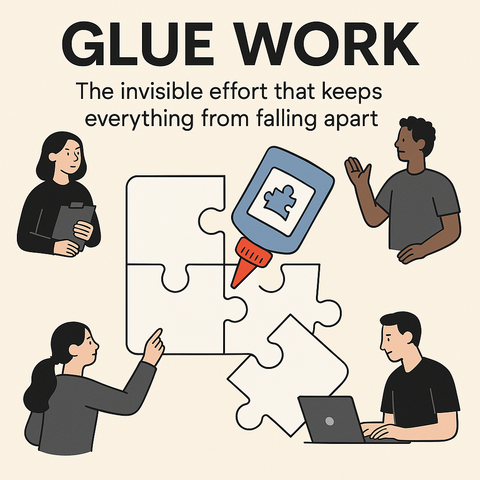
@futurebird Glue work is how I've heard it referred to but not sure how widespread the term is outside of coding.

https://medium.com/@annway/glue-work-the-invisible-effort-that-keeps-everything-from-falling-apart-b96fce3a5b35

🧩 Glue Work: The Invisible Effort That Keeps Everything from Falling Apart

When people talk about productivity in a team, they usually focus on features, bug fixes, designs, releases, and metrics — all the…

Medium

@futurebird

Well, an open source lesson collection would be a way to make it count, even if not counted.

I suppose that things like that already exist, but they probably should organize at a larger scale...

@futurebird
It really discourages revision and improvement too. Every year I try to improve or update my course design, but this is never as much as I would like, and very limited if I'm teaching something new. But I have no incentive to do so other than wanting to teach better. The practice fits right in with the academic ethos of free labor called "service," though.

@futurebird the last time I prepared a new hour long lecture it took me five hours, and that was a lecture for adults who already buy into the epistemologic framework of evidence based medicine

I can't imagine how long it would take to do a version of that for kids

@futurebird ohhhhh so much this