 dabinat
I tried to prove I'm not AI. My aunt wasn't convinced
https://www.bbc.com/future/article/20260324-i-tried-to-prove-im-not-an-ai-deepfake
I tried to prove I'm not AI. My aunt wasn't convinced
https://www.bbc.com/future/article/20260324-i-tried-to-prove-im-not-an-ai-deepfake
> At first, my aunt wasn't buying that any AI was involved. [...] There was a long pause. "I was like 90% sure," she said, hesitating. "But that sounded more artificial."
There is a thing about many people. I don't remember the phenomenon's name, if it has one, but it goes like this:
Given enough time to reconsider options, people will be endlessly flip-flopping between them grabbing onto various features over and over in a loop.
Dissonance between what you instinctively believe and what you think the other person wants you to say.
Easy to replicate by asking someone something obvious, like the weather, and when they reply ask “are you sure?” - they won’t be so sure any more (believing it’s a trick question)
If I ask my mother if I’m real, she’ll have a pause because she has never had to entertain such a question, or the possibility her son over the phone is an impostor. Good way to push someone towards paranoia and psychosis.
This is the basis of the virtual kidnapping scam/grandparent scam, or panic manipulation more generally. The manufactured urgency keeps them from doubting: the voice on the phone being off is just fear, or a bad connection, for example.
I have personally intervened in one of those when I heard someone reading off a 6 digit number.
> Good way to push someone towards paranoia and psychosis.
Interestingly, these are both phenomena where we start to _lose_ the ability to question our thoughts or introspect. These are phenomena of self-confidence rather than of self-doubt.
Given enough time to reconsider options, people will be endlessly flip-flopping between them grabbing onto various features over and over in a loop.
People will default to believing something is AI if there's no downside to that opinion. It's a defence mechanism. It stops them being 'caught out' or tricked into believing something that's not true.
As soon as there's a potential loss (e.g. missing out on getting rich, not helping a loved one) people will switch off that cynical critical thinking and just fall for AI-driven scams.
This is the downside of being a human being.
AI companies love to hype up how AI will provide a great benefit to the economy and transform intellectual labor, but I hardly see any discussion about how much damage it will cause to the economy when you can no longer trust that you're on a video call with an actual person. Maybe the person you're interviewing is actually an AI impersonating someone, or maybe they never existed in the first place. Information found online will also no longer be trustable, footage of some incident somewhere may have been entirely fabricated by AI, and we already experience misleading articles today.
Money will have to be wasted on unnecessary flights to see stuff or meet people in-person instead of video, and the availability of actual information will become more and more limited as the sea of online information gets polluted with crap. It may never be possible to calculate the full extent of the damage in monetary value.
I think you might be right and I think I'll like some of the consequences and hate some of the others.
More in-person stuff feels like a win to me (and I say this as someone who probably counts as introverted).
Not being able to trust any online interactions anymore? Seems like a new height in what was already a negative.
linkedin is completely destroyed now. There are tons of ai bots there but real humans are now fronts for AI. So you cant even trust content from from ppl you know.
identity serivce is not useful because that person might be a real person but they might just be a pipe to ai like we see on linkedin.
Partially agree.
However, this problem has existed with scam e-mails since the 90s.
For me the solution is in signed e-mails and signed documents. If the person invites me to a online meeting with a signed e-mail, I trust that person that it's really them.
Same for footage of wars, etc. The journalist taking it basically signs the videos and verifies it's authenticity. It is AI generated, then we would loose trust in that person and wouldn't use their material anymore.
How do you prove the signature isn't fake?
Ultimately ID requires either a government ID service, a third party corporate ID service, or some kind of open hybrid - which doesn't exist.
All of those have their issues.
> footage of some incident somewhere may have been entirely fabricated by AI,
Or the opposite, where people attempt to get out of trouble by calling real evidence into question by calling it “AI”
> damage it will cause to the economy when you can no longer trust that you're on a video call with an actual person
What damage are you talking about?
I'm not sure I understand why it matters that there is no real person there if you can't actually tell the difference. You're just demonstrating that you don't actually need a human for whatever it is you're doing.
The grandparent post has the belief that human interaction is intrinsically better. Not sure i agree, but i can understand the POV.
However, the increase in fake videos that are difficult to tell from real is indeed a potential issue. But the fact that misinformation today is already so prevalent is evidence that better video doesn't make it any worse than it already is imho.
Because what you are actually doing is exchanging symbols, tokens, if you will, that may be redeemed in a future meatspace rendezvous for a good or service (e.g. a job, a parcel). These tokens are handshakes, contracts, video calls, etc. to be exchanged for the actual things merely represented therein.
Instead what we have now with AI is people exchanging merely the tokens and being contented with the symbol in-and-of itself, as something valuable in its own right, with no need for an actual candidate or physical product underlying the symbol.
There is a clip by McLuhan I can't be assed to find right now where he says eventually people will stop deriving pleasure from the products themselves and instead derive the feelings of (projected) accomplishment and pleasure from viewing advertisements about the product. The product itself becomes obsolete, for all you actually need to evoke the desired response is the advertisement, or the symbol.
A hiring manager interviewing an AI and offering it a job is like buying the advertisement you just watched, and.... that's it. No more, the transaction is complete.
Just say something that would violate AI safety. Then you can be sure they’re a real human.
“Auntie, it’s me! N*** k** f**! X is really a man! ** did 9/11!”
“Oh it really is you Johnny!”
We’re all going to have to start communicating this way. Best of luck.
I offer consulting services on the side to help professionals hone these skills. $250 / hour.
I've started to prove it (here on LinkedIn, countering its Moltbookification) via my bad handwriting – the final frontier of AGI. Finally, a lifetime of training to write more or less illegible pays off.
https://www.linkedin.com/posts/fabianhemmert_handwriting-vs-...
It feels good to connect with humans that way.
The same I am trying to do with my (vibe coded!) site "jetzt" (German for "now"), to which I photo blog impressions from everyday life. Only insiders will know what they mean beyond their aesthetic, and it also feels like a good way of human connection in these times.
(No food, no plane wings, just ugly banalities and beautiful nothingness from everyday life.)
Here's also a nice project, the "Reverse Turing Test":
https://ars.electronica.art/panic/de/view/reverse-turing-tes...
(I.e. trying to hide the fact that you're human, among a group of AIs)
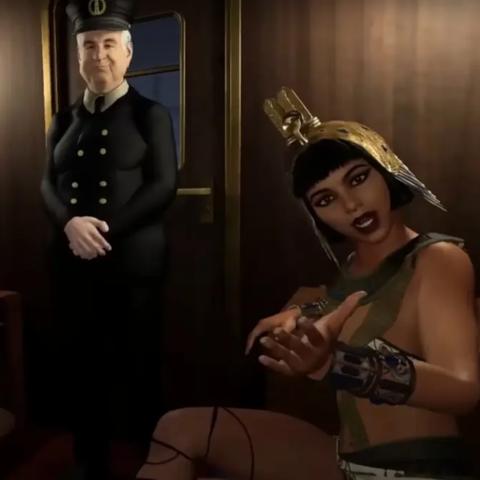
Dieses VR-Erlebnis fordert die Besucher*innen heraus, sich als einziger Mensch unter fortschrittlichen KI-Systemen zu tarnen – und wirft dabei tiefgreifende Fragen über Intelligenz, Identität und Realität auf.

