1/n
I should have twigged something after looking at the first display case I saw after exiting the lift on the 1st floor of Das Wiener Naturhistorische Museum. I should have understood it immediately. It's a failing that it took me several hours of wandering around the museum for that to sink in.
The museum is undergoing construction work, so I had to take a slightly illogical route to get to the start of the incredibly well curated set of artifacts. I walked past all sorts of things to get...
2/n
back through time to where it begins.
And it begins with rocks.
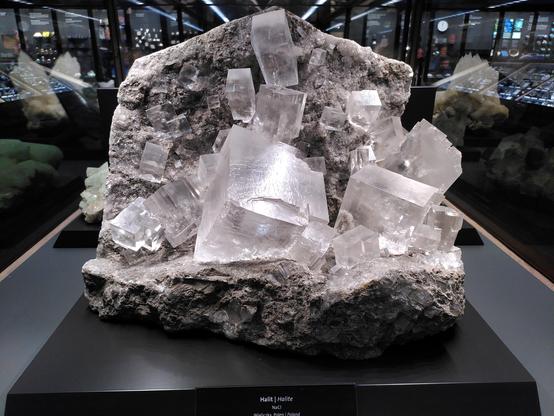
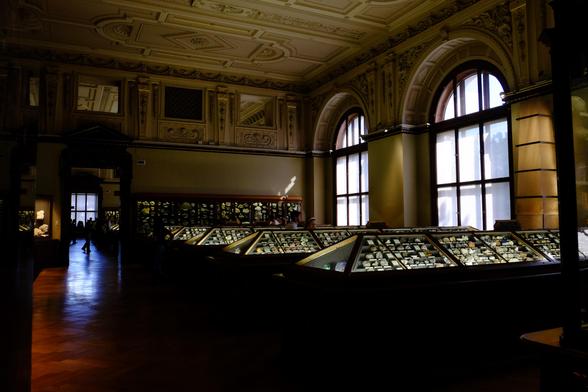
Many of the natural history museums I've been to have started with dinosaurs. With fossils. But this museum? This one starts at the beginning, over 4 billion years ago as the earth forms. Oak display case after display case of rocks. Interpreatation boards on the walls explain how the earth forms. The different types of rocks. I've often moaned at modern museums not having enough artifacts on display. NHM Wien is not one...
3/n
In fact I took more photos of the display cases than I did the rocks. I'm not much of a geologist, tho I did used to collect rocks as a kid. So after a few rooms full of rocks from earth. I entered the meteorite room.
NHM Wien has the largest collection of meteorites in Europe.
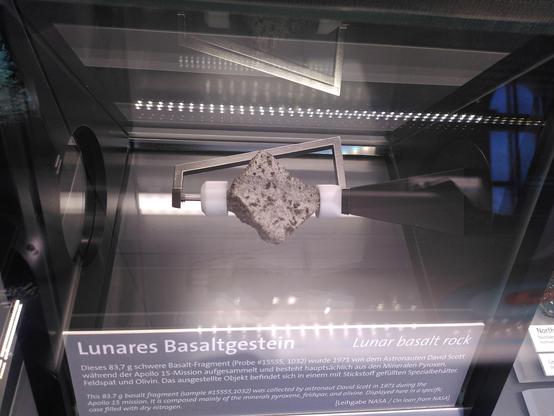
Six of the meteorites caught my eye. They came from mars. I admired them. I photographed them. I even posted a joke about them on fedi, which very few people got...
https://social.v.st/@quixoticgeek/116210234799385684
5/n
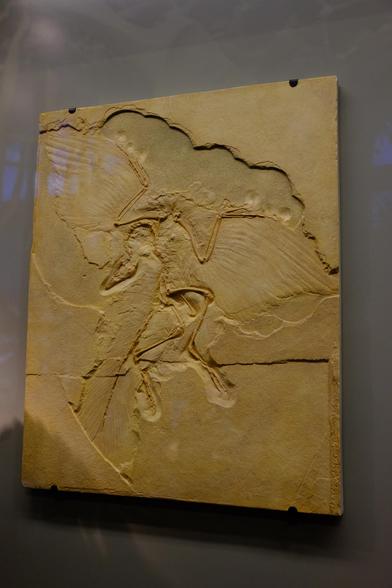
After rocks, came dinosaurs. There were some animatronic dinosaurs, which seemed to be delighting and scaring a group of school kids that were looking at them. In a dark display case along the wall tho lay a much more important find. One that completely revolutionaised how we understood dinosaurs.
The stone is small. About the size of an a3 sheet of paper. It showed a flattened toothed dinosaur.
A dinosaur with feathers.
Archaeopteryx.
This fossil changed humanity's understanding.
7/n
After the dinosaurs came the rooms about the development of humanity. We have a mammoth, stone age implements. Etc...
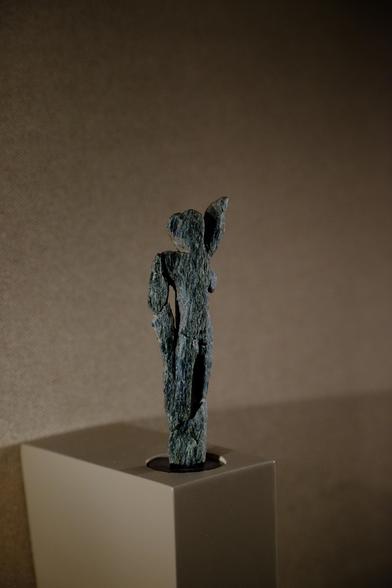
And then in one small room, off to the side of the room full of flint axes and arrow heads. A room simply labelled "Venus". Stood a small slate statue in a display case.
The statue is 36000 years old.
Beside the statue. The explanation in German and English reads:
8/n
"With her raised arm and slightly twisted upper body the figurine appears to be frozen mid-pirouette..."
I admired this incredibly well preserved peice of art. Not sure which is more impressive. The art itself, or that now, 36000 years later. I can look at it in a small dark room in Wien.
I read the explanation. But I'm not sure I really understood it.
Not yet atleast.
9/n
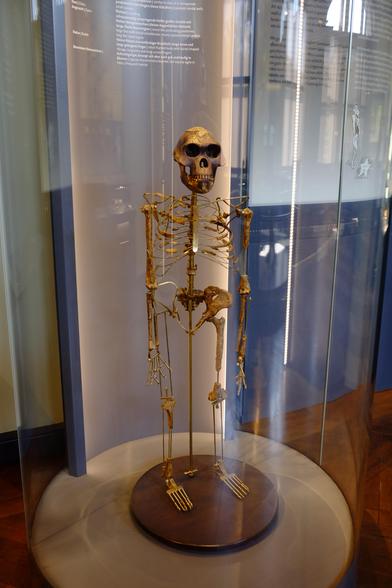
A few rooms further on. I once again met Lucy.
Long time followers will remember a thread about meeting Lucy in Madrid a couple of years back. https://social.v.st/@quixoticgeek/114932432182938901
I sent a message to a friend joking about how I keep meeting Lucy in museums.
By this point tho, my feet hurt, so I turned right at the mammoth and went in search of the museum cafe.
TBC
(Thread is gonna pause for a bit, the alarm just went off saying my dinner is cooked)
10/n
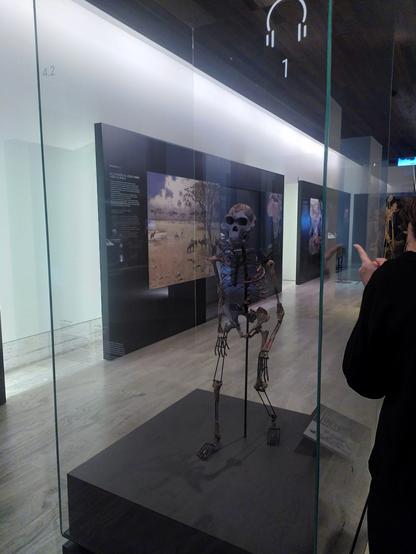
@deborahh the display of Lucy in Madrid was even better. More dynamic.

Attached: 1 image The skeleton I saw surprised me at first. I thought she was in Addis Ababa. I certainly hadn't expected to find her in madrid. Definitely not stood there to great people walking in. When I got closer tho, & read the plaque, which was in both English and Spanish, it was clear this was a plaster copy of Lucy's skeleton, and not actually Lucy. Lucy is of course a Australopithecus afarensis. An extinct species of hominid, that lived in what is now east Africa approx 2.9-3.9 million years ago. 2/n