1/n
I should have twigged something after looking at the first display case I saw after exiting the lift on the 1st floor of Das Wiener Naturhistorische Museum. I should have understood it immediately. It's a failing that it took me several hours of wandering around the museum for that to sink in.
The museum is undergoing construction work, so I had to take a slightly illogical route to get to the start of the incredibly well curated set of artifacts. I walked past all sorts of things to get...
2/n
back through time to where it begins.
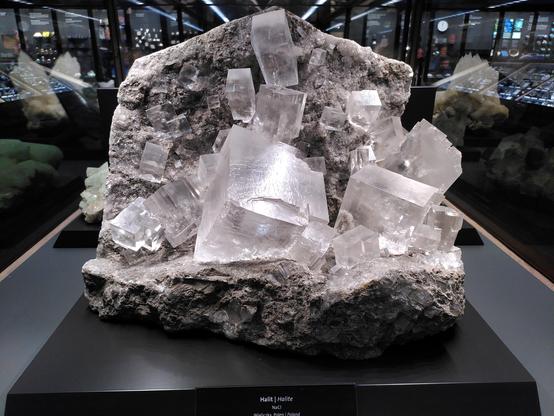
And it begins with rocks.
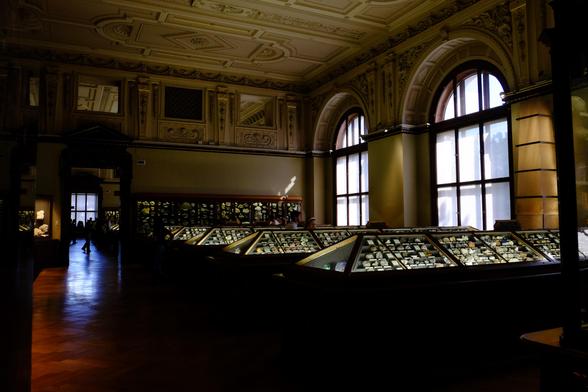
Many of the natural history museums I've been to have started with dinosaurs. With fossils. But this museum? This one starts at the beginning, over 4 billion years ago as the earth forms. Oak display case after display case of rocks. Interpreatation boards on the walls explain how the earth forms. The different types of rocks. I've often moaned at modern museums not having enough artifacts on display. NHM Wien is not one...
3/n
In fact I took more photos of the display cases than I did the rocks. I'm not much of a geologist, tho I did used to collect rocks as a kid. So after a few rooms full of rocks from earth. I entered the meteorite room.
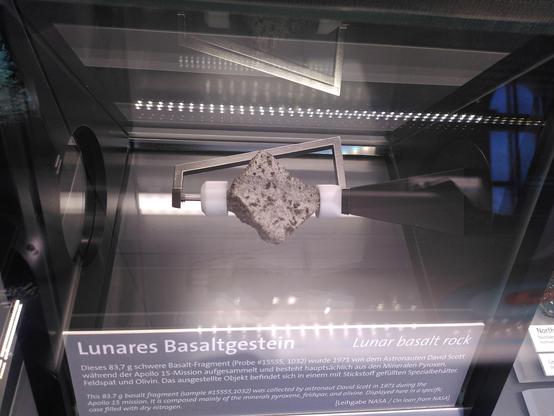
NHM Wien has the largest collection of meteorites in Europe.
Six of the meteorites caught my eye. They came from mars. I admired them. I photographed them. I even posted a joke about them on fedi, which very few people got...
https://social.v.st/@quixoticgeek/116210234799385684
5/n
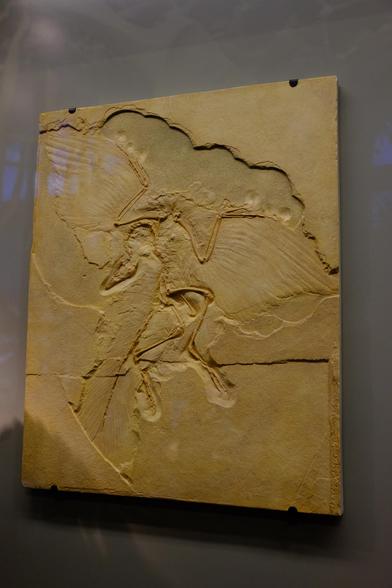
After rocks, came dinosaurs. There were some animatronic dinosaurs, which seemed to be delighting and scaring a group of school kids that were looking at them. In a dark display case along the wall tho lay a much more important find. One that completely revolutionaised how we understood dinosaurs.
The stone is small. About the size of an a3 sheet of paper. It showed a flattened toothed dinosaur.
A dinosaur with feathers.
Archaeopteryx.
This fossil changed humanity's understanding.
7/n
After the dinosaurs came the rooms about the development of humanity. We have a mammoth, stone age implements. Etc...
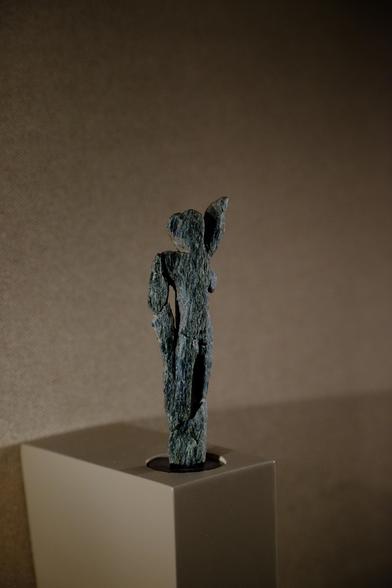
And then in one small room, off to the side of the room full of flint axes and arrow heads. A room simply labelled "Venus". Stood a small slate statue in a display case.
The statue is 36000 years old.
Beside the statue. The explanation in German and English reads:
8/n
"With her raised arm and slightly twisted upper body the figurine appears to be frozen mid-pirouette..."
I admired this incredibly well preserved peice of art. Not sure which is more impressive. The art itself, or that now, 36000 years later. I can look at it in a small dark room in Wien.
I read the explanation. But I'm not sure I really understood it.
Not yet atleast.
9/n
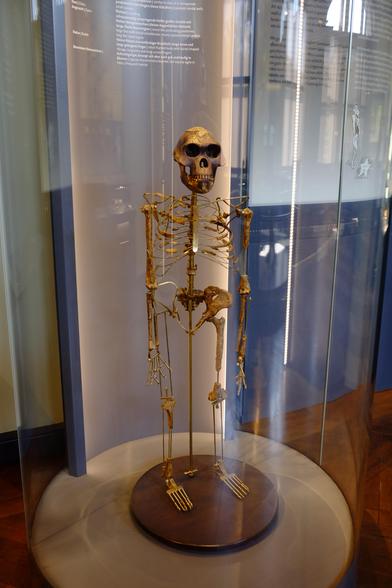
A few rooms further on. I once again met Lucy.
Long time followers will remember a thread about meeting Lucy in Madrid a couple of years back. https://social.v.st/@quixoticgeek/114932432182938901
I sent a message to a friend joking about how I keep meeting Lucy in museums.
By this point tho, my feet hurt, so I turned right at the mammoth and went in search of the museum cafe.
TBC
(Thread is gonna pause for a bit, the alarm just went off saying my dinner is cooked)
10/n
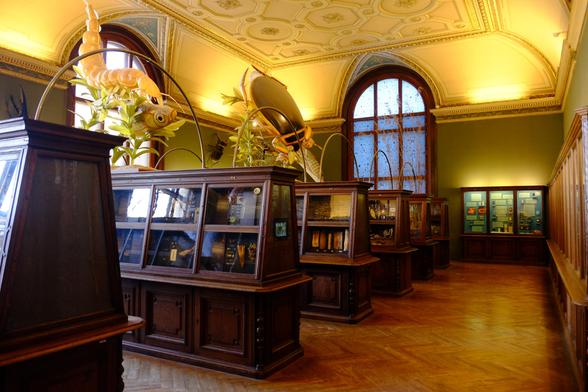
After a slice of Sacher Toort met sahne in the Museum Cafe, it was time to explore the second floor of the museum. Chronologically, what we had progressed to now could be considered modern. I walked past display cased full of beautiful irridescent butterflies. A room full of crabs. Fish. Reptiles. And amphibians. Each static. Imobilised in it's display case. The incredible. Old. Wooden display cases.
I should have understood.
But I didn't.
11/n
Because of the construction work, the rooms that normally contained bird exhibits were clsoed off. So In order to get to the next room, I had to go all the way back. Past case after case of inanimate taxidermied death.
It was quite a long walk. This museum is huge. I'd been walking for hours, and when I finally got to the next room in the numerical order the rooms are listed on the museum map. My feet hurt. So I sat on a bench next to a display cabinate.
12/n
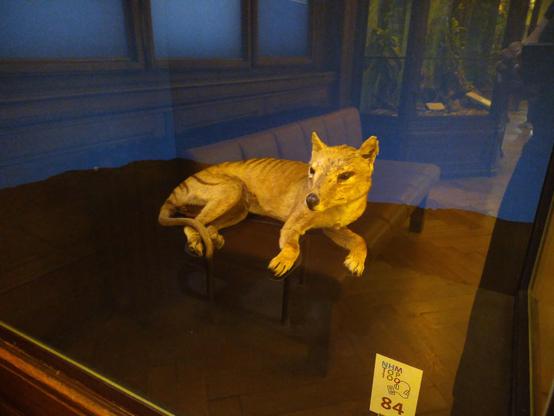
The dark cabinet contained a taxidermy small dog like creature. Curled up on its side. As if resting by the fire in a modern home.
The animal had stripes in its back.
At first I didn't realise what it was. There was no obvious label explaining what the display was. But something looked familiar. I'd seen pictures of these before. But only pictures.
I rotated round on the seat and discovered the explanation of what I was looking at was on the wall behind me. It confirmed my fear.
13/n
I sat there on a bench next to the taxidermy Thylacine and cried.
If you don't know what a thylacine is. You won't be alone. They went extinct in the wild in the early 20th century. The last one died in Hobart zoo on Tasmania in 1936. You may have heard of this species by it's other name. The Tasmanian tiger. Because of the stripes along it's back.
Before white settlers colonised Australia, there were ~5000 of these magnificent animals. But now all we have to remember them by is...
14/n
A few black and white photos. And an even smaller number of taxidermy specimens in museums. I wondered how many other taxidermy animals I had walked past which no longer existed in the wild.
That's when the nagging feeling I'd had since the first display case kicked in.
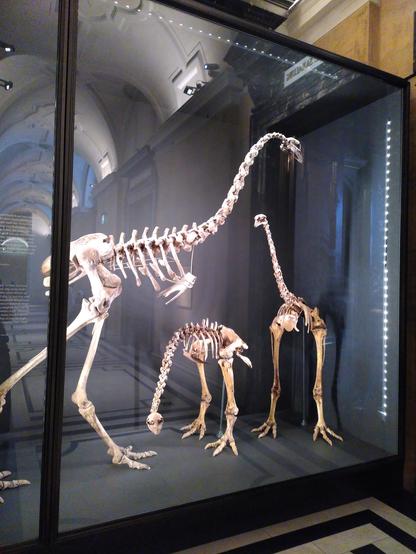
The display case of Moa skeletons.
The giant flightless bird of New Zealand that went extinct shortly after the arrival of humans.
15/n
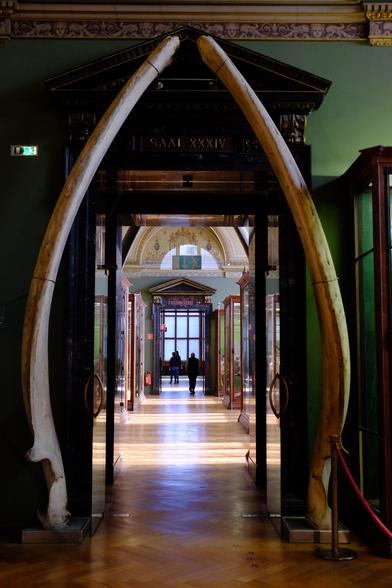
I started my walk back through the rooms. Stopping for a moment next to an elephant seal to marvel at just how huge these creatures are. I admired the whale skeleton on display opposite it. But to leave the room. you walk through an arch made from a pair of whale jaw bones. It's a familiar image. I've seen this arrangement in pictures of whaling stations taken across the world. A reminder of a time when humanity hunted these magnificient creatures to near extinction.
16/n
A reminder of a time before humanity as a whole woke up and realised we must stop killing these magnificient creatures. When we literally understood.
[cetacean needed].
I walked back through more rooms. A room of bears. A room of Antilope. Room full of canids. And eventually. I got to the last room I hadn't yet visited. The last numbered room on the map. A map that started with the creation of the rocks the world is made up of. All the way through The evolution of humanity.
17/n
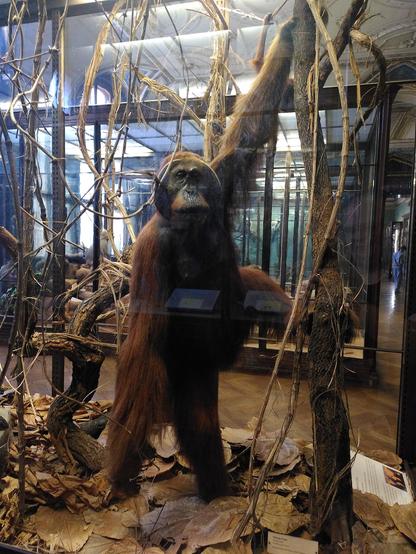
I stood there and looked at the last exhibit of the museum. A figure with a raised arm, slightly twisted upper body, as if frozen mid pirouette...
The taxidermy orangutan looked back.
It's empty lifeless eyes. This magnificent, intelligent sentient creature. In the wild orangutan are on the brink of extinction. Critically endangered according to the IUCN.
This whole museum is a giant monument not just to the natural history of this rock we all call home. But...
18/n
The dark colonial history that built it. The artifacts in this museum have been collected over a period of several hundred years. But a bulk of the collection dates from a time when humanity spread across the world, killing, destroying, pillaging.
Colonising.
I'm a white girl from Britain. I have absolutely no right to lecture any one on their nations' colonial past. That's not what I'm trying to do here.
But it's impossible to escape that this museum largely exists because of it.
19/n
What animals are there alive today, that children born now, will only ever see in museums like this ? As species after species is driven past the point of no return. Walking back from the Thylacine I passed a white rhino. There are two northern white Rhino left alive. Both females. The species is functionally extinct. And it will go fully extinct soon. Hunted. Killed. Destroyed by humanity.
This museum is incredible. A temple to the astounding miracle of the natural world...
20/n
It reminded me of something written by Douglas Adams in the book I consider his greatest work. One you should all read.
"Last chance to See"
The section in question is quoted on this page: https://liamlynch.ie/2023/11/is-this-our-last-chance/
The natural world is incredible. And for all the incredibly dark disturbing past that underlies a museum like this. It's places like this that allow many of us to get a glimpse of how amazing the natural world is. As DNA said.
"it is. And you should have seen the rest of it.”
21/21
Postscript:
I'm not sure where I'm trying to go with this thread. This museum was both incredible in its beauty, but also in the destruction it catalogues. The record of a world we've lost. It's an awful lot to think about. Thank you if you've read this far. And if you haven't already, go read "last chance to see"
I agree with previous comments, the sincere thank you's, the 'you don't have to go anywhere' and the agreeing sentiments.
There's a hundred deep dives to follow here, something I am in the habit of doing to avoid the current world situation, specifically, the USA.
It's exhausting, as many people are finding. Over in the only other social I have, I've lost people from shouting and sharing the seen disasters and the less seen harms.
This thread was an oasis. Thank you, thank you. You have a natural talent for communicating hard, thoughtful ideas.
Also thanks to the folks commenting!