 Annals of Botany
🌿Just published in @AnnBot : “Fire-stimulated flowering enhances multiple plant fitness components” by Julia Gegunde and co-authors. 🧵(1/7)
#PlantScience #Ecology #FireEcology #WildfireEcology #PlantReproduction #AoBpapers
🌿Just published in @AnnBot : “Fire-stimulated flowering enhances multiple plant fitness components” by Julia Gegunde and co-authors. 🧵(1/7)
#PlantScience #Ecology #FireEcology #WildfireEcology #PlantReproduction #AoBpapers
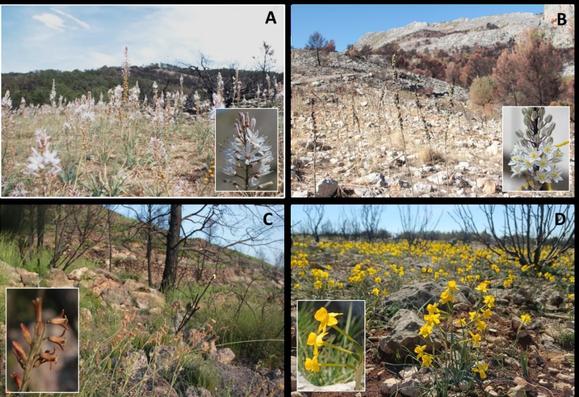
Researchers studied four Mediterranean geophytes:
🌿 Asphodelus cerasifer
🌿 Dipcadi serotinum
🌿 Drimia maritima
🌿 Narcissus assoanus
They compared plants in burned vs. nearby unburned areas across six natural wildfires. (3/7)
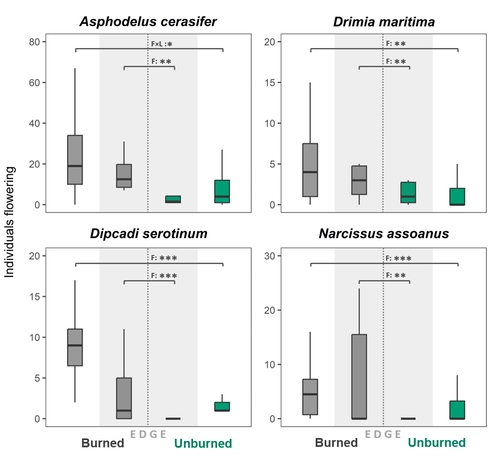
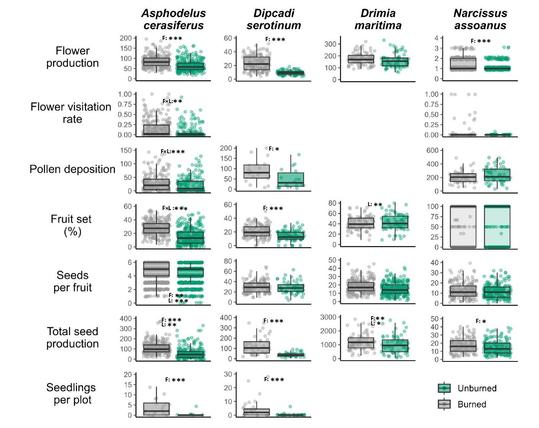
Plants growing in burned areas showed:
🌸 Higher flowering density
🌼 More flowers per plant
🌱 Greater total seed production
In some species, post-fire plants also attracted more pollinators and received more pollen. (4/7)
Why does this happen? After fire, plants may benefit from:
☀️ More light
🌿 Less competition
🐝 Increased pollinator activity
These conditions create a unique reproductive window. (6/7)
🔥 Fire-stimulated flowering appears to be an adaptive strategy that helps plants maximize reproductive success in fire-prone ecosystems. Fire may play a major role in shaping plant life-history evolution in Mediterranean habitats. (7/7)
#PlantScience #Ecology #FireEcology #WildfireEcology #PlantReproduction #AoBpapers