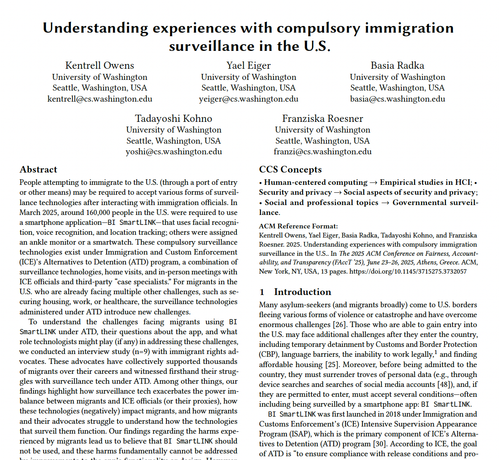
New research from UW exposes what it's really like to be under ICE's compulsory surveillance app, BI SmartLINK. The findings are alarming and the researchers conclude the app simply should not be used. 🧵
As of March 2025, ICE's Alternatives to Detention program enrolled 183,884 people. Of those, at least 159,959 were monitored by BI SmartLINK, a smartphone app using facial recognition, voice recognition, and location tracking.
The average person is enrolled in the ATD program for 651 days. That's nearly two years of compulsory surveillance (facial scans, location tracking, and mandatory check-ins) while waiting for an immigration hearing.
ICE claims the app is an "alternative" to detention. But immigrant rights advocates in this study describe it as "digital detention", a system that extends carceral control into migrants' homes, jobs, and daily lives.
The app has real consequences for employment. Mandatory check-ins at unpredictable times have caused migrants to lose jobs. One advocate described a client who lost three jobs because they couldn't step away from an assembly line to complete a check-in.
Being monitored puts other people at risk too. Migrants struggle to find housing because undocumented housemates fear ICE coming to their door. Advocates describe clients avoiding family and friends to protect them from surveillance.
The mental and physical health toll is severe. Advocates describe clients living in constant anxiety about redetention or deportation. One client developed serious physical and psychological symptoms directly as a result of wearing an ankle monitor.
ICE and BI (the private contractor running the app) have documented a serious lack of accountability. ICE operated the ATD program for nearly 20 years without filing a required Privacy Impact Assessment, only releasing one in April 2023.
The facial recognition technology has documented problems. A 2016 ICE pilot study found 56% of facial recognition check-ins failed. Advocates also report the app's facial recognition is less accurate for migrants with darker skin tones.
The app only supports three or four languages and does not account for users with limited or no literacy, creating serious barriers for the very people it is compulsorily imposed upon.
 Austin Kocher, PhD 🌎